Feeding & Nutrition
Feeder Insects Explained: Crickets, Dubia, Mealworms, and More
Compare crickets, dubia roaches, mealworms, superworms, and more. Learn nutrition, staples vs treats, sizing, and gut-loading to feed your reptile well.
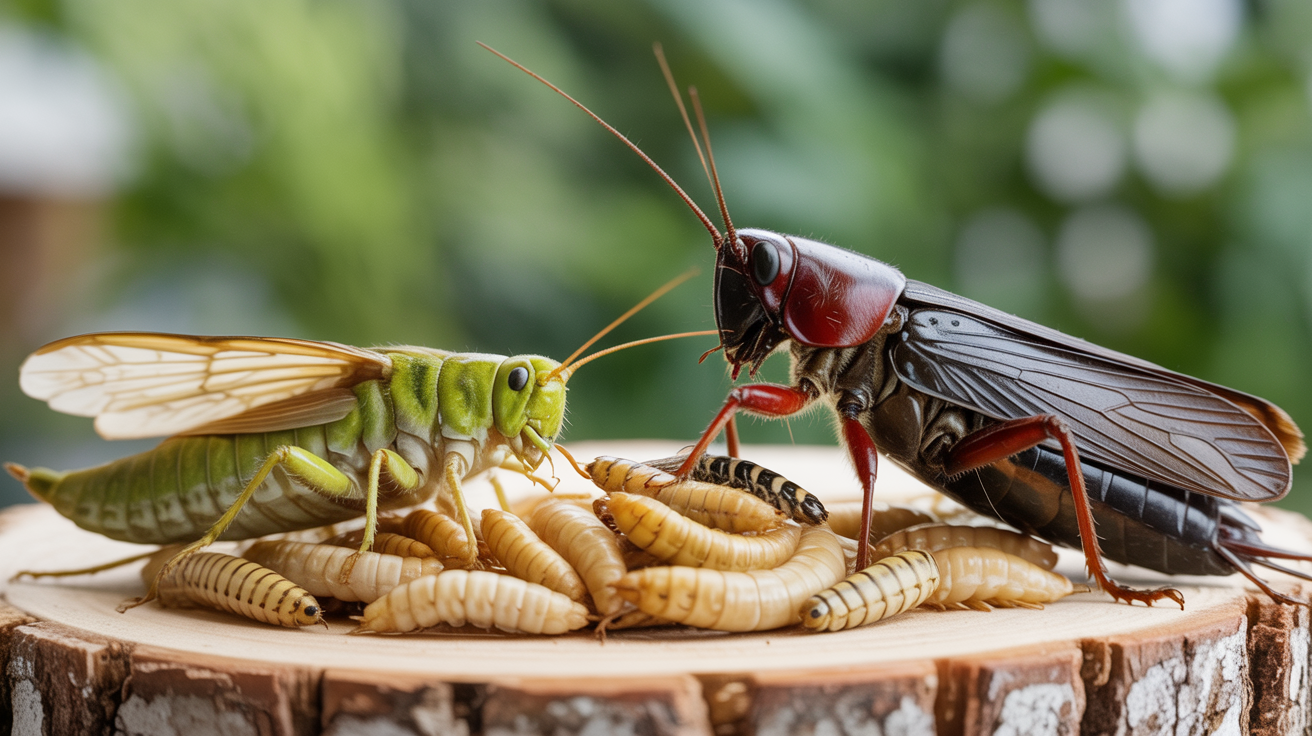
Walk into any pet store and you will find at least three or four feeder insect options. That variety is useful, because no single insect has a perfect nutritional profile, and rotating feeders keeps your reptile's diet more balanced than relying on one type indefinitely.
This guide covers the insects you are most likely to encounter, what each one offers nutritionally, how practical they are to keep at home, and which belong in the regular rotation versus which work best as occasional treats. For a broader look at how feeders fit into a complete diet, see what your pet reptile actually eats.
The Main Feeder Insects Compared
Here is a side-by-side snapshot of the most common options. Values are approximate because nutrition varies by what the insects have eaten and how fresh they are.
| Feeder | Protein | Fat | Ca:P Ratio | Best For |
|---|---|---|---|---|
| Dubia roach | ~21% | ~7% | 1:3 | Most insectivores, staple |
| Cricket | ~21% | ~6% | 1:9 | Wide use, staple |
| Mealworm | ~20% | ~13% | 1:7 | Treats, leopard geckos |
| Superworm | ~19% | ~18% | 1:18 | Occasional treat |
| Black soldier fly larva | ~18% | ~14% | 1.5:1 | Excellent Ca source, staple |
| Hornworm | ~9% | ~3% | 1:3 | Hydration, treats |
| Waxworm | ~16% | ~25% | 1:7 | High-fat treat only |
The calcium-to-phosphorus (Ca:P) ratio matters because phosphorus blocks calcium absorption. A diet heavy in high-phosphorus feeders leads to metabolic bone disease over time, which is why dusting with calcium supplement is standard practice for most insect-fed reptiles.
Staple Feeders vs. Treats
Dubia roaches are the most nutritionally complete staple available for most lizards and frogs. They have a favorable protein-to-fat ratio, softer chitin than crickets, and they cannot climb smooth surfaces or make noise. The main drawback is legal status: dubia are illegal to keep in Florida and Hawaii, where they are considered an invasive species risk.
Crickets are the most widely available staple and work for nearly every insectivorous reptile. They are louder and smell stronger than dubias, they escape frequently if you keep a colony, and they can bite a sedentary or sick animal. Despite those downsides, they are affordable and easy to find, which makes them a practical choice for beginners.
Black soldier fly larvae (BSFL), sold under brand names like Repashy's Phoenix Worms or Dubia.com's NutriGrubs, have an unusually good calcium-to-phosphorus ratio -- roughly 1.5:1 -- meaning they contribute calcium rather than draining it. They require no dusting when used as a significant portion of the diet, though you will still want to dust other feeders in the same meal.
Mealworms are convenient and long-lived in the fridge, but their high fat content and tough chitin shell limit their usefulness as a staple for most species. Leopard geckos tolerate them well and many leopard gecko owners use them routinely, but bearded dragons and chameleons do better with softer-bodied feeders.
Superworms (Zophobas morio) are larger than mealworms and even higher in fat. They are useful for getting weight onto an underweight animal or for larger lizards that need a bigger prey item, but they are not a daily staple.
Hornworms are low in fat, very high in moisture, and soft-bodied. They are useful for hydrating a reptile that is not drinking enough, or as a palatable treat to encourage a picky feeder. They grow fast, so use them quickly once you receive them.
Waxworms are high in fat and highly palatable, which makes them effective for conditioning a sick or underweight animal back to health. Because they are so appealing, some reptiles will refuse other feeders after eating too many waxworms. Limit them to occasional treats.
Sizing, Chitin, and Impaction Risk
A general rule of thumb: offer prey items no wider than the space between the animal's eyes. This applies to insects just as it does to whole prey. Oversized feeders are harder to swallow and create unnecessary stress.
Chitin is the hard material that makes up an insect's exoskeleton. High-chitin feeders like mealworms and superworms pose a higher impaction risk if a reptile is cold, dehydrated, or already struggling with gut motility. Babies and juveniles are more vulnerable than adults. If your animal is not at the correct temperature, its digestion slows and the risk of an undigested insect causing a blockage increases. Keep basking spots at species-appropriate temperatures (check your species guide for exact numbers) before and after feeding.
Soft-bodied feeders -- hornworms, BSFL, small waxworms -- carry very low impaction risk and are often recommended when feeding young or delicate animals.
Gut-Loading and Dusting
A feeder insect is only as nutritious as what it has eaten. An insect that sat in an empty container for three days provides very little nutrition. Gut-loading means feeding your feeder insects nutritious food for 24 to 48 hours before offering them to your reptile. Leafy greens, squash, sweet potato, and commercial gut-load products all work. Avoid citrus and high-oxalate foods like spinach.
Dusting means coating live feeders with a calcium or vitamin supplement immediately before feeding. Put a pinch of supplement in a small bag or cup, add the insects, and give it a gentle shake. Dust just before offering so the powder sticks and does not fall off in the enclosure. For the specifics on which supplements to use and when, how to gut-load and dust feeder insects covers the full process.
Most insectivores need calcium dusted on feeders at nearly every meal, with a D3-containing supplement added two to three times per week if the animal does not have access to adequate UVB lighting. For a breakdown of which supplements do what, see calcium and vitamin supplements for reptiles.
Practical Considerations: Smell, Noise, and Escape Risk
If you are keeping a colony at home rather than buying feeders weekly, the practical differences between species matter:
Crickets chirp at night, smell noticeably after a few days, and escape through small gaps. They require a secure, ventilated container and regular cleaning.
Dubia roaches are quiet, produce less odor than crickets, and cannot climb glass or smooth plastic. A simple plastic bin with a mesh lid works well. They reproduce slowly, so a colony takes time to establish.
Mealworms store easily in the refrigerator for several weeks, which slows their metabolism and extends shelf life. This makes them the most convenient feeder to keep in small quantities without maintaining a live colony.
BSFL can be kept at room temperature and have a shelf life of several weeks. They require no feeding during storage, which keeps things simple.
If you notice any sign of illness in your reptile -- lethargy, loss of appetite, bloating, or changes in stool -- consult an exotics veterinarian. Impaction and nutritional deficiencies are treatable when caught early, but they can become serious if left unaddressed.
Frequently Asked Questions
Are dubia roaches better than crickets?
For most lizards and frogs, yes. Dubias have softer chitin, a better fat-to-protein ratio, less odor, and no noise. The main reasons to stick with crickets are cost, availability, or living in a state where dubias are restricted.
Can I feed my reptile mealworms every day?
For most species, no. Mealworms are high in fat and their tough exoskeleton is harder to digest than softer feeders. Leopard geckos handle them better than most, but even then, rotating in other feeders is a good habit.
Do I need to dust dubia roaches and crickets with calcium?
Yes, in most cases. The Ca:P ratio of crickets is around 1:9, which means the insect contains far more phosphorus than calcium. Without supplementation, a cricket-heavy diet pulls calcium from your reptile's bones over time. BSFL are the main exception, since their Ca:P ratio is naturally favorable.
How do I know if my reptile has impaction from feeder insects?
Signs include straining to defecate, a firm or swollen abdomen, reduced appetite, and lethargy. Warmth helps: make sure the basking spot reaches the correct temperature for your species. If symptoms persist for more than a day or two, see an exotics vet rather than waiting it out.
How large should feeder insects be for a baby gecko or lizard?
No wider than the gap between the animal's eyes. For very young reptiles, this often means pinhead crickets or small BSFL. Offering prey that is too large stresses the animal and can cause regurgitation or injury.