Feeding & Nutrition
Live, Frozen, or Pre-Killed: Feeding Snakes Safely
Compare live, frozen-thawed, and pre-killed prey for pet snakes. Learn safe thawing, feeding schedules by age and size, and what to do when a snake refuses.
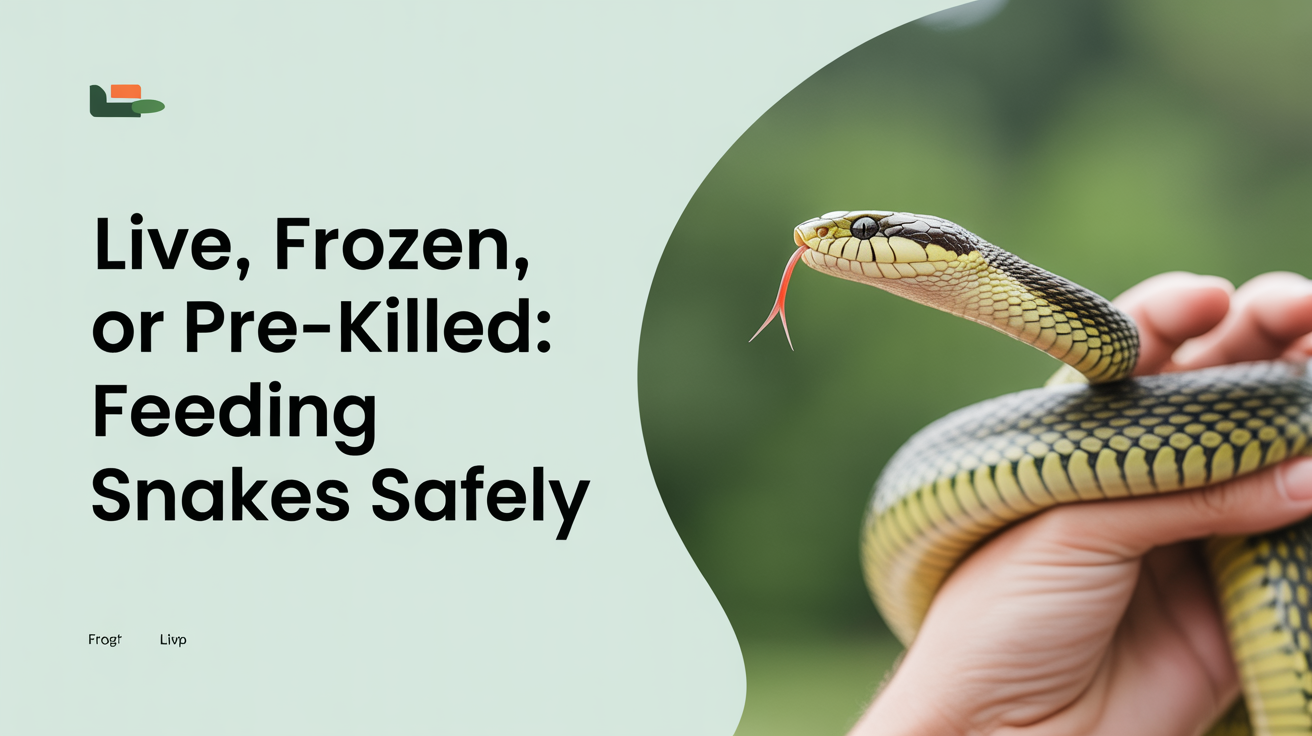
Most new snake owners discover quickly that their pet is not going to eat pellets. Snakes are obligate carnivores and require whole prey animals. What is less obvious is that the form that prey takes, whether alive, freshly killed, or frozen and thawed, has real consequences for your snake's safety and your own sanity as a keeper.
This guide walks through the differences between live, pre-killed, and frozen-thawed prey, explains how to prepare and offer each type, and covers feeding schedules and the most common reasons a snake will stop eating. See our beginner's feeding guide for a broader overview of reptile diets.
Live, Pre-Killed, and Frozen-Thawed: The Core Differences
Live prey is a mouse, rat, or other rodent offered while still alive. Many snakes will readily strike live prey because the movement triggers their hunting instinct. The problem is that live rodents can bite and scratch. Even a small mouse can inflict a serious wound on a snake, and those injuries can become infected quickly. Leaving a snake alone with live prey is never recommended, and some keepers never use live prey at all.
Pre-killed prey is exactly what it sounds like: a rodent that has just been humanely killed, usually by cervical dislocation, before being offered to the snake. The body is still warm, which makes acceptance easier than frozen-thawed in many cases. Pre-killed is safer than live and avoids the thawing process. The downside is availability: you either need to kill the prey yourself or find a supplier who sells pre-killed fresh, which is harder to source than frozen.
Frozen-thawed prey is a rodent that was humanely killed and then flash-frozen. It is widely available from pet shops and online reptile suppliers, easy to store in bulk, and generally the safest and most welfare-friendly option. The trade-off is that some snakes, particularly those that were raised on live prey, refuse frozen-thawed initially. Converting them takes patience.
For most keepers, frozen-thawed is the practical standard. It is what the majority of breeders and experienced hobbyists recommend as a starting point, and most captive-bred snakes from reputable sources are already trained to accept it.
How to Thaw and Offer Frozen Mice or Rats
Proper thawing matters more than most beginners expect. A prey item that is cold in the center will not only be less appealing to the snake but can also cause digestive problems.
The safest thawing method is to move the frozen prey from the freezer to the refrigerator the night before feeding day. This slow thaw is gentle on the tissue and keeps bacterial growth minimal. Before offering the prey, you will want to warm it to approximately 100 to 105 degrees Fahrenheit (38 to 40 degrees Celsius) at the surface. A simple way to do this is to seal the thawed prey in a zip-lock bag and place it in warm, not boiling, water for 10 to 15 minutes.
What to avoid:
- Never microwave frozen prey. It heats unevenly and can create hot pockets that burn the snake's mouth or gut.
- Never refreeze prey that has been thawed.
- Do not leave thawed prey at room temperature for more than a couple of hours, as bacterial contamination accelerates.
Once the prey is warm, you have a few options for offering it. Feeding tongs are the standard tool because they keep your hand away from the strike zone and let you wiggle the prey to simulate movement. Some snakes will accept stationary prey placed in the enclosure; others need it moved slightly before they show interest. Try different approaches if your snake ignores the first attempt.
Feeding Schedules by Snake Age and Size
How often a snake eats depends on its age, body size, and the size of the prey item. A snake should eat a prey item that is roughly as wide as the widest part of its body, or slightly thinner for younger snakes. Offering prey that is consistently too large can lead to regurgitation.
Hatchlings and juveniles (roughly under one year) have fast metabolisms and grow quickly. Most species benefit from feeding every five to seven days. Ball pythons and corn snakes in this age range typically eat pinkies or fuzzies every week.
Young adults (roughly one to three years, depending on species) generally move to every seven to ten days. Prey size scales up accordingly, from small mice to adult mice or small rats.
Adult snakes can be fed every ten to fourteen days for most colubrid species like corn snakes and king snakes. Adult ball pythons do well on a similar schedule, often every seven to fourteen days. Larger constrictors like boas and burms eat less frequently as adults, sometimes every two to four weeks.
Always remove uneaten prey from the enclosure within 24 hours. A hungry snake left with a thawed mouse overnight is one thing; a mouse left longer than that begins to decompose and can make the enclosure smell and potentially harbor bacteria.
Regurgitation and Refusal: What They Mean
Refusal is common and usually not a cause for alarm. Snakes often go off feed during a shed cycle, after being moved to a new enclosure, during winter months if seasonal temperature cues affect them, and occasionally for no obvious reason. Ball pythons in particular are known for extended feeding strikes that can last weeks or even a few months, especially in males during breeding season.
What to do if your snake refuses:
- Try feeding in a separate container rather than the main enclosure. This works well for species that are sensitive to disturbances.
- Offer prey in the evening or at night, since most pet snakes are more active after dark.
- Warm the prey slightly more or try a different presentation with the tongs.
- Check that your temperatures are correct. A snake that is too cold cannot digest food and may not bother striking. A warm basking zone of around 88 to 92 degrees Fahrenheit (31 to 33 degrees Celsius) is typical for ball pythons; other species vary.
Regurgitation is a separate and more serious issue. If a snake vomits up a meal, there are several possible causes: the enclosure was too cold for digestion, the snake was handled too soon after eating (wait 48 to 72 hours after a meal), the prey was too large, the snake is under stress, or there is an underlying health issue such as a parasite burden or infection. A single regurgitation event is not automatically an emergency, but recurring regurgitation warrants a visit to an exotics vet. After a regurgitation, wait at least two weeks before offering food again to give the digestive tract time to recover.
Frequently Asked Questions
Can I switch my snake from live to frozen-thawed? Yes, and it is worth doing. The most reliable method is to offer the freshly thawed prey while wiggling it with tongs to mimic movement. Some snakes convert in one or two sessions; others take longer. Scenting the prey (rubbing it against something the snake already recognizes as food, like a feeder mouse bedding or a small amount of tuna in water) can also help stubborn individuals.
How do I know what size prey to offer? The prey item should be close in diameter to the widest part of the snake's mid-body. Going slightly smaller is fine; going significantly larger causes problems. A good rule of thumb for hatchlings is to start small and size up gradually as the snake grows.
Is it safe to handle live prey? Handling a live feeder rodent carries the risk of bites, scratches, and the stress involved for both parties. If you choose to offer live prey for a specific reason, always supervise the feeding and remove the rodent if the snake shows no interest within 15 to 20 minutes. Never leave a live rodent unattended with a snake.
My snake refused food for three weeks. Should I be worried? It depends on the species and context. Ball pythons regularly fast for a month or more without any health impact, especially during seasonal shifts or breeding season. Corn snakes and king snakes are usually more consistent feeders; a long refusal in those species warrants a closer look at husbandry and a vet consult if it continues. Any refusal accompanied by weight loss, lethargy, or changes in appearance should be seen by an exotics vet promptly.
Do I need to supplement prey with vitamins or calcium? Whole prey fed to snakes is generally a complete diet and does not require the same supplementation that feeder insects do. The exceptions are snakes fed only muscle meat, which are rare in typical captive setups. For insect-eating reptiles, supplementation is a different story; see our guides on how to gut-load and dust feeder insects and calcium and vitamin supplements for reptiles for more detail on that side of reptile nutrition.