Getting Started
Reptiles vs. Amphibians: What's the Difference for Pet Keepers?
Reptiles and amphibians look similar but need very different care. Learn the key biology differences and what they mean before choosing your first pet.
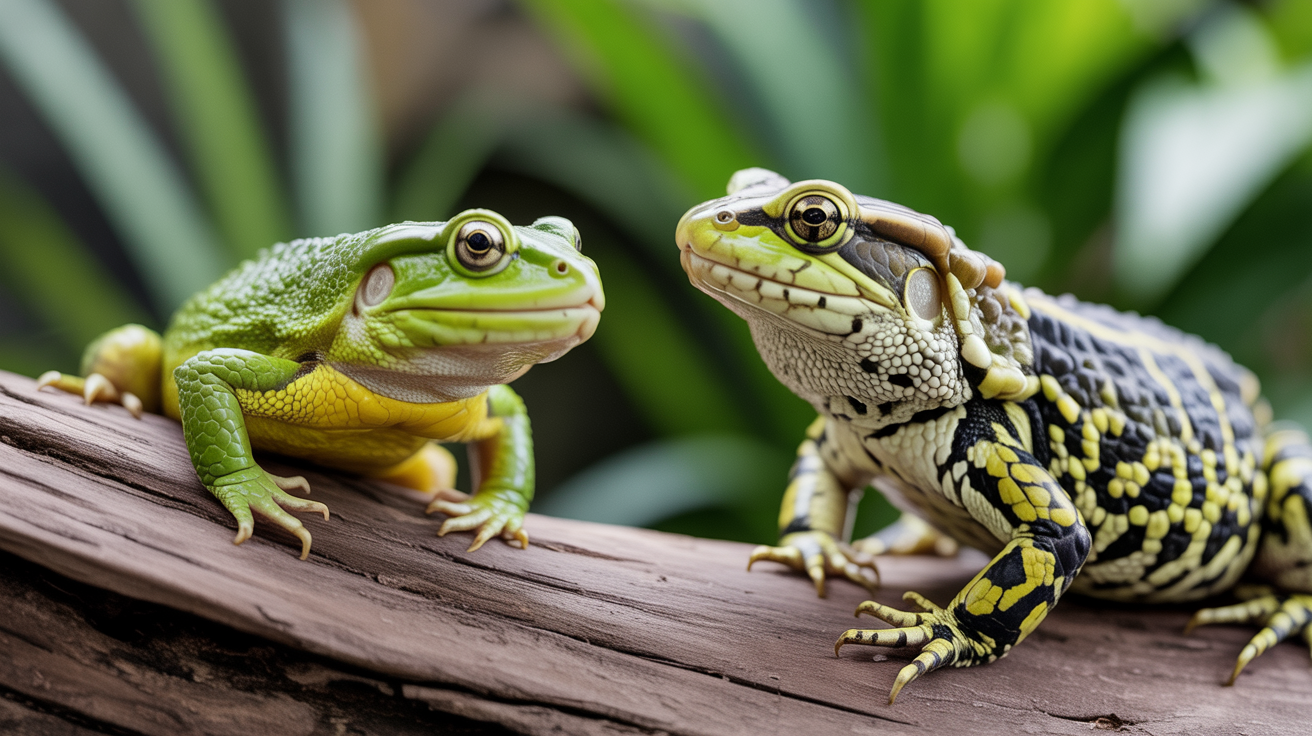
Walk into any pet store and you'll see bearded dragons next to dart frogs, ball pythons beside axolotls. They get grouped together, but reptiles and amphibians are fundamentally different animals with different biology and very different care requirements. Knowing which group your pet belongs to is the first step to keeping it alive.
At a Glance
- Skin is the core divide: reptiles have dry, scaled, impermeable skin; amphibians have moist, permeable skin that absorbs whatever touches it.
- Water chemistry matters far more for amphibians: chlorinated tap water passes straight through amphibian skin and can be lethal within days without conditioning.
- Reptiles rely on external heat and UVB; amphibians generally need cooler temperatures (65–75°F) and prioritize humidity over basking heat.
- Only amphibians metamorphose: a tadpole and an adult frog are built for different environments; reptile hatchlings look and behave like small adults from day one.
- "Beginner" amphibian still means careful keeper: even hardy species like White's tree frogs demand dechlorinated water and minimal handling.
- First-timers usually do better starting with a reptile unless they already understand aquarium water chemistry from keeping fish.
The Core Biology Differences
The two groups split hundreds of millions of years ago, and that evolutionary distance shows up in almost every part of their bodies.
Skin
Reptiles have dry, scaly skin. Those scales are made of keratin (the same protein as your fingernails) and form a tough barrier that holds moisture in. You can handle most reptiles with dry hands, and they won't absorb anything through their skin.
Amphibians have moist, smooth, permeable skin. That permeability isn't a flaw, it's how many species breathe, absorb water, and regulate certain body functions. According to the Merck Veterinary Manual's overview of amphibians, their thin, nonkeratinized epidermis allows for transdermal respiration, fluid absorption, and osmoregulation, all at once, through the same tissue. It also means anything on your hands (lotion, soap residue, hand sanitizer, the salt from sweat) can pass directly into their bloodstream. This is why you'll read "minimal handling" on virtually every amphibian care sheet.
Eggs and Reproduction
Reptile eggs have a leathery or hard shell that retains moisture, which is why reptiles can lay eggs on land. Snakes, lizards, and turtles deposit eggs in soil or rotting wood and walk away, the shell protects the embryo without a water source nearby. (Some reptiles, like certain boa constrictors, give birth to live young, but the egg-on-land strategy is the defining feature of the group.)
Amphibian eggs have no shell. They're laid in or near water, encased in a gel-like coating that dries out quickly in open air. This is one reason amphibians are almost always tied to water sources throughout their lives.
Metamorphosis
Most amphibians go through dramatic metamorphosis. A tadpole and an adult frog are built so differently they barely look related. A typical pet-trade frog species spends anywhere from a few weeks to several months as an aquatic, gill-breathing larva before its legs emerge, its tail is reabsorbed, and its lungs take over, at which point it needs to leave the water or risk drowning, since adult frogs can no longer extract enough oxygen through gills alone. Salamander larvae hatch with external gills; adults breathe through lungs and skin. Some species, like axolotls, retain juvenile features permanently (called neoteny), staying fully aquatic and gilled their whole lives.
Reptiles don't metamorphose. A baby corn snake is a small corn snake. Juveniles need the same basic care as adults from day one, which simplifies early husbandry significantly.
Breathing
Adult reptiles breathe exclusively through lungs. Amphibians use a mix: lungs, skin, and (in aquatic species) sometimes gill tissue. Skin breathing in amphibians is why high humidity and clean, dechlorinated water aren't optional, they're life support.
What These Differences Mean for Care
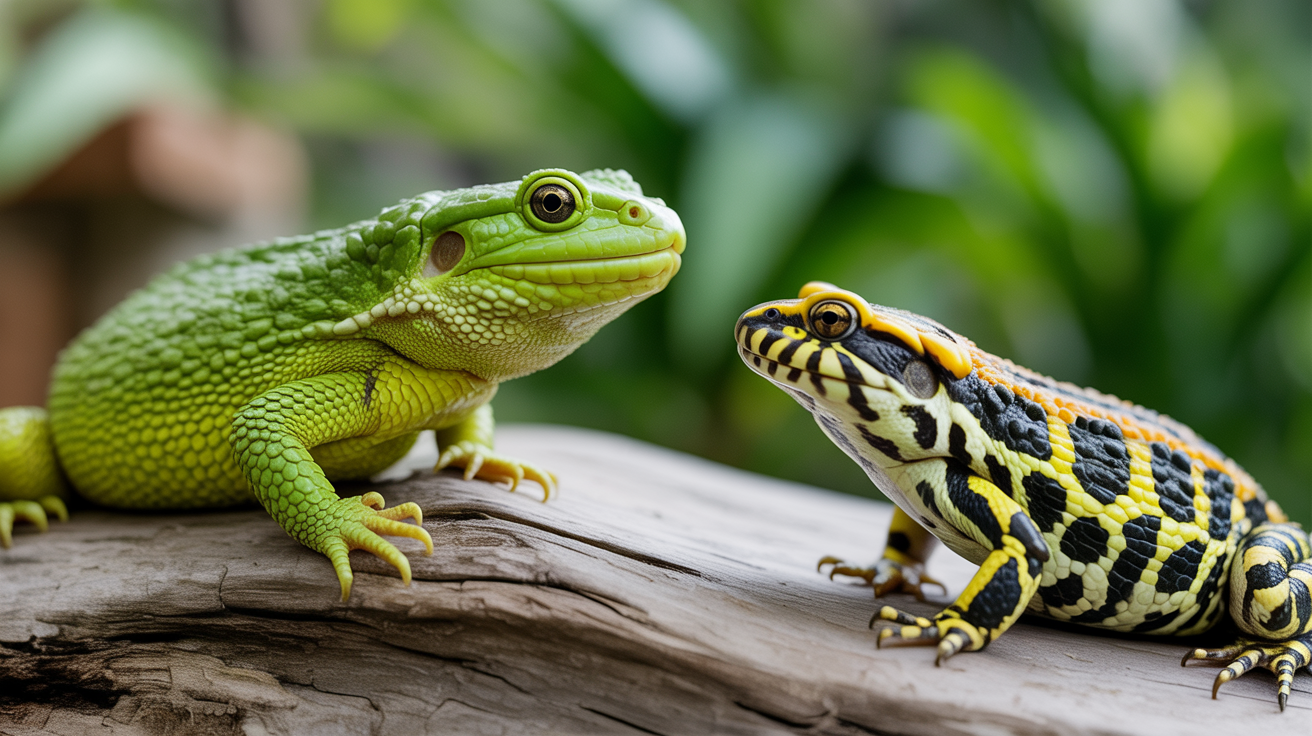
The biology above translates directly into husbandry decisions.
Reptile Care Priorities
Because reptiles have dry skin and breathe only through lungs, their main care challenges are:
- Temperature gradients. Reptiles are ectotherms, they can't generate their own body heat. You need a warm side and a cool side in their enclosure so they can thermoregulate. Get a temperature gun; guessing doesn't work.
- UVB lighting. Most diurnal (day-active) reptiles need UVB to synthesize vitamin D3 and metabolize calcium. Nocturnal species (leopard geckos, crested geckos) need less, but many still benefit from low-output UVB. The Merck Veterinary Manual notes that UVB in the 290–300 nm range is especially important for diurnal lizards and chelonians, and that bulbs need replacing roughly every 9 to 12 months since output drops well before visible light does.
- Dry substrate options. Many popular reptile species come from arid or semi-arid environments. Excess humidity causes respiratory infections and scale rot.
For a full rundown of what you'll spend getting set up, see how much does it cost to keep a pet reptile.
Amphibian Care Priorities
Amphibians demand clean, carefully managed water and moisture at all levels.
- Water quality. Tap water must be dechlorinated before any amphibian contact, chlorine and chloramine pass straight through their skin. Use a reptile/amphibian-safe water conditioner, or let water sit uncovered for at least 24 hours, or run it through a carbon filter, the Merck Veterinary Manual specifically recommends circulating tap water through a carbon filter for 24 hours or more before use. For fully aquatic species, a cycled filter is non-negotiable.
- Minimal handling. Oils, salts, and chemicals on hands are toxic to permeable skin. If you do need to handle an amphibian, rinse your hands with dechlorinated water (no soap) first. Many keepers keep dedicated "amphibian hands", a separate rinse routine, and some wear powder-free nitrile gloves rinsed in dechlorinated water for extra caution with sensitive species like dart frogs.
- Humidity. Most frogs and salamanders need ambient humidity between 60 and 90 percent. A failing misting schedule or a screen lid that vents too aggressively can kill a frog in days.
- Temperature. Most amphibians kept as pets prefer cooler temperatures than reptiles, many do best between 65 and 75°F (18–24°C). Excess heat stresses them faster than cold does.
Common Pet Species in Each Group
Popular Pet Reptiles
| Species | Skill Level | Notes |
|---|---|---|
| Leopard gecko | Beginner | Ground-dwelling, low UVB needs, easy to tame |
| Bearded dragon | Beginner–Intermediate | Needs strong UVB and varied diet |
| Corn snake | Beginner | Docile, escape-prone, simple feeding |
| Ball python | Beginner | Hardy but picky eaters when stressed |
| Blue-tongued skink | Intermediate | Large, friendly, needs significant space |
For a deeper look at which species suit first-time owners, see the best pet reptiles for beginners.
Popular Pet Amphibians
| Species | Skill Level | Notes |
|---|---|---|
| White's tree frog | Beginner | Hardy, tolerates some handling, large and slow |
| Fire-bellied toad | Beginner | Semi-aquatic, active, toxic skin secretions |
| African dwarf frog | Beginner | Fully aquatic, small, peaceful community tank |
| Axolotl | Beginner–Intermediate | Fully aquatic, cool water required, can't be tankmates with fish |
| Tiger salamander | Intermediate | Terrestrial adult phase, robust but needs burrowing space |
Notice that even "beginner" amphibians come with the water quality and handling caveats above. Ease of care doesn't mean the biology stops mattering.
The Reptile vs. Amphibian Comparison Table
| Trait | Reptiles | Amphibians |
|---|---|---|
| Skin | Dry, scaled, impermeable | Moist, smooth, permeable |
| Eggs | Leathery or hard shell, laid on land | Gel-coated, require water or high humidity |
| Metamorphosis | None | Most species undergo larval to adult transformation |
| Breathing | Lungs only | Lungs + skin (some species use gills as larvae) |
| Water needs | Drinking water; humidity varies by species | Dechlorinated water critical; high humidity standard |
| Handling | Generally tolerates handling | Minimal; clean, dechlorinated hands required |
| Temperature range | Most prefer 75–95°F warm zones | Most prefer 65–75°F |
| Common beginner species | Leopard gecko, corn snake | White's tree frog, axolotl |
Which One Fits You? A Readiness Check
Beyond preference, a few practical questions can point you toward one group over the other.
| If This Describes You | Lean Toward | Reasoning |
|---|---|---|
| You've never kept fish or managed water chemistry | Reptile | No dechlorination, filtration, or cycling to learn upfront |
| You want to handle your pet regularly | Reptile | Most amphibians tolerate little to no handling |
| You already own a cycled fish tank | Amphibian (aquatic species) | The filtration and water-testing skills transfer directly |
| You want a low-heat setup in a cool room | Amphibian | Most thrive at 65–75°F without a basking lamp |
| You want to watch active daytime behavior | Reptile | Most popular pet amphibians are more active at dusk or night |
| You're drawn to dramatic life-stage changes | Amphibian | Metamorphosis is unique to this group |
How to Choose Between a Reptile and an Amphibian
The honest answer: most first-time keepers find reptiles easier to start with. The dry skin means you don't have to worry about water chemistry or chemical contamination from your hands. Temperature and lighting are the main variables, and both are measurable.
Amphibians reward patience and attention to water quality. If you already keep fish and understand cycling and dechlorination, the jump to aquatic amphibians (African dwarf frogs, axolotls) is smaller than it looks. If you've never managed a water system before, start with a terrestrial reptile and learn husbandry fundamentals first.
Both groups need appropriate enclosure size, species-specific diet, and a keeper who researches before buying. The biggest mistakes new owners make aren't about reptile-vs-amphibian, they're about impulse purchases and undersized setups. Read 10 mistakes new reptile owners make and how to avoid them before you decide.
Frequently Asked Questions
Is a frog a reptile?
No. Frogs are amphibians. They have permeable, moist skin, lay gel-coated eggs in water, and most go through a tadpole stage before becoming adults. Reptiles have scales, lay eggs on land, and don't metamorphose.
Is a turtle a reptile or an amphibian?
Turtles are reptiles. They have scaly skin and hard-shelled eggs laid on land, even fully aquatic species like red-eared sliders come ashore to nest. They breathe through lungs (though some species can absorb a small amount of oxygen through skin tissue in winter torpor).
Can reptiles and amphibians live together?
Almost never. Their environmental needs conflict, and reptile-safe temperatures often harm amphibians. Beyond that, some reptiles eat amphibians, and amphibian skin secretions that are harmless to the frog can be toxic to a reptile sharing the same space.
Do amphibians need UVB lighting like reptiles?
Most amphibians kept in captivity have lower UVB requirements than diurnal reptiles, but recent research suggests low-output UVB improves health outcomes in many frog and salamander species. At minimum, provide a photoperiod (a regular light cycle) so they can regulate their circadian rhythm. Check species-specific care guides rather than assuming no UV is fine.
Why does permeable skin make amphibians harder to keep?
Permeable skin means the water and air touching an amphibian directly affect its internal chemistry. Chlorinated tap water, residue on hands, substrate treated with pesticides, or even a new decoration leaching compounds into the water can cause skin damage or systemic toxicity. Every input into an amphibian's environment needs more scrutiny than it would for a reptile.
Is it true that touching a toad gives you warts?
No, that's a folk myth. Warts are caused by a human virus (HPV), not by contact with toad skin. What toad and frog skin secretions can actually do is irritate mucous membranes, some species produce toxins strong enough to cause real illness if you touch your eyes or mouth after handling them. Wash your hands (with dechlorinated water, no soap, immediately before and after) rather than worrying about warts.