Getting Started
Are Reptiles Good Pets? An Honest Beginner's Look
Reptiles can be rewarding pets, but they're not for everyone. Here's an honest look at the pros, cons, costs, and commitments before you bring one home.
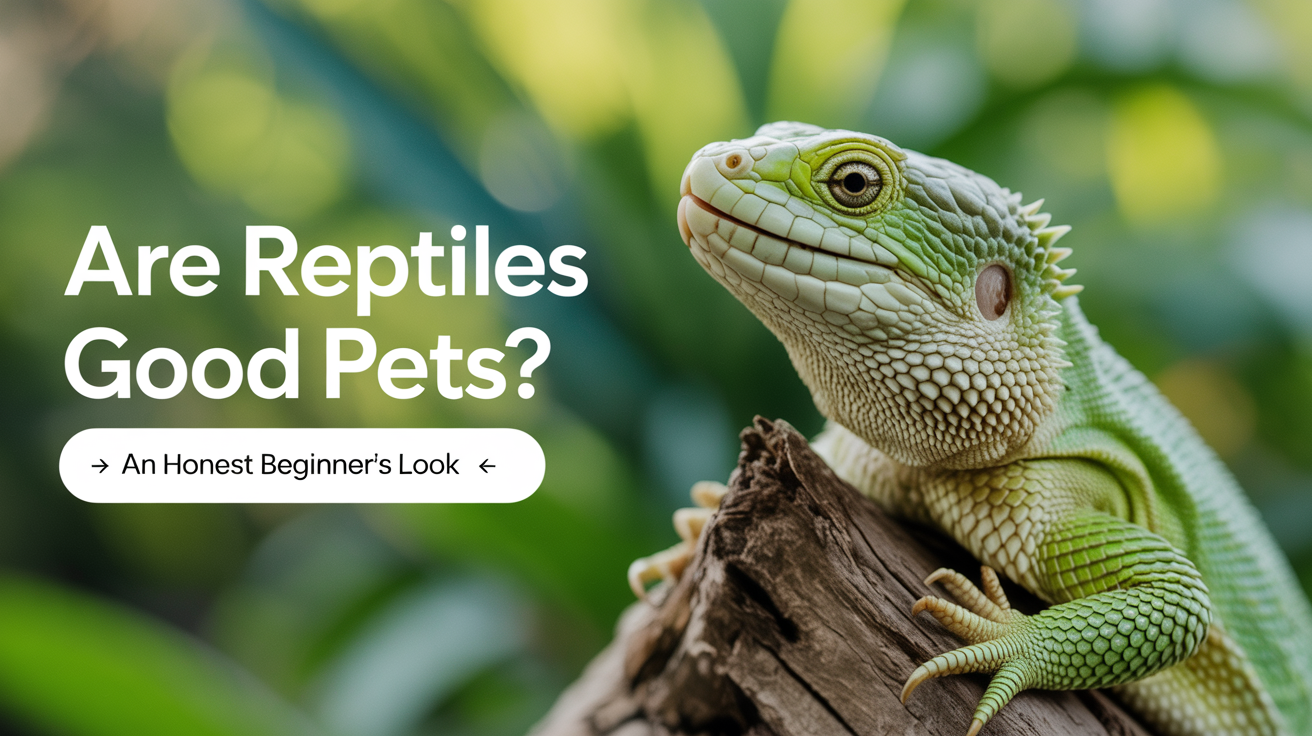
Reptiles get a lot of enthusiasm online, and some of it is warranted. They're quiet, they don't need walks, and watching a well-set-up enclosure is genuinely satisfying. But reptiles also fail in the wrong homes, usually because the person who brought one home didn't know what they were signing up for.
This guide lays out the real pros and cons, the upfront costs, the health considerations, and the questions worth asking yourself before you commit.
What Reptiles Do Well as Pets
Low noise and low social maintenance. Reptiles don't bark, meow, or demand attention at 2 a.m. Most species are perfectly content to be left alone for several days as long as their enclosure is set up correctly. If your schedule is unpredictable or you travel regularly, that matters.
Fascinating to observe. A bearded dragon basking under its UVB lamp, a ball python slowly exploring its enclosure at dusk, a crested gecko hunting crickets at night: reptile behavior is worth watching if you're the kind of person who finds animals interesting on their own terms.
No dander-based allergies. People who react to cat or dog dander often do fine with reptiles. Scales don't shed proteins the way fur does. (Salmonella is a separate hygiene concern covered below, but it's manageable with handwashing, not antihistamines.)
Contained space requirements (depending on species). A leopard gecko lives comfortably in a 20-gallon (75 L) tank for its whole life. A ball python needs a 4 ft x 2 ft (120 x 60 cm) enclosure as an adult. Compare that to the space a large dog needs, and reptiles come out ahead for apartment dwellers who pick the right species.
What Reptiles Actually Require
This is where a lot of beginners get surprised.
Exacting temperature gradients. Almost every reptile needs a basking spot and a cooler side. A bearded dragon's basking spot should run 100 to 110°F (38 to 43°C); the cool side should stay around 80°F (27°C). A ball python needs an ambient temperature of 78 to 80°F (26 to 27°C) with a warm spot of 88 to 92°F (31 to 33°C). These aren't approximate numbers you can eyeball. You need a quality thermometer (ideally a temp gun) and the right heating equipment to hold the range reliably.
UVB lighting for many species. Bearded dragons, tortoises, blue-tongue skinks, and most other diurnal lizards need UVB to synthesize vitamin D3 and metabolize calcium. Without it, they develop metabolic bone disease over months, sometimes before you notice anything wrong. UVB bulbs have a real lifespan (typically 6 to 12 months) and need to be replaced on schedule even when they still emit visible light.
Specific humidity levels. A ball python needs 60 to 80% humidity. A crested gecko does best at 60 to 80% as well, with a nightly mist cycle. A leopard gecko prefers 30 to 40%. If you put a humid-climate species in a dry cage, you'll see stuck sheds and respiratory issues. If you put a dry-climate species in a soggy enclosure, you'll see scale rot and mold.
Regular feeding with appropriate prey. Leopard geckos eat live insects. Ball pythons eat pre-killed or frozen-thawed rodents. Bearded dragons need a rotation of live insects and fresh leafy greens as juveniles, shifting to mostly greens as adults. None of this is complicated, but it does require consistent sourcing and a basic understanding of gut-loading and dusting insects with calcium and vitamins.
Costs, Lifespans, and Long-Term Commitment
Reptile ownership is front-loaded with costs. The animal itself is often the cheapest part of the purchase.
A quality enclosure for a bearded dragon runs $150 to $300. Add a UVB fixture ($60 to $120), basking bulb, thermostat ($40 to $80), thermometers, substrate, hides, and a water dish, and you're looking at $400 to $600 before you've bought a single cricket. For a full breakdown, see how much it actually costs to keep a pet reptile.
Then there's the lifespan question. Bearded dragons live 10 to 15 years in good care. Ball pythons regularly reach 20 to 30 years. A Russian tortoise can outlive you. This is not a starter pet you return when you move or get bored. A ball python you buy at 18 may still be with you at 45. That's worth sitting with for a moment.
Vet costs are also real. Reptiles hide illness well, and by the time symptoms are obvious, the problem is often serious. You need access to an exotics vet, not a general small-animal practice. Exotics vets are not available in every region, and their fees are higher than standard vet visits. Find one near you before you buy an animal, not after it gets sick.
Health Considerations: Salmonella and Handling
All reptiles should be treated as potential Salmonella carriers. That doesn't mean they're dangerous pets, but it does mean specific hygiene habits are non-negotiable.
Wash your hands with soap and water every time after handling a reptile or touching anything inside its enclosure. Don't handle reptiles near your face. Don't prepare food or eat in the same space where you handle the animal. Keep reptiles away from young children under 5, people who are immunocompromised, and elderly individuals unless you are consistently careful about hygiene.
Reptiles are not cuddly in the way cats or dogs are. Most tolerate handling; some genuinely seem to enjoy basking on a warm arm or shoulder. But handling is on the reptile's terms, especially at first. Some individuals remain defensive and prefer to be left alone. You won't know how a particular animal behaves until you've lived with it for a while.
Deciding If a Reptile Fits Your Life
Here are the questions that actually matter:
Can you afford the setup? The enclosure, lighting, thermostat, and initial vet visit will cost more than the animal. If the setup budget is a stretch, wait.
Do you have time for daily maintenance? Reptiles don't need daily attention the way a dog does, but they do need daily food checks (for insectivores), temperature checks, water changes, and quick visual health assessments. That's 10 to 20 minutes a day, but it needs to happen consistently.
Are you comfortable with live or frozen prey? Many reptile keepers eventually make peace with this, but it's worth being honest with yourself upfront.
Can you commit for the long term? A ball python is a decade-plus commitment. A tortoise may be a multi-decade one.
Is there an exotics vet within reasonable distance? Look this up before you buy.
If you're still interested after thinking through those honestly, reptiles can be genuinely rewarding animals. The learning curve is real, but it levels off once you understand what a species needs and have the right equipment. If you're deciding which species to start with, the best pet reptiles for beginners covers species that are forgiving of beginner mistakes and available through reputable breeders.
One more thing worth knowing: reptiles and amphibians are related but have meaningfully different care requirements. If you're not sure which group interests you, reptiles vs. amphibians for pet keepers walks through how the two groups differ so you can choose the right direction.
Frequently Asked Questions
Are reptiles good pets for beginners? Some are. Leopard geckos, ball pythons, and crested geckos are commonly recommended because they're hardy, tolerate handling, and have stable care requirements. Many other reptiles are better suited to keepers with some experience. The species matters more than the category.
Do reptiles need a lot of attention? Not in the way dogs or cats do. Most reptiles don't seek out interaction and are content with a correctly set up enclosure and consistent feeding. That said, they do require daily maintenance checks and proper equipment to stay healthy.
What is the lifespan of a pet reptile? It varies widely by species. Leopard geckos typically live 10 to 20 years. Bearded dragons average 10 to 15 years. Ball pythons often reach 20 to 30 years. Tortoises can exceed 50 years. Lifespan is one of the most important factors to research before choosing a species.
Is Salmonella a real concern with pet reptiles? Yes, but it's manageable. Reptiles commonly carry Salmonella without showing any symptoms. Consistent handwashing after handling and keeping reptiles away from food prep areas and young children reduces the risk substantially.
Do I really need an exotics vet? Yes. General practice veterinarians are often not trained to diagnose or treat reptiles. Find an exotics vet in your area before you bring an animal home, not after a problem develops. The American Association of Reptile Veterinarians (ARAV) has a vet locator on their website.