Feeding & Nutrition
How to Keep Your Reptile Hydrated: Water Bowls, Soaking, and Misting
Learn how to hydrate a reptile using water bowls, scheduled soaks, and misting. Covers dehydration signs, bowl setup, water type, and species differences.
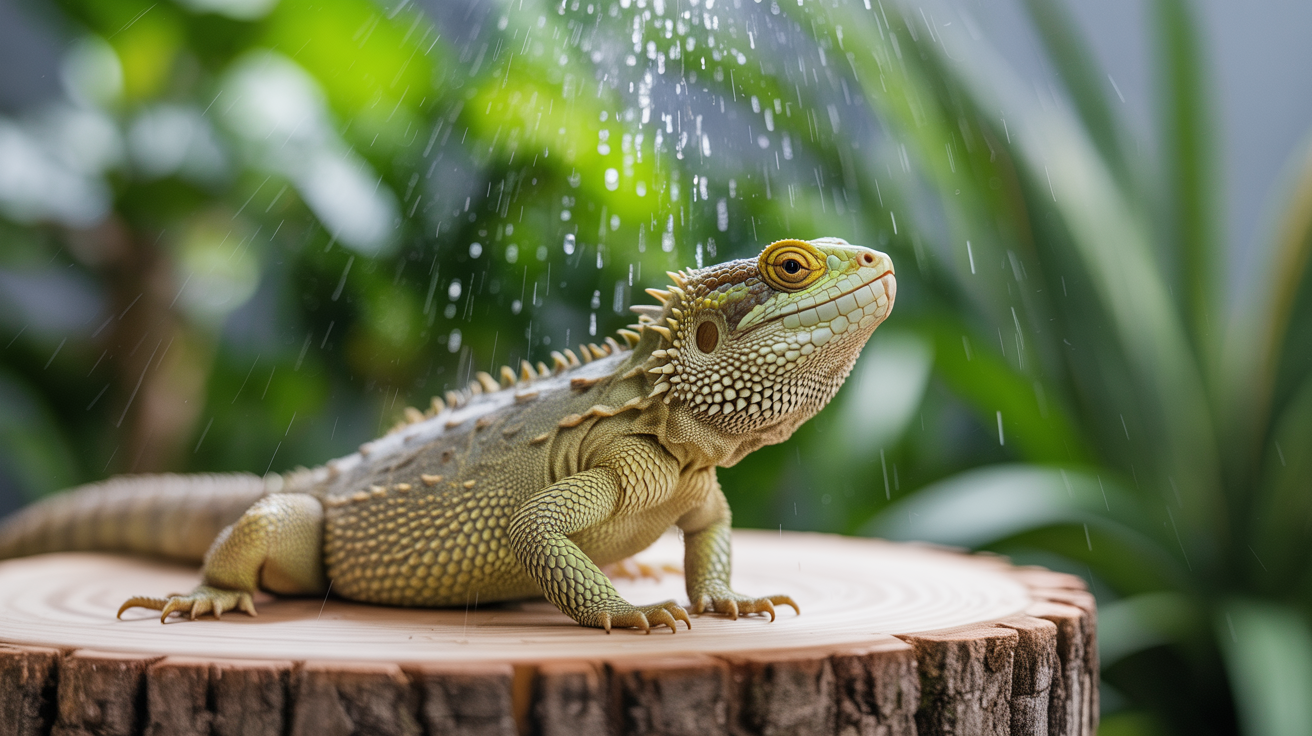
Hydration is one of the most common areas where beginners fall short, and the consequences show up slowly enough that many keepers don't connect the dots until a problem is already advanced. A reptile can appear active and eating for weeks while quietly losing body condition to chronic dehydration.
Getting water right matters as much as getting temperature right. The methods that work depend heavily on the species you keep, so this guide covers the three main approaches, how to recognize when something is wrong, and which option fits which animal.
The Three Main Hydration Methods
Standing water bowls are the default for most beginner-friendly species. A bowl sitting in the cool side of the enclosure lets the animal drink when it wants to, and also raises local humidity slightly through passive evaporation. This works well for bearded dragons, blue-tongued skinks, corn snakes, and many other commonly kept reptiles.
Bowl size matters. It should be large enough for the animal to soak in if it chooses, but shallow enough that a small or juvenile animal cannot drown. A good rule: the water should reach no higher than the animal's chin when it stands at the bowl's center. Heavy ceramic bowls are harder to tip than plastic and don't harbor bacteria as quickly.
Change the water daily. Reptiles often defecate in their bowls, and standing water in a warm enclosure grows bacteria fast. Scrub the bowl with a dilute reptile-safe disinfectant a few times per week and rinse thoroughly before refilling.
Scheduled soaks are the primary hydration method for species that rarely drink from standing water, or for animals recovering from dehydration. Tortoises, Russian tortoises especially, rely on periodic soaking. Many chameleons and day geckos rarely drink from still water at all and need other methods. Soaks are also useful during shed cycles for most species, since hydrated skin releases more cleanly. See our guide on helping a reptile with a stuck or bad shed for more on that.
For a soak, use a shallow container with warm water, around 85 to 90 degrees F (29 to 32 degrees C) for most tropical and desert species. The water should reach the animal's mid-body. Let it soak for 15 to 20 minutes, then dry it off before returning it to the enclosure. Don't leave an animal unattended in a soak if it's small, weak, or very young.
Enclosure misting is essential for species from humid environments. Chameleons, crested geckos, tree frogs, and many tropical snakes drink water droplets off leaves and glass rather than from a bowl. Misting the enclosure once or twice a day (morning and evening) replicates the dew cycle these animals evolved with. It also helps maintain the enclosure's ambient humidity.
For high-humidity species, a handheld pressure sprayer works fine to start. Automated misters are worth considering once you've confirmed the species needs consistent high humidity. Over-misting a desert species is just as harmful as under-misting a tropical one, so match the method to the animal. Our guide on how to control humidity in a reptile enclosure goes deeper on setting up the right environment.
Recognizing Dehydration Early
Dehydration in reptiles doesn't announce itself the way it might in a dog or a cat. By the time a reptile is visibly lethargic or refusing food, it's often been dehydrated for a while. Knowing what to look for early makes a real difference.
Skin tenting or wrinkling is the most reliable early sign. Gently pinch a small fold of skin along the animal's side or neck and release it. Healthy skin snaps back immediately. Dehydrated skin stays tented or returns slowly. This test is most useful on lizards and tortoises; snake skin behaves somewhat differently.
Sunken eyes are a moderate-to-severe sign. Healthy eyes should be round and full. Eyes that appear recessed into the socket suggest the animal has lost significant fluid. This needs prompt attention.
Tacky or sticky mucus membranes are another reliable indicator. Look inside the animal's mouth when it opens it naturally. Healthy mucus membranes are moist and slightly glossy. Tacky, stringy, or dry-looking tissue inside the mouth points to dehydration, and in some cases to respiratory infection as well, so an exotics vet visit is warranted if you see this.
Infrequent or dark urates can also signal a problem. In snakes and lizards, the white chalky portion of a dropping is the urate. Bright white urates are normal. Yellow or orange urates often indicate dehydration or kidney stress.
If you suspect dehydration, offer a lukewarm soak right away and reassess over 48 hours. If the animal doesn't improve, see an exotics vet. Chronic dehydration can damage kidneys, which won't show obvious symptoms until the damage is significant.
Water Quality and Practical Setup Tips
Tap water is fine for most reptiles in most municipalities, but there are situations where it's worth being more careful. Heavily chlorinated water can irritate mucus membranes in sensitive amphibians. If you keep frogs, salamanders, or other amphibians, use dechlorinated water for any water they contact directly. You can dechlorinate tap water by letting it sit uncovered for 24 hours or by using a reptile-safe water conditioner.
For reptiles, bottled spring water or filtered tap water is a reasonable precaution if your local water quality is questionable, but it's not mandatory. If your tap water tests safe for drinking, it's generally fine for reptiles.
Bowl placement matters more than most beginners expect. Put the water bowl on the cool side of the enclosure. A bowl sitting under a basking lamp will reach unsafe temperatures quickly, and warm standing water becomes a bacterial problem fast. Some species, particularly ball pythons and other burrowers, prefer their bowl partially tucked under a hide.
Juveniles and hatchlings need special attention. Young animals dehydrate faster than adults, their bowls must be shallow enough to be safe, and they may need more frequent soaks than adults of the same species.
Hydration and feeding are connected. See our beginner's feeding guide for notes on how gut-loading feeder insects and offering appropriately sized prey also contributes to overall moisture intake, particularly for insectivores that get a portion of their hydration from food.
How Humidity and Hydration Work Together
Ambient humidity affects how quickly a reptile loses moisture through its skin and respiratory tract. A desert lizard kept at the right low humidity (30 to 40 percent) loses moisture at a manageable rate and drinks to compensate. The same animal kept in a wet, poorly ventilated enclosure is at risk for respiratory infections and scale rot. A tropical species kept too dry loses moisture faster than drinking can replace.
This means hydration and humidity are not separate problems. If your enclosure's humidity is consistently off, your animal's hydration will follow. Substrate choice, ventilation, enclosure material, and misting frequency all interact to set the ambient humidity, and that humidity determines how hard your animal has to work to stay hydrated.
For species with specific humidity requirements, a digital hygrometer is essential, not optional. Guessing isn't close enough.
Frequently Asked Questions
How often should I change my reptile's water bowl? Daily, at minimum. Reptiles frequently defecate in their water, and standing water in a warm enclosure accumulates bacteria quickly. If the bowl is visibly soiled, change it immediately.
Can I soak my reptile too often? For most lizards, soaking two or three times per week is appropriate during a shed, and once per week or less during normal times. Daily soaking can macerate the skin of desert species. For aquatic turtles and semi-aquatic species, continuous access to water is normal. Match the frequency to the species.
My reptile never seems to drink from its bowl. Is that normal? Some species, particularly chameleons and certain geckos, don't recognize still water as a drinking source. They need moving droplets or misted surfaces. Others drink at night when you're not watching. If the bowl is consistently clean and you're not seeing weight loss or dehydration signs, your animal is likely finding water another way.
What temperature should soak water be? Aim for 85 to 90 degrees F (29 to 32 degrees C) for most tropical and desert species. Water that's too cold can cause stress or digestive slowdown. Test it with a thermometer before placing the animal in the container.
Should I see an exotics vet if I think my reptile is dehydrated? Yes, if soaks and bowl access don't resolve the signs within 48 hours, or if you see sunken eyes, tacky oral mucus membranes, or the animal is lethargic and not eating. Chronic dehydration can lead to kidney damage that isn't reversible. An exotics vet can assess the animal and, if needed, provide subcutaneous fluids, which rehydrate significantly faster than soaking.