Heating & Lighting
How Often Should You Really Replace Your Reptile's UVB Bulb?
UVB output fades long before a bulb goes dark. Here's why calendar-based replacement matters more than a visual check, and how to verify output.
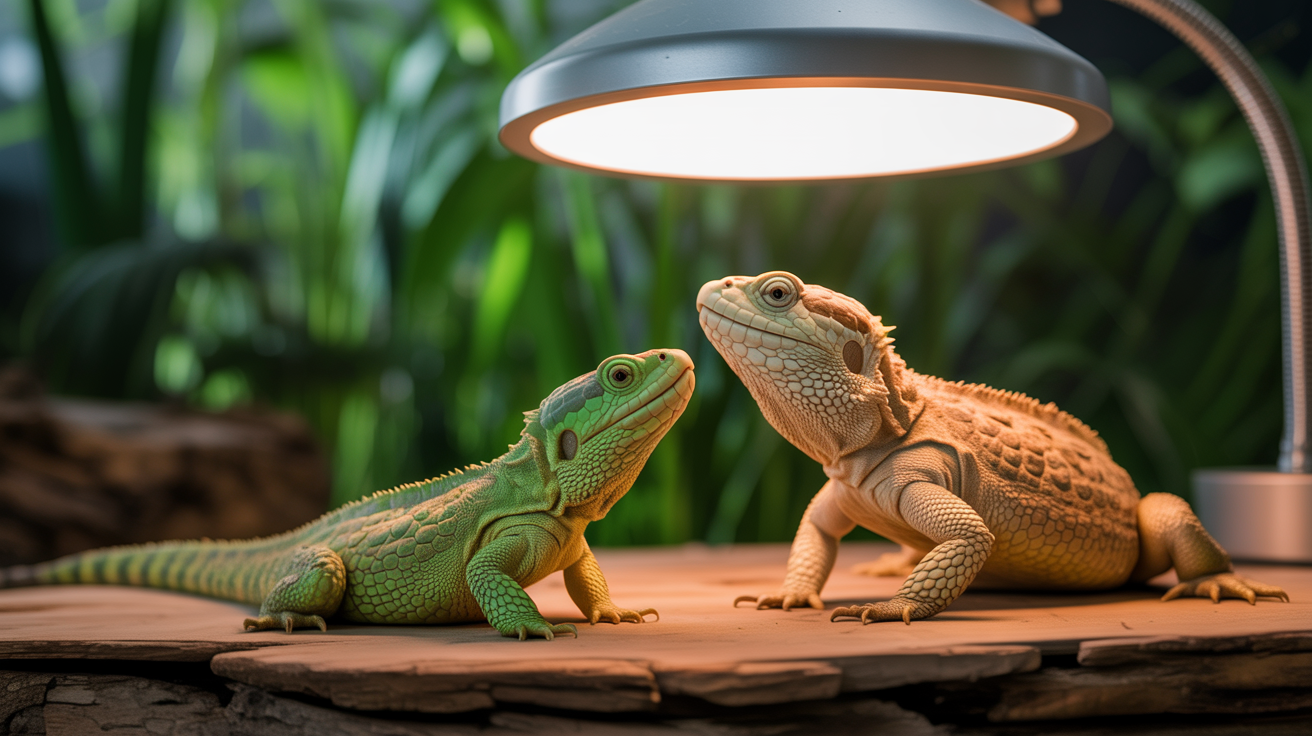
If you've ever looked up at your reptile's light fixture, seen it glowing away like normal, and figured the bulb must still be doing its job, you're not alone. It's a completely reasonable assumption, and it's also the single most common reason keepers end up with a UVB setup that looks fine but isn't providing anything close to what the animal needs. The honest answer to how often to replace a UVB bulb is: on a calendar, not by eye. Visible light and UVB output are two different things produced by the same bulb, and they don't fade at the same rate.
This matters because UVB is how your reptile makes vitamin D3, which it needs to actually use the calcium in its diet. A bulb that looks healthy but has quietly stopped producing usable UVB can leave an animal calcium-deficient for months before anyone notices. If you haven't already, what UVB is and why your reptile needs it covers why this one component carries so much weight.
Why "it still lights up" is the wrong test
A UVB bulb is built around a phosphor coating that converts the energy passing through the tube into UVB radiation. That phosphor coating degrades with use. The visible light diode or filament portion of the bulb keeps working long after the phosphor has worn down, which is exactly why a dim-looking bulb isn't a reliable warning sign and a bright-looking one isn't a reliable green light either.
Think of it less like a bulb burning out and more like a battery slowly losing capacity. The bulb doesn't switch off when the UVB is gone. It just keeps running on a fraction of what it used to put out, with no visual cue to tell you that's happening. You catch this by knowing roughly how old the bulb is, not by glancing at the tank.
Fluorescent versus mercury vapor bulbs
Linear fluorescent tubes (the T5 and T8 style bulbs most beginner setups use) and compact fluorescent UVB bulbs both degrade this way, and they're the ones most often left in service too long because they're cheap enough to forget about. Mercury vapor bulbs, which combine heat and UVB in one, tend to hold output a bit longer but aren't immune to the same decline. If you're unsure which type you're running or what the printed percentage means, how to read a UVB bulb: T5, T8, and percentages explained covers that in more detail.
So how long does a UVB bulb actually last?
A lot of care sheets give a single tidy number, and that number is usually wrong for at least some of the bulbs someone reading it owns. Lifespan varies by bulb type, brand, and even by how many hours a day the bulb runs, so treating one figure as gospel for every product on the market isn't accurate. What is consistent across brands is the pattern: fluorescent UVB bulbs commonly need replacement well before a year of continuous use, and many manufacturers post their own recommended replacement windows on the packaging or their website for exactly this reason.
The right move is to check the manufacturer's guidance for the specific bulb you bought rather than relying on a number you saw in a forum post or an old care sheet. Brands reformulate their phosphor coatings over time, and a replacement interval that was accurate for a bulb made several years ago may not match what the same brand sells today. Write the replacement date down when you install a new bulb, because "sometime last spring" is not a schedule you can act on.
A rough way to think about it
Without a manufacturer date in front of you, a reasonable rule of thumb is to plan on replacing fluorescent UVB tubes on a schedule measured in months, not years, and to treat any bulb you can't confidently date as due for replacement now. A fresh bulb costs far less than months of inadequate UVB.
Verifying output with a UV Index meter
If you want to stop guessing entirely, a UV Index meter (often called a Solarmeter in the hobby) is the tool that actually tells you what's coming out of the bulb right now, rather than what the box promised when it was new. You hold the meter at the animal's basking distance from the bulb and it gives you a UV Index reading you can compare against the target range for your species.
This is genuinely worth the cost if you're keeping more than one or two animals, because it turns "I think the bulb is probably fine" into an actual measurement. It also catches problems a calendar can't, like a bulb degrading faster than expected, a reflector reducing effective output, or old, dusty screen mesh between the bulb and the animal cutting UVB transmission more than people realize.
A meter reading also tells you when a bulb is fine to run a bit longer despite a looming calendar reminder, or when a bulb that "should" still be good is already underperforming and needs an early swap. It's the closest thing to ground truth you can get without lab equipment.
Building a replacement schedule you'll actually keep
Knowing the theory doesn't help much if the bulb quietly ages out and nobody notices. A few habits make this easy to stay on top of:
- Write the install date on a piece of tape stuck to the fixture or the bulb itself. Don't rely on memory.
- Set a recurring reminder on your phone for the manufacturer's recommended replacement interval, and set it a few weeks early rather than exactly on the deadline.
- Keep the box or a photo of the packaging so you have the model number and stated UVB percentage on hand when it's time to reorder.
- If you keep multiple reptiles, stagger a shared shopping list rather than trying to remember each enclosure's bulb age separately.
- Check bulbs with a UV Index meter periodically if you have one, especially as a bulb approaches its expected replacement date.
None of this is complicated. It just requires treating the bulb like a consumable with an expiration date instead of a fixture you install once and forget about.
What skipping replacement actually risks
The reason this whole topic gets so much attention in the reptile-keeping world is metabolic bone disease. Without adequate UVB, a reptile can't synthesize enough vitamin D3 to absorb dietary calcium properly, and the body starts pulling calcium from the bones to keep other systems running. Early on this can be nearly invisible. Later it shows up as soft or bowed limbs, a rubbery or swollen jaw, tremors, or a reptile that seems reluctant to move or climb the way it used to.
An aging, low-output bulb is one of the slower, quieter ways this can develop, precisely because it still looks like it's working. For the full picture of the signs, how it develops, and prevention through diet and supplementation, see what is metabolic bone disease and how to prevent it. UVB replacement is one part of prevention, and an easy one to neglect since nothing about a dim bulb announces itself.
If you ever suspect an animal is showing signs consistent with metabolic bone disease, that's a reason to get it seen by a reptile-experienced veterinarian rather than trying to diagnose and correct it yourself at home.
Frequently Asked Questions
Does a UVB bulb stop working the moment it goes past its replacement date?
No, and that's part of what makes this confusing. Output declines gradually rather than cutting off at a fixed point, so a bulb a bit past its recommended date isn't necessarily producing zero UVB. The manufacturer's window is a guideline for when output has typically dropped below a useful level, not a hard switch that flips off on a specific day.
Can I tell a bulb is failing by how bright it looks?
Not reliably. The visible brightness comes from a different part of the bulb's output than the UVB does, and the two don't decline in lockstep. A bulb can look completely normal to the eye while its UVB output has already dropped well below what your reptile needs.
Is a UV Index meter worth buying for just one reptile?
It's a judgment call. If you're keeping a single animal and you're diligent about calendar-based replacement using manufacturer guidance, you can manage reasonably well without one. If you want certainty rather than an estimate, or you keep several reptiles across different fixtures, a meter pays for itself quickly in peace of mind and in bulbs you don't replace early out of caution.
Do mercury vapor bulbs need replacing on the same schedule as fluorescent tubes?
They tend to hold usable output a bit longer than fluorescent UVB bulbs, but "longer" doesn't mean indefinitely. They still degrade over time and still need periodic replacement. Check the specific manufacturer's guidance for the bulb you're using rather than assuming a mercury vapor bulb is a lifetime fixture.
What should I do if I have no idea how old my current bulb is?
Treat it as due for replacement. An unknown-age bulb, especially one you inherited with a secondhand enclosure or simply lost track of, is exactly the scenario the calendar approach is meant to prevent. Replace it, write the new install date down somewhere visible, and start the schedule fresh from there.