Heating & Lighting
What Is UVB and Why Does Your Reptile Need It?
UVB drives vitamin D3 in reptiles and prevents metabolic bone disease. Which species need it, bulb types, distances, and replacement schedules.
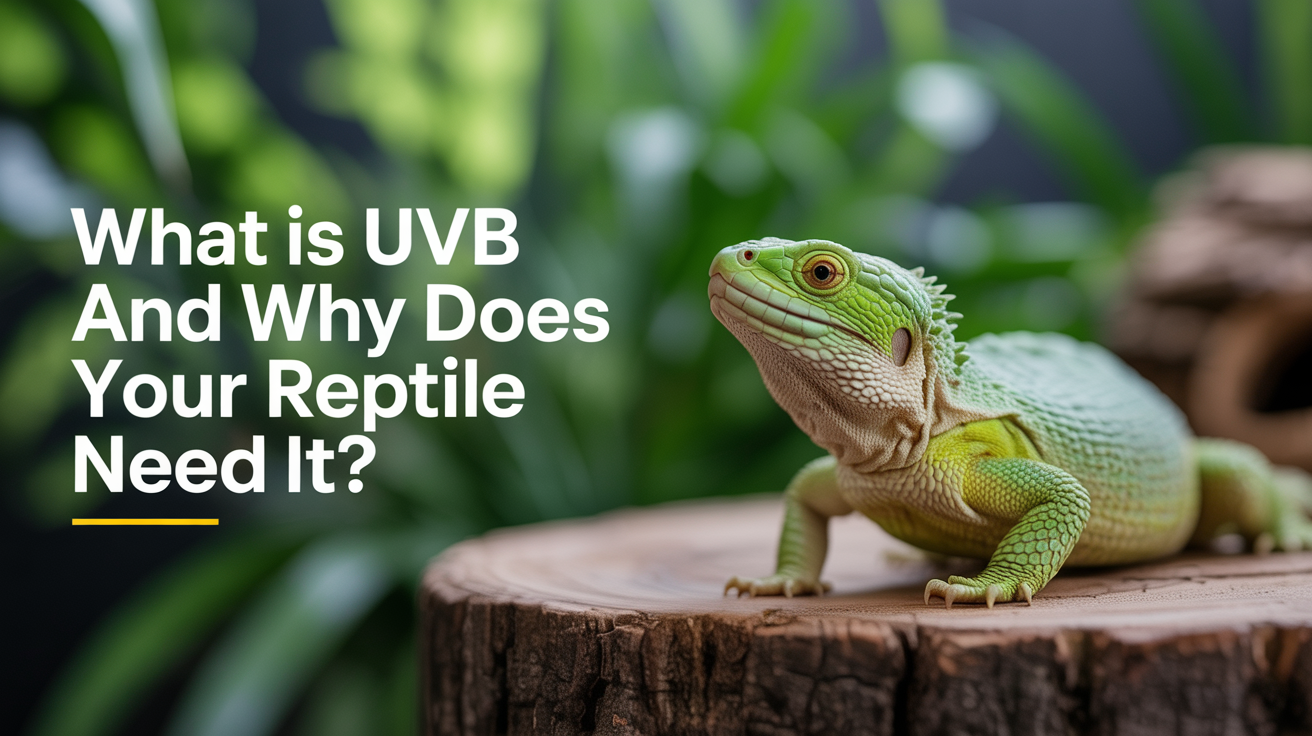
UVB is a band of ultraviolet light (wavelengths roughly 280–315 nm) that your reptile's skin uses to manufacture vitamin D3. Without enough D3, the body cannot absorb calcium properly, and soft, deformed bones follow. That condition, metabolic bone disease (MBD), is one of the most common and entirely preventable causes of suffering in captive reptiles. Getting the lighting right from day one is non-negotiable.
The UVB → Vitamin D3 → Calcium Chain
Sunlight contains UV radiation across several bands. UVA affects behaviour and color perception; UVB is the one that matters for bone health. When UVB photons hit a reptile's skin, they convert a cholesterol precursor into pre-vitamin D3, which the liver and kidneys then convert into active D3 (calcitriol). Calcitriol signals the gut to absorb calcium from food.
Break any link in that chain and calcium absorption collapses. The body compensates by leaching calcium from bones, causing the classic signs of MBD: tremors, soft or rubbery limbs, jaw deformities, and spinal kinks. In severe cases, MBD is fatal. Supplementing calcium powder alone is not enough if D3 is absent, the calcium simply passes through.
Can't I Just Use D3 Supplements?
Oral D3 supplements are a valid partial backup, especially for nocturnal species that receive little UVB in the wild. The problem is that the body self-regulates D3 production from UVB (it stops making more once it has enough), while over-supplementing with oral D3 can cause hypercalcemia, toxic calcium buildup. For diurnal (day-active) basking species, a properly set-up UVB lamp is far safer and more natural than relying on supplements alone.
Which Reptiles Need UVB?
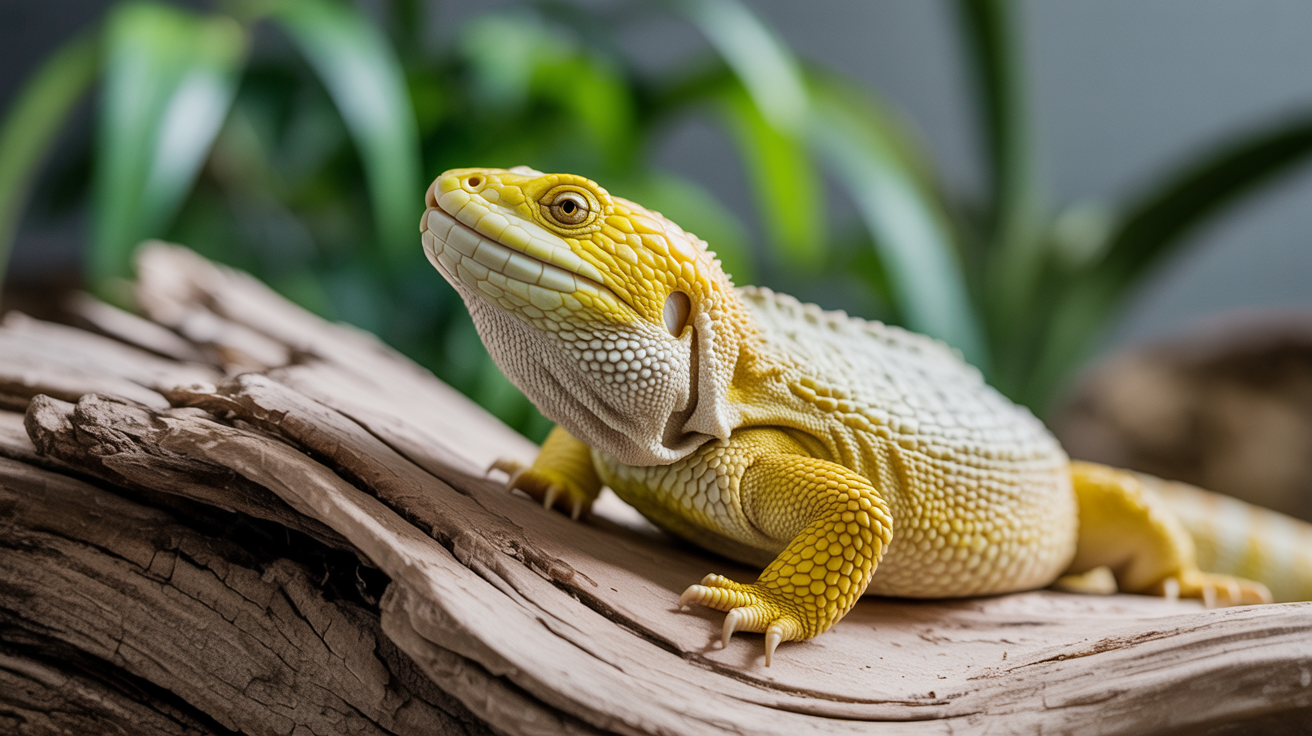
The short answer: most diurnal, basking species benefit significantly from UVB, and many require it to thrive. Nocturnal species (most ball pythons, corn snakes, leopard geckos) can be maintained with lower UVB levels or supplementation, though even they benefit from low-output ambient UVB. "Doesn't need UVB" usually means "has a lower requirement," not "zero is fine."
| Species Type | UVB Need | Recommended Bulb Strength |
|---|---|---|
| Desert tortoise, bearded dragon, uromastyx | High | 10–12% T5 HO tube |
| Chameleon, water dragon, tegu | High | 6–10% T5 HO tube |
| Blue-tongue skink, crested gecko | Moderate | 5–6% T5 HO or T8 |
| Corn snake, ball python | Low | 2–5% or supplement-only |
| Leopard gecko | Low–Moderate | 2–5% (increasingly recommended) |
| African bullfrog, tree frog | Low | 2–5% or supplement-only |
These are starting points. Always cross-reference with species-specific care guides and consult an exotic animal vet if you're unsure.
T5 vs T8: Choosing the Right Bulb
UVB lamps come in two main fluorescent tube formats: T5 High Output (HO) and T8. The number refers to tube diameter in eighths of an inch (T5 = 5/8", T8 = 1"). Size affects output intensity, not just power draw.
T5 HO Tubes
T5 HO tubes are brighter and produce usable UVB at greater distances, typically 30–50 cm (12–20 inches) for a 10% tube, further for high-desert setups. They're the standard choice for large enclosures and high-demand species like bearded dragons and tortoises. A T5 HO bulb fits a correspondingly labeled fixture; confirm compatibility before buying.
T8 Tubes
T8 tubes are dimmer and cheaper. Their effective UVB zone is shallower, usually 15–25 cm (6–10 inches) below the lamp. They work adequately in smaller enclosures or for species with moderate UVB needs, provided the basking spot is within that distance. Beyond that range, UVB output drops to near-zero regardless of what the bulb packaging says.
Compact/Spiral Bulbs
Compact coil UVB bulbs (the screw-in type) have a much narrower cone of useful UVB output and have been associated with eye and skin problems in some reptiles when mounted too close. Most experienced keepers now prefer linear tubes.
Mounting Distance, Placement, and Glass Blocking
Getting the bulb is only half the job. Where you mount it determines how much UVB actually reaches your animal.
Distance to Basking Surface
Match the mounting distance to the bulb's rated output zone. A 10% T5 HO tube can deliver adequate UVB at 30–45 cm; a T8 5% tube may only reach 20–25 cm. The Ferguson Zone system categorises reptiles by natural UV exposure and is a practical reference for matching bulb strength to mounting height, Zone 1 (UV-shy species like some geckos) through Zone 4 (high-desert baskers like uromastyx).
Always measure from the bulb itself, not the mesh lid, to the basking surface.
The Glass and Plastic Problem
Glass and standard acrylic block virtually all UVB. If your bulb sits outside a glass terrarium or under a glass cover, assume the UVB reaching your animal is negligible. Screen/mesh lids transmit roughly 50–70% of UVB depending on mesh density. Mount UVB lamps inside the enclosure or directly above a mesh top for meaningful output.
Covering the Basking Zone
The UVB lamp should run the length of the basking zone, not the whole enclosure. This lets the animal self-regulate by moving in and out of the UV gradient, mirroring how it would behave in the wild.
For a full picture of how UVB fits alongside heat sources, see our guide to reptile heating and lighting explained for beginners and how to set the right basking temperature.
Replacing Bulbs on Schedule
This is where many keepers get caught out. Fluorescent UVB tubes continue to emit visible light long after their UV output has faded. A bulb that looks perfectly fine at 18 months may be delivering almost no UVB. You have no way to tell without a UV meter (a worthwhile investment) or a strict replacement schedule.
Replacement Timeline
- T5 HO tubes: Replace every 12 months, or sooner if a UV meter confirms degraded output.
- T8 tubes: Replace every 6 months. They degrade faster.
- Compact bulbs: Replace every 6 months (if you use them at all).
Mark the installation date on the end of the bulb with a permanent marker, it takes two seconds and removes all guesswork.
Photoperiod
Run UVB lamps on a timer to match a naturalistic photoperiod. Most temperate and tropical species do well on 10–14 hours of light depending on season, dropping to 8–10 hours in winter. Consistent on/off cycles support appetite, breeding behaviour, and sleep patterns. See also: do you need a thermostat for reptile heating for how lighting timers integrate with temperature control.
Frequently Asked Questions
Do nocturnal reptiles like leopard geckos need UVB?
Traditionally, keepers kept leopard geckos without UVB, relying on oral D3 supplements. Recent research and welfare guidance increasingly recommend low-output UVB (2–5% T5 or T8) even for nocturnals. It appears to improve activity, feeding response, and long-term bone density. It's not mandatory in the same way it is for a bearded dragon, but it's a reasonable addition to any leo setup.
Can I use a regular LED or incandescent bulb for UVB?
No. Standard LED, incandescent, and compact fluorescent (non-UVB) bulbs produce no meaningful UV output. "Full spectrum" is a marketing term and does not mean UVB. Only lamps specifically rated and tested for UVB output will work. If the packaging doesn't state a UVB percentage, assume it emits none.
How do I know if my reptile has MBD?
Early signs include lethargy, reduced appetite, and a reluctance to climb or bear weight. As the condition progresses: soft or swollen limbs, tremors, a rubbery or "bendy" lower jaw, and in severe cases, spinal curvature or seizures. If you suspect MBD, see an exotic animal vet immediately, blood work and X-rays can confirm it, and early treatment (corrective lighting, calcium, and sometimes injectable D3) can reverse mild cases. Do not attempt to self-treat advanced MBD.
My bulb is only a few months old. Can the UVB really be fading already?
Yes. UV output degrades from the moment a fluorescent tube is first switched on. The drop is steepest in the first few hundred hours, then levels off, but it never stops. T8 tubes can lose 30–50% of their initial UVB output within six months of daily use. If your animal is basking correctly but showing signs of D3 deficiency, an aging bulb is one of the first things to check.
Should I position the UVB lamp over the hot or cool side?
Over the basking (hot) side. In nature, the sun is directly overhead at the warmest part of the day, that's when reptiles bask and absorb UVB simultaneously. Placing the UVB source over the basking spot replicates this and encourages your animal to use it. A completely separate UVB zone on the cool side is less natural and often underused.