Species Guides
White's Tree Frog Care: A Complete Beginner's Guide
Learn how to keep White's tree frogs (dumpy tree frogs) healthy as a beginner. Covers enclosure setup, temperature, humidity, feeding, and common health issues.
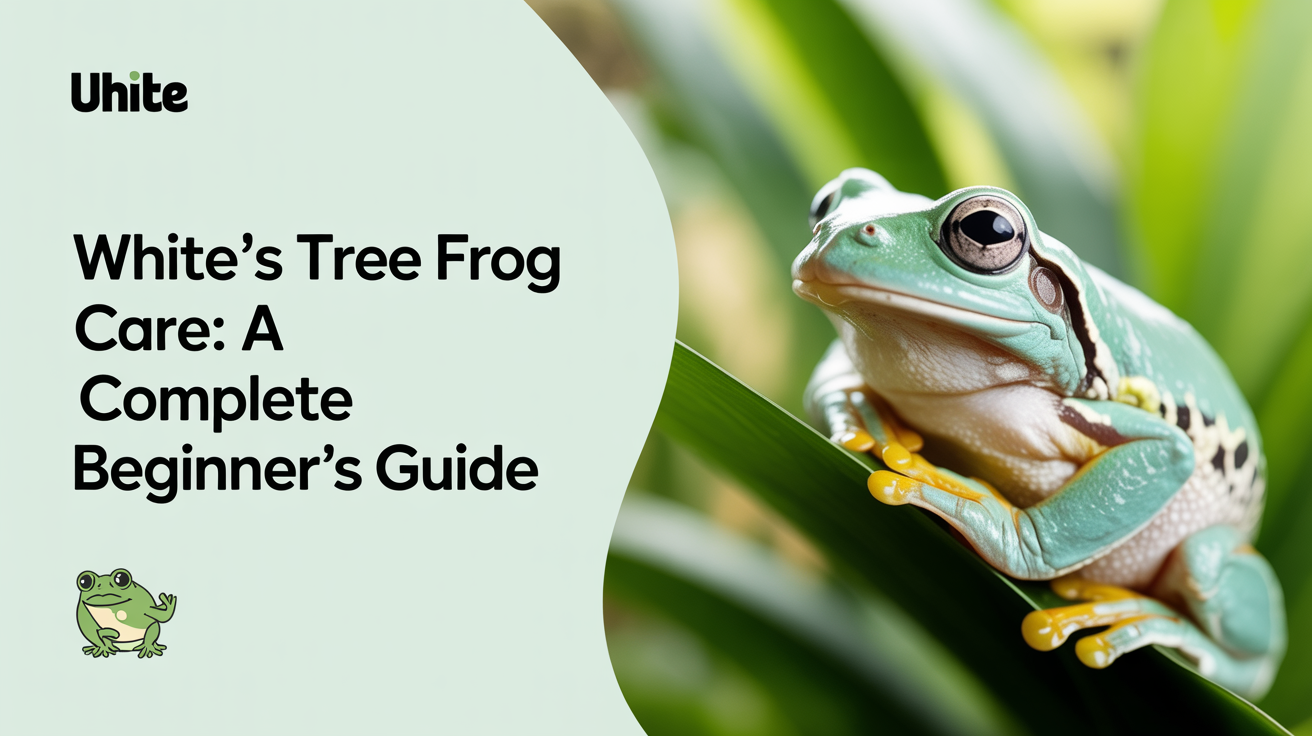
White's tree frogs (Litoria caerulea) have a reputation among amphibian keepers as one of the most forgiving pet frogs you can own. They tolerate a wider range of temperatures than most tree frogs, they hold up to short handling sessions without panicking, and they eat reliably enough that most beginners have no trouble getting them established. If you have been curious about keeping a frog but worried about getting the care wrong, this species is a reasonable starting point.
Before we get into specifics, it helps to understand that amphibians are categorically different from the reptiles we cover elsewhere on this site. Frogs absorb water and some substances through their moist skin, which means heat and husbandry details that work for lizards or snakes do not apply here. For a broader comparison, see Reptiles vs. Amphibians: What's the Difference for Pet Keepers.
At a Glance
- A single adult needs at least an 18 x 18 x 24 inch enclosure; two frogs need roughly 24 x 18 x 36 inches.
- No basking lamp is required. Target 75 to 85°F by day, a drop to 65 to 72°F at night, with 50 to 70% daytime humidity rising to 70 to 80% overnight.
- Feed appropriately sized crickets and dubia roaches every two to three days for adults, daily for juveniles under six months.
- Obesity is the most common preventable health problem in this species; a visibly round frog with fat rolls above the eyes is overweight.
- Amphibian skin absorbs chemicals directly, so tap water needs conditioning and hands need thorough rinsing before any handling.
- Lifespan runs 15 to 20 years with proper care, longer than most people expect from a pet frog.
Enclosure Setup
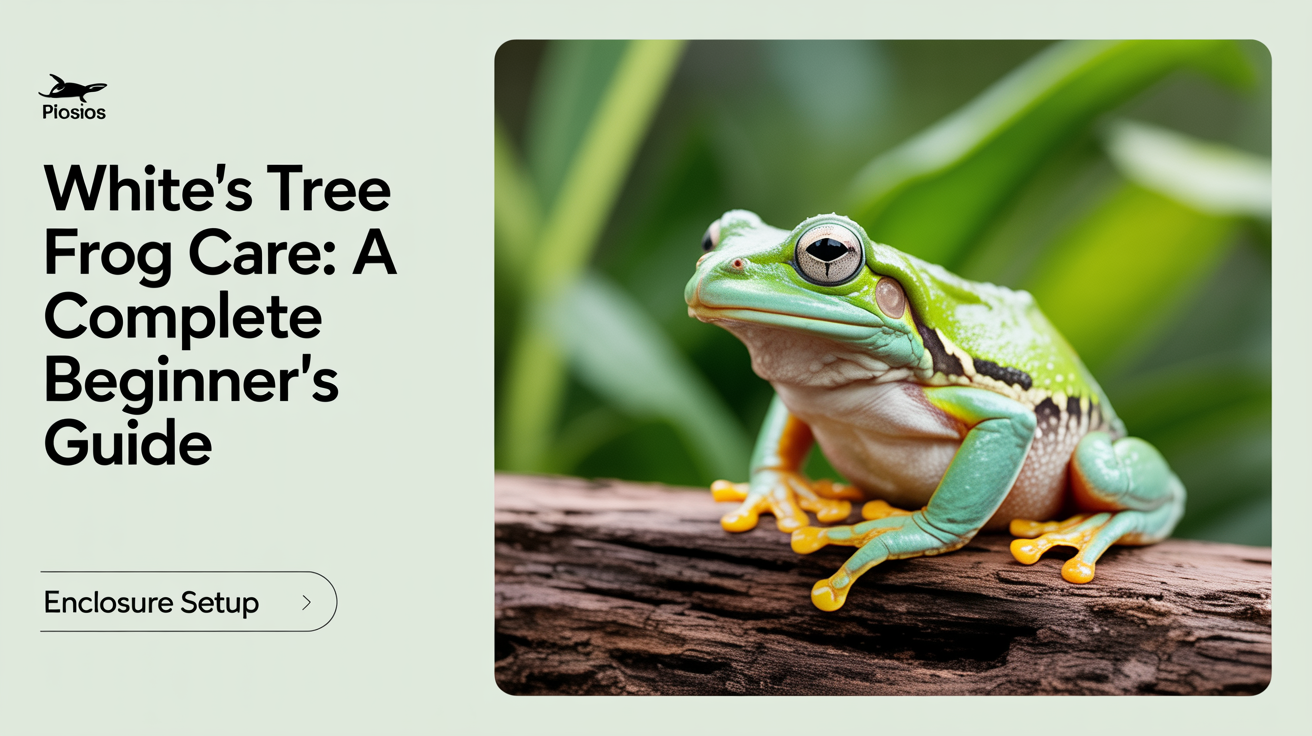
White's tree frogs need vertical space more than floor area because they climb. A single adult does fine in an enclosure that is at least 18 inches wide by 18 inches deep by 24 inches tall. Two frogs want something larger, around 24 x 18 x 36 inches. Screen-top or mesh-sided terrariums allow airflow, which matters for preventing stagnant, overly wet conditions. All-glass tanks with screen lids work as well.
Line the floor with a substrate that holds some moisture without staying sodden. Coconut fiber, organic topsoil mixed with sand, or a commercial tropical bioactive mix all work. Depth of two to three inches lets the substrate buffer humidity without becoming a puddle. Avoid gravel, bare glass, or paper towel as long-term substrates; they do not hold humidity and make frogs feel exposed.
Add branches or cork tubes at several heights so the frogs can choose where to sit. Live or artificial tropical plants give cover and help maintain humidity. White's tree frogs spend a lot of time perched motionless; a cluttered enclosure with multiple resting spots keeps them calmer than a sparse one.
A shallow water dish on the floor should always have fresh, dechlorinated water. Frogs absorb water by sitting in it, so the dish matters more than misting alone. Change the water every day or two. Chlorine and chloramine from tap water can irritate skin over time, so run tap water through a reptile water conditioner or use bottled spring water. This is not an optional step the way it might be for a reptile: an amphibian's skin is directly permeable, so whatever is in the water has a much more direct path into the animal's system.
For tips on managing moisture levels in a vivarium, How to Control Humidity in a Reptile Enclosure covers the core techniques, most of which apply to amphibian setups too.
Temperature and Humidity
White's tree frogs come from Australia and parts of southern Asia. Their preferred range sits between 75 and 85 degrees Fahrenheit (24 to 29 degrees Celsius) during the day. At night they tolerate a drop down to around 65 to 72 F (18 to 22 C) without trouble. Sustained temperatures above 90 F (32 C) stress them out quickly.
Unlike bearded dragons or blue-tongued skinks, these frogs do not need a basking lamp. A low-wattage overhead bulb or a T8 fluorescent fixture can provide gentle ambient warmth if your room runs cool, but you are not trying to create a hot spot. Radiant heat mats placed on the side of the enclosure (never the bottom, which can trap heat under a resting frog) are another option for supplemental warmth in cooler rooms.
Low-level UVB lighting is optional but may benefit long-term health. A 5.0 or 2.0 compact UVB bulb on a 10 to 12 hour cycle gives frogs the option to use it without forcing strong UV exposure. It is not the non-negotiable that it is for many lizards, but there is no harm in providing it.
Target 50 to 70 percent relative humidity during the day, with a spike to 70 to 80 percent at night after a light misting. Mist one side of the enclosure with dechlorinated water in the evening; this lets the other side stay a bit drier so there is always somewhere for the frogs to go if conditions feel too wet. A digital hygrometer gives you accurate readings; dial or sticker gauges are not reliable enough for amphibians.
Feeding White's Tree Frogs
Adult White's tree frogs eat every two to three days. Juveniles under six months old can be fed daily or every other day since they are still growing. The staple prey items are appropriately sized crickets and dubia roaches. "Appropriately sized" means roughly the width of the frog's head at most; oversized prey stresses them and can cause regurgitation.
Variety matters. Rotating between crickets and roaches gives a better nutritional profile than sticking to one feeder insect. Hornworms make a good addition a few times a month; they are high in moisture and calcium relative to most feeders. Waxworms and butterworms are fine as occasional treats but are high in fat and should not be a regular part of the diet. White's tree frogs are prone to obesity, which shortens their lifespan.
Dust every other feeding with a calcium supplement that contains vitamin D3. Every fourth or fifth feeding, swap the calcium for a multivitamin powder. Gut-loading your feeder insects for 24 to 48 hours before offering them is the single most effective way to improve the nutritional value of the meal. Feed your crickets or roaches leafy greens, sweet potato, and a commercial gut-load before they go into the frog enclosure.
Avoid feeding anything caught from outside. Wild insects may carry pesticides or parasites that do not affect the insects themselves but can harm your frog.
Feeding and Supplement Schedule at a Glance
| Feeding | Frequency | Notes |
|---|---|---|
| Crickets or dubia roaches (staple) | Every 2–3 days (adults), daily (juveniles) | Size to the width of the frog's head |
| Hornworms | 2–4 times a month | High moisture and calcium; good variety item |
| Waxworms / butterworms | Occasional treat only | High fat; overuse drives obesity |
| Calcium + D3 dust | Every other feeding | Dust insects immediately before offering |
| Multivitamin dust | Every 4th–5th feeding | Rotate in place of calcium dust |
| Gut-loading feeders | 24–48 hours before feeding | Leafy greens, sweet potato, commercial gut-load |
Common Health Issues
Obesity. This is the most common preventable problem in captive White's tree frogs. Healthy adults have a slight waist; a frog that looks uniformly round or has fat rolls above its eyes is overweight. Reduce feeding frequency and cut out fatty treats. Obesity stresses the organs and shortens lifespan, and unlike a lean frog that simply looks less plump, a genuinely obese frog can struggle to climb and may develop fatty deposits that press on internal organs over time.
Toxic out syndrome. This is an emergency condition where a frog absorbs something harmful through its skin, usually from substrate that has been sprayed with cleaning products, tap water with high chloramine levels, or residue from human hand lotion. Signs include twitching, loss of coordination, and the frog assuming a stiff, splayed posture. Move the frog immediately to a clean container with shallow dechlorinated water and contact an exotics vet. Recovery is possible when caught early, which is why avoiding any cleaning products, scented soaps, or lotion residue anywhere near the enclosure matters more with amphibians than with almost any reptile.
Chytridiomycosis. A fungal disease caused by the fungus Batrachochytrium dendrobatidis that affects the skin. According to the Merck Veterinary Manual, signs include loss of appetite, weight loss, excessive shedding, and pale or grayish skin, and the disease is capable of decimating entire amphibian populations rapidly in the wild, which is part of why quarantine and hygiene matter even in a captive collection of one. It requires antifungal treatment from a vet, and any new frog should be quarantined for 60 to 90 days before housing it with established animals.
Red leg. Reddish discoloration spreading from the thighs or belly, often accompanied by lethargy and swelling. The Merck Veterinary Manual attributes red-leg syndrome to a range of bacteria, commonly including Aeromonas and Pseudomonas species, and notes it can develop secondary to almost any underlying infection or stressor. Improve husbandry immediately, including cleaner substrate and fresh water, and get the frog to an exotics vet for antibiotic treatment if the coloration does not resolve.
Always source an exotics vet before you bring a frog home so you know who to call. A general practice vet with no reptile or amphibian experience is not a substitute for a herp-experienced clinician. The Association of Reptilian and Amphibian Veterinarians (ARAV) maintains a directory that covers amphibian-experienced vets as well as reptile specialists, worth checking before you need it rather than during an emergency.
If you are also interested in another beginner-friendly frog species, see Pacman Frog Care: A Beginner's Guide for a comparison with a ground-dwelling alternative.
Frequently Asked Questions
Can I handle my White's tree frog?
Yes, in moderation. Short handling sessions of five to ten minutes a few times a week are tolerable for most adults. Always wash and rinse your hands thoroughly before handling to remove lotion, soap residue, or sweat, which can irritate their skin. Wash your hands after handling as well. If the frog tries to jump repeatedly or appears very agitated, return it to the enclosure.
How long do White's tree frogs live?
With proper care they commonly reach 15 to 20 years in captivity. This is a long commitment, longer than most people expect from a frog.
Do they need a companion?
They can be kept singly or in small same-sex groups. Males may call loudly if kept together, which some keepers find disruptive at night. Do not house different frog species together; mixing species creates parasite and disease risks.
What size feeder insects should I use?
A general rule is nothing wider than the space between the frog's eyes. For a typical adult, that means large crickets or adult dubia roaches are fine. For juveniles, small or medium crickets and small dubia are safer.
Do I need a UVB light?
UVB is optional for White's tree frogs rather than required. That said, providing low-level UVB on a natural day/night cycle costs little and may support vitamin D3 synthesis independent of supplementation. If you are keeping a single bulb setup, a 5.0 compact UVB is a reasonable choice.
How can I tell my frog is dehydrated versus just resting?
A well-hydrated White's tree frog has smooth, slightly moist-looking skin and a plump body. A dehydrated frog looks noticeably thinner, with skin that appears wrinkled or tacky rather than smooth, and it may sit in its water dish far more than usual. If you see these signs, check that the water dish is clean and full, humidity is in range, and misting is happening on schedule; a frog that still looks dehydrated after a day of corrected husbandry should see an exotics vet.