Species Guides
Pacman Frog Care: A Beginner's Guide
Learn pacman frog care from enclosure setup to feeding schedules. Covers humidity, temperatures in °F/°C, diet, health signs, and beginner tips.
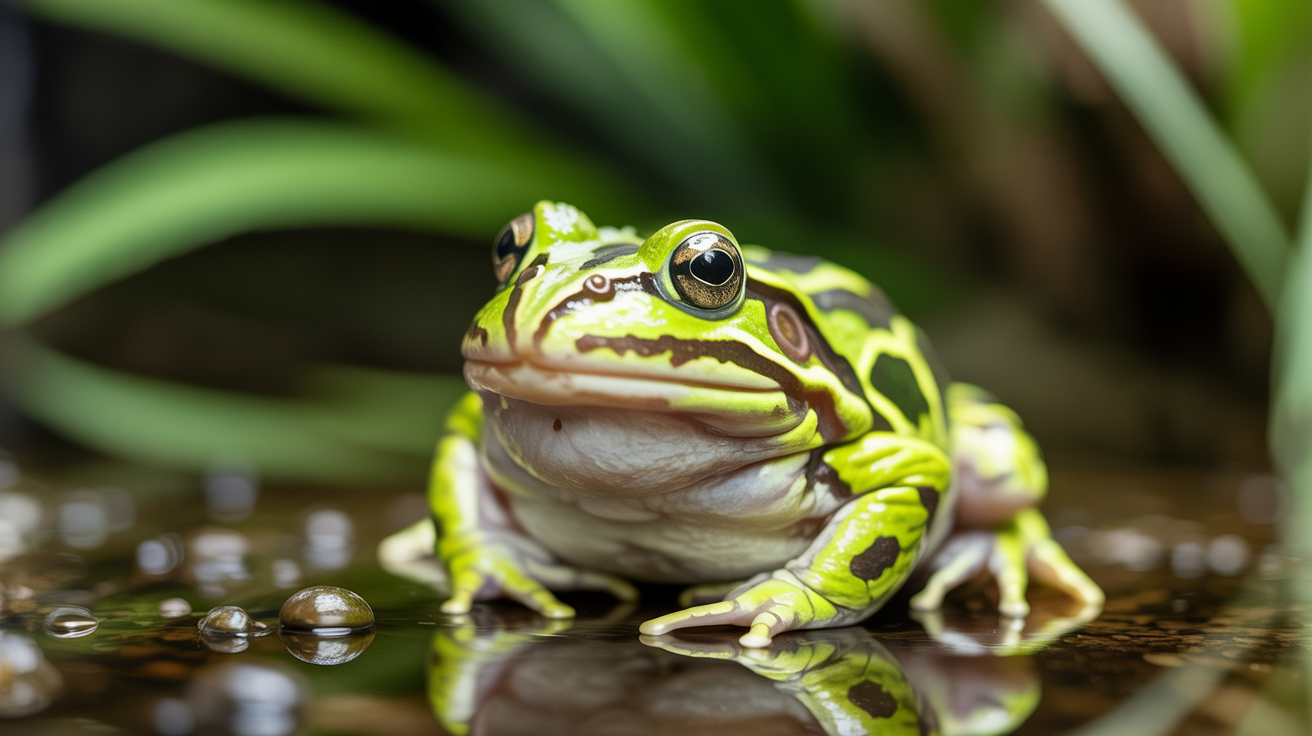
Pacman frogs (Ceratophrys ornata), also called Argentine horned frogs, are stocky, round-bodied amphibians named for the circular shape they take when mouth is open wide. They are native to the grasslands and forests of Argentina, Uruguay, and southern Brazil, where they spend most of their time buried in leaf litter waiting for prey to wander past. That sedentary lifestyle makes them one of the more manageable amphibians for a first-time keeper, but their care still requires close attention to humidity, temperature, and diet to keep them healthy.
Unlike tree frogs or aquatic species, pacman frogs are terrestrial ambush hunters that rarely move unless food is nearby. They are not social animals and must be housed alone, since they will attempt to eat anything that fits in their mouth, including other frogs. If you want to compare what pacman care involves relative to other beginner-friendly species, the bearded dragon care guide and the leopard gecko guide offer useful contrast for those deciding between reptiles and amphibians.
Enclosure and Substrate Setup
Adult female pacman frogs reach 4 to 5 inches in diameter; males stay smaller at around 2.5 to 3 inches. A 20-gallon terrarium is the standard recommendation for a single adult, giving enough floor space for the frog to settle in one corner and still have room to thermoregulate by moving slightly toward or away from the heat source. A 10-gallon enclosure works for juveniles but will feel cramped within a year as the animal grows.
The substrate is one of the most important elements of a pacman setup. These frogs burrow, and without 3 to 4 inches of loose, moist substrate, they become stressed and may stop eating. Coconut fiber (sold as coco coir or eco earth) is the most reliable choice: it holds moisture well, does not compact as quickly as plain soil, and is easy to spot-clean. Sphagnum moss mixed into the top layer helps retain surface humidity. Avoid gravel, sand, or bark chips; pacman frogs are prone to accidental substrate ingestion during feeding strikes, and loose particulate material can cause impaction.
A shallow water dish large enough for the frog to sit in but no more than an inch deep is useful. Pacman frogs absorb water through their skin and will use a shallow soak to rehydrate, but they are poor swimmers and can drown in water deep enough to cover their body. Change the water daily.
Temperature and Humidity
Pacman frogs are comfortable at ambient temperatures between 75 and 82°F (24 to 28°C). They do not require a dedicated basking spot in the way that a bearded dragon or a ball python does, but they do benefit from a slight temperature gradient so they can self-regulate. A low-wattage under-tank heater (UTH) placed under one side of the enclosure achieves this without drying out the substrate the way overhead heat lamps can.
At night, temperatures can drop to 68 to 72°F (20 to 22°C) without harm. If your room temperature drops below 65°F (18°C) regularly, a small ceramic heat emitter on a thermostat will maintain safe overnight temps without disrupting the light cycle.
Humidity should stay between 60 and 80 percent. A digital hygrometer placed at substrate level gives an accurate reading. Misting one side of the enclosure once or twice daily, plus a damp substrate, typically keeps humidity in range. If the enclosure dries out noticeably between mistings, consider a glass or screen-top enclosure with partial ventilation rather than fully open screen, which accelerates evaporation.
Pacman frogs do not require UVB lighting the way many reptiles do, since they are primarily nocturnal and derive vitamin D3 from supplemented food rather than sun exposure. A low-level UVB tube (T5 HO 2.0 or similar) placed on a 10 to 12-hour cycle does no harm and may support natural behavior rhythms. If you skip UVB entirely, consistent calcium-and-D3 dusting on feeders becomes even more important.
Feeding Your Pacman Frog
Pacman frogs are opportunistic predators with a strong feeding response. They are not selective; they will strike at anything that moves within range. Juveniles (under 3 inches) should be fed every one to two days, while adults do well with two to three meals per week. Overfeeding leads to obesity, which shortens lifespan and causes organ stress.
Good feeder options for all life stages include:
- Crickets (appropriately sized, no wider than the space between the frog's eyes)
- Dubia roaches (high protein, low chitin compared to crickets)
- Earthworms (excellent hydration source and nutritionally balanced)
- Hornworms (high moisture, useful for rehydration or picky feeders)
Adult frogs can occasionally be offered a pinky mouse as a supplemental meal, but rodents are high in fat and should not be a staple. Feeder fish are often cited as an option but can carry parasites and thiaminase, so most experienced keepers avoid them.
Dust feeders with a calcium-plus-D3 supplement at every feeding for juveniles, and at every other feeding for adults. A multivitamin supplement every two to four weeks rounds out any nutritional gaps. Gut-loaded insects (fed nutritious foods 24 to 48 hours before offering them) provide better baseline nutrition than unfed feeders.
Handling and Behavior
Pacman frogs are not handling animals in the way a bearded dragon might be. They are easily stressed by frequent contact, and when threatened they inflate their body, open their mouths wide, and can deliver a surprisingly firm bite. Adults have teeth (called odontoid processes) that can break skin. Handling should be kept to a minimum and done only when necessary, such as during enclosure cleaning or a health check.
When you do need to pick one up, wet your hands first. Dry hands can damage the permeable skin that frogs rely on for gas exchange and hydration. Wash your hands thoroughly before and after any contact, since amphibians can carry Salmonella and other bacteria.
A pacman frog that sits at the surface of its substrate during the day and ignores food for a day or two is not necessarily sick. These animals are inactive by nature and have variable appetites. A frog that has been undisturbed for a few weeks in stable conditions will typically settle into a consistent feeding routine.
Health and Common Problems
The most common health issues in pacman frogs are rooted in husbandry rather than infection. Temperature or humidity that runs too low slows metabolism and suppresses the immune system. Substrate that stays too dry may trigger "estivation," a dormancy state where the frog seals itself in a hardened cocoon of shed skin. A frog in estivation needs to be gently rehydrated by placing it in a shallow container of dechlorinated water at room temperature for 30 to 60 minutes.
Watch for these warning signs:
- Red leg (redness or red streaking on the underside or legs): a bacterial infection, often linked to poor water quality or a dirty enclosure. An exotics vet visit is needed.
- Bloating or swelling that is not linked to a recent large meal: can indicate infection, organ dysfunction, or edema.
- Cloudy or sunken eyes outside of a shed cycle: may suggest dehydration or underlying illness.
- Persistent refusal to eat for more than two to three weeks when temperatures and humidity are correct: worth a vet checkup.
Pacman frogs are long-lived for a small amphibian, reaching 10 to 15 years with good care. Finding an exotics vet experienced with amphibians before any health problems arise is a sensible step, since not all small-animal vets are familiar with frog physiology.
Frequently Asked Questions
How big of a tank does a pacman frog need? A 20-gallon terrarium is the recommended minimum for an adult. Floor space matters more than height for this species since they are terrestrial and do not climb. Juveniles can be kept in a 10-gallon until they outgrow it, usually within six to twelve months.
Do pacman frogs need UVB lighting? They do not require it to survive, but a low-output UVB tube (2.0 rating) on a 10 to 12-hour cycle supports a natural day-night rhythm and may assist with D3 synthesis. If you skip UVB, use a calcium supplement with D3 at every feeding for juveniles and every other feeding for adults.
Why has my pacman frog stopped eating? The most common causes are incorrect temperature (below 72°F / 22°C slows appetite), low humidity, stress from too much handling or enclosure disturbance, or the onset of a seasonal slowdown. If temperatures and humidity are correct and the frog has been left undisturbed for two weeks with no improvement, consult an exotics vet to rule out impaction or infection.
Can pacman frogs live together? No. They are solitary predators and will eat any animal that fits in their mouth, including other pacman frogs of similar size. House one frog per enclosure.
How often should I mist a pacman frog enclosure? Once or twice daily is typical for most household environments. The goal is substrate that feels damp about an inch below the surface, not soggy or bone dry. A hygrometer reading of 60 to 80 percent at substrate level is the target.