Species Guides
Bearded Dragon Care: A Complete Beginner's Guide
Everything first-time keepers need to know about bearded dragon care: enclosure setup, heating, UVB, diet, handling, and health.
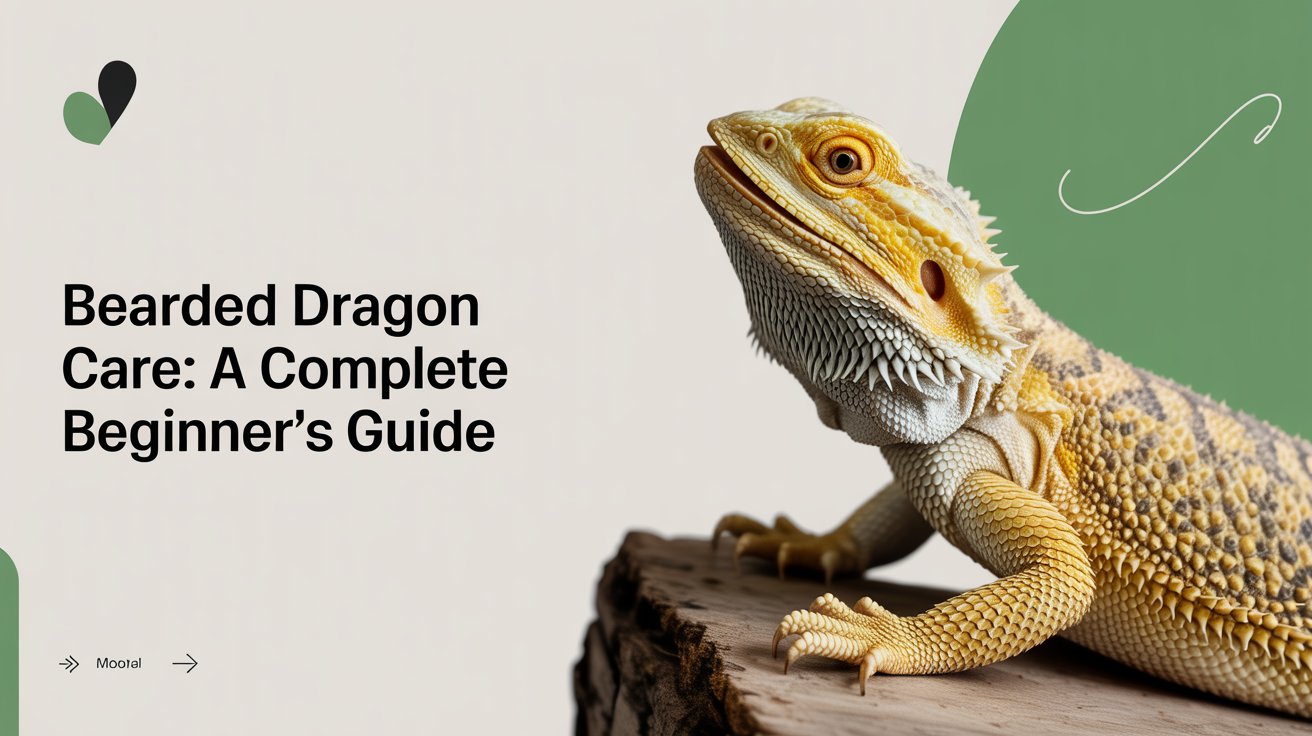
Bearded dragons are among the best reptiles a first-time keeper can choose. They're alert, tolerant of gentle handling, and active during the day, so you actually get to watch them live their lives. The tradeoff is that they need specific heat, strong UVB light, and a varied diet to thrive. Get those three things right and a beardie will reward you with 10 to 15 years of company.
At a Glance
- Basking spot: 95–110°F (35–43°C), measured at the surface with an infrared temperature gun, not the air.
- UVB is non-negotiable: a full-length T5 HO 10.0 tube, replaced every 12 months regardless of whether it still glows.
- Diet flips with age: juveniles eat mostly insects (70–80%); adults eat mostly leafy greens (about 70%).
- Adults need real space: minimum 4 × 2 × 2 ft (120-gallon equivalent), not the 20- or 40-gallon tank they started in.
- Metabolic bone disease is the top preventable killer: caused by inadequate UVB or calcium, and it is entirely avoidable with correct setup.
- Lifespan is 10 to 15 years, occasionally longer, so treat the purchase as a decade-long commitment, not an impulse buy.
Quick-Care Summary
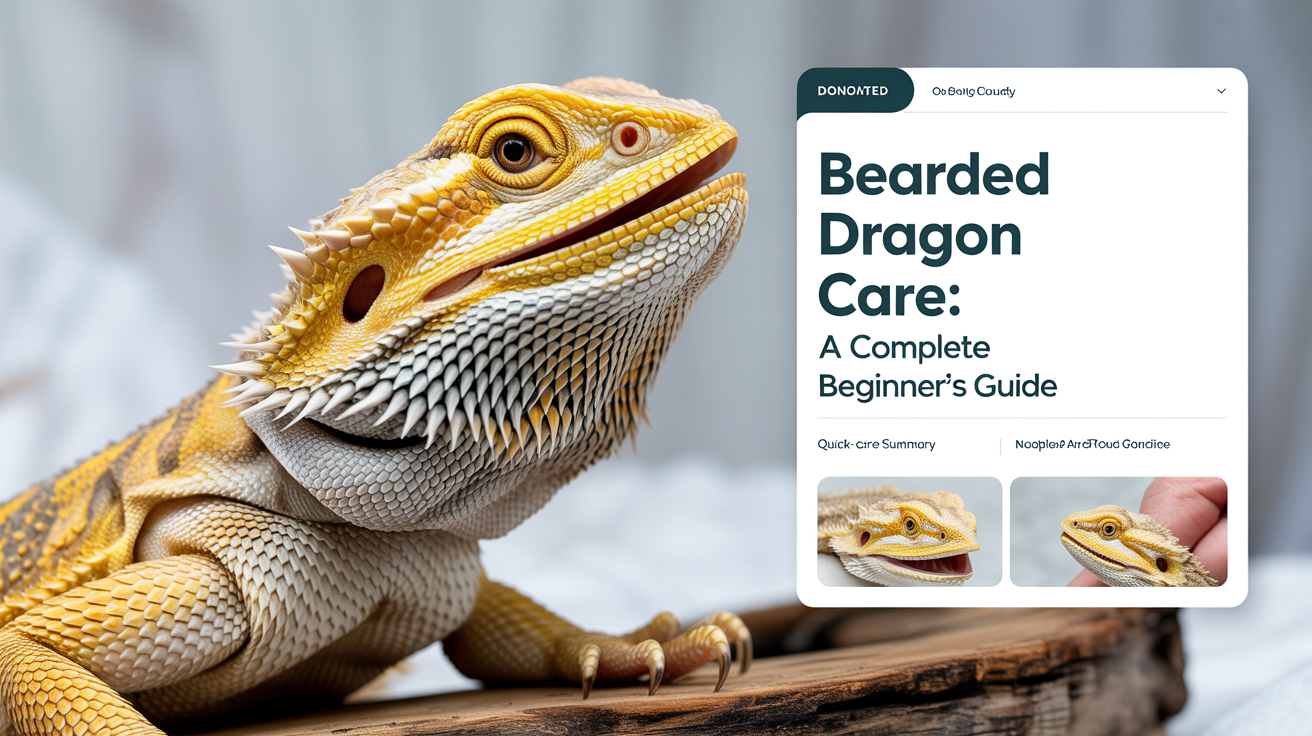
| Parameter | Recommended Range |
|---|---|
| Adult enclosure | 4 × 2 × 2 ft (120-gallon equivalent) minimum |
| Basking spot | 95–110 °F (35–43 °C) |
| Cool side | 80–85 °F (27–29 °C) |
| Nighttime low | No lower than 65 °F (18 °C) |
| UVB tube | T5 HO 10.0 or 12%, full-length |
| Humidity | 30–40% |
| Adult diet split | ~70% leafy greens, ~30% insects |
| Juvenile diet split | ~70% insects, ~30% greens |
| Lifespan | 10–15 years |
Species Overview
Bearded dragons (Pogona vitticeps) come from the semi-arid scrublands of central Australia. Adults typically measure 16 to 24 inches (40–60 cm) from snout to tail tip and weigh 400 to 600 grams. Their "beard" is a gular pouch that darkens when they feel threatened or excited. Most captive-bred adults are remarkably calm and will sit on your arm without protest.
Because they're diurnal (active by day) and from open, sunny habitat, they're physiologically dependent on both high heat and intense UV radiation. Replicating that environment indoors is the core challenge of bearded dragon care.
If you're comparing options, see our guides for leopard gecko care and crested gecko care for less heat-intensive alternatives.
Enclosure Setup
Size Requirements
A hatchling can start in a 20-gallon tank, but you'll need to upgrade quickly. Juveniles (under 10 inches) do fine in 40 gallons. Adults need a minimum of 4 × 2 × 2 ft of floor space, equivalent to a 120-gallon enclosure. Bigger is almost always better. A cramped enclosure leads to stress, difficulty establishing a proper thermal gradient, and reduced activity.
Glass tanks work well and retain heat adequately in most homes. PVC enclosures hold heat more efficiently in cooler rooms and are lighter to move.
Substrate
For adults, tile, paper towels, or bioactive soil mixes are the safest choices. Loose particle substrates (play sand, calcium sand) carry a risk of impaction if accidentally ingested during feeding. Juveniles especially should be kept on non-particle surfaces until they're reliably feeding on appropriately sized prey.
Decor and Hides
Provide at least one flat basking rock or ledge directly under the heat lamp and one cool-side hide. Beardies love to climb, so cork rounds, low branches, and textured backgrounds give them environmental enrichment. Keep clutter minimal enough that you can still observe the whole enclosure easily.
Age-Based Care Milestones
Bearded dragon husbandry changes substantially as they grow. This table pulls together the enclosure, diet, and feeding schedule shifts across life stages so you can see the whole arc at once.
| Age | Enclosure | Feeding Frequency | Diet Split (insects : greens) |
|---|---|---|---|
| Hatchling (0–2 months) | 20-gallon tank | 3 times daily | 80 : 20 |
| Juvenile (2–6 months) | 20–40 gallon | 2–3 times daily | 70 : 30 |
| Sub-adult (6–12 months) | 40 gallon minimum | 1–2 times daily | 50 : 50 |
| Adult (12+ months) | 4×2×2 ft (120 gal) | Daily greens, insects 3–5x/week | 30 : 70 |
Heating and Lighting
This is the most critical part of bearded dragon setup. Get it wrong and no other care variable compensates.
Basking Heat
The basking surface (not the air) should reach 95–110 °F (35–43 °C). Measure with an infrared temperature gun, not the adhesive strip thermometers sold in pet stores. The cool side of the enclosure should sit around 80–85 °F (27–29 °C). Nighttime temps can drop to 65–70 °F (18–21 °C); below 65 °F (18 °C) and you need a low-watt ceramic heat emitter to maintain the floor.
Halogen flood bulbs or incandescent basking bulbs are the standard heat source. Wattage varies by distance and ambient room temp, so buy a dimmer and dial in the surface temp rather than guessing by wattage alone. Never use hot rocks or heat mats as a primary heat source.
UVB Lighting
Bearded dragons need strong UVB. A T5 HO (high-output) fluorescent tube rated at 10.0 or 12% UV output is the practical standard. The tube should run at least two-thirds the length of the enclosure and sit at the manufacturer's recommended distance from the basking surface (typically 10–14 inches for T5 HO lamps without a mesh lid in between). Mesh blocks 30–50% of UVB output, so account for that if your lid is mesh. The Merck Veterinary Manual notes that UVB in the 290–300 nm range is especially important for diurnal lizards and species that bask heavily, which is precisely the bearded dragon's ecological niche.
Replace UVB bulbs every 12 months. The UV output degrades before the visible light does, so a bulb that still glows brightly may no longer be producing adequate UVB.
Keep lights on a 12–14 hour cycle in summer and 10–12 hours in winter, mimicking seasonal variation. A timer removes the guesswork.
Diet and Nutrition
Bearded dragons are true omnivores, and the ratio of insects to plants shifts significantly as they age.
Feeding by Age
Juveniles (0–6 months): Offer insects at every meal, roughly 70–80% of total food intake. Feed 2–3 times daily. Offer appropriately sized feeders; the insect should be no wider than the space between the dragon's eyes.
Sub-adults (6–12 months): Transition toward a more even split, roughly 50/50 insects to plant matter. Feed once or twice daily.
Adults (12+ months): Flip the ratio. Leafy greens and vegetables should make up about 70% of the diet; insects provide the remaining 30%. Most adults do well on a daily salad with insects offered 3–5 times a week.
Best Feeder Insects
Dubia roaches are the gold standard feeder. They're nutritious, low-odor, and can't climb smooth surfaces. Crickets work well but are noisier and harder to contain. Black soldier fly larvae (BSFL/Reptiworms) are high in calcium and make a useful supplemental feeder. Avoid feeding fireflies (toxic), wild-caught insects (pesticide risk), or mealworms as a staple (high fat, low nutrients). As a rule of thumb, a 400-gram adult eating insects three times a week does well on 6 to 10 dubia roaches per feeding, adjust up or down based on body condition rather than a fixed count.
Greens and Vegetables
Collard greens, mustard greens, dandelion greens, and turnip greens are excellent staples. Butternut squash, acorn squash, and bell pepper are good additions. Avoid spinach, kale (in large amounts), and iceberg lettuce. Fruit can be offered occasionally as a treat.
Supplementation
Dust feeder insects with a calcium (no D3) supplement at most feedings. Use a calcium-with-D3 supplement 1–2 times per week and a multivitamin once a week. Don't over-supplement vitamin D3 if your UVB setup is strong; the dragon will synthesize it naturally and excess D3 supplementation causes toxicity over time.
Always provide fresh water in a shallow dish. Beardies don't always drink from still water, so a light mist on the greens or a brief soak twice a week ensures adequate hydration.
Handling and Temperament
Bearded dragons are generally docile once they're settled, but every individual has a personality. Hatchlings and juveniles are often skittish. Give a new dragon at least two weeks to acclimate to its enclosure before handling regularly.
Building Trust
Start with short sessions of 5–10 minutes. Support the full body (they dislike having their feet unsupported) and keep movements slow and calm. Most dragons will start to voluntarily walk onto an offered hand within a few weeks.
Signs of stress include a darkened beard, gaping mouth, flattened body, and frantic movement. If you see these, return the animal to its enclosure and try again another day.
Enrichment
Beardies can be let out in a safe, supervised indoor space for additional exercise. Clear the area of gaps, cords, and other pets first, bearded dragons are curious and will investigate anything reachable. Some owners set up small outdoor "play pens" for supervised sun exposure on warm days (above 75 °F/24 °C), which provides real sunlight UVB as a supplement, unfiltered sunlight through window glass does not count, since glass blocks UVB wavelengths almost entirely. Never leave them unattended outside, even briefly; a beardie can dig under a poorly secured pen wall faster than most owners expect.
Common Health Issues
Find a reptile-experienced vet before you ever need one. Not all veterinarians are trained in exotic animal medicine, and an avian/exotic vet will give you far better guidance for a sick beardie than a general practice. The Association of Reptile and Amphibian Veterinarians maintains a searchable directory if your regular vet doesn't see reptiles.
Metabolic Bone Disease (MBD)
The most common preventable disease in captive beardies. According to the Merck Veterinary Manual, it's caused by a poor calcium-to-phosphorus ratio, vitamin D3 deficiency, or inadequate UVB and thermal husbandry. Symptoms include soft or deformed limbs, tremors, and lethargy. Correct UVB setup and proper calcium supplementation prevents it entirely, and it's one of the few reptile diseases where the fix is almost purely a husbandry correction rather than a medical one.
Atadenovirus (ADV)
A viral disease sometimes called "wasting disease" or "stargazing disease." Infected dragons may display neurological symptoms (head tilted back, uncoordinated movement) or fail to thrive. There's no cure; it's managed supportively. Purchase from reputable breeders who test their animals.
Impaction
Occurs when a dragon ingests substrate or oversized prey that blocks the digestive tract. Prevention: avoid loose particle substrate for juveniles, feed appropriately sized insects, and keep the enclosure warm enough for proper digestion. A beardie that stops passing stool for more than a week, strains visibly, or shows a firm swelling along the belly needs a vet visit rather than a wait-and-see approach.
Respiratory Infections
Wheezing, mucus around the mouth or nostrils, and open-mouth breathing are signs. Usually caused by husbandry issues (too cold, too humid) or bacterial infection. A vet visit is required.
Parasites
Wild-caught animals and some feeder insects carry parasites. Annual fecal exams with an exotic vet are good practice.
For a comparison of health challenges across beginner species, the ball python care guide covers a very different set of common issues.
Frequently Asked Questions
How big of a tank does a bearded dragon need?
Adults need at minimum a 4 × 2 × 2 ft enclosure (roughly 120 gallons of volume). A 40-gallon tank is acceptable for juveniles under about 10 inches but should be considered temporary. Bigger enclosures allow a better thermal gradient and give the dragon room to thermoregulate naturally.
Do bearded dragons need UVB light?
Yes, this is non-negotiable. Without adequate UVB, beardies cannot synthesize vitamin D3, which is essential for calcium absorption. The result is metabolic bone disease. Use a T5 HO 10.0 or 12% tube, replace it annually, and position it correctly based on the manufacturer's distance guidelines.
How often should I feed my bearded dragon?
Juveniles need food 2–3 times daily. Sub-adults once or twice daily. Adults can be offered fresh greens every day, with insects 3–5 times per week. Always remove uneaten insects after 15–20 minutes; loose crickets can harass a resting beardie.
Can bearded dragons eat fruit?
Yes, in moderation. Fruit is high in sugar and should be an occasional treat rather than a dietary staple. Berries, mango, and papaya are suitable options. Citrus should be avoided.
How long do bearded dragons live?
With proper care, 10 to 15 years is realistic. Some well-cared-for individuals reach 15+ years. This is a long-term commitment, so factor that into your decision before purchasing.
Why does my bearded dragon's beard turn black?
A darkened or black beard is usually a stress or arousal signal rather than a sign of illness by itself. It shows up during shedding, when a dragon feels cornered, in the presence of another dragon it perceives as a rival, or sometimes simply during a mood shift. Occasional darkening is normal. If the beard stays black for days alongside lethargy, appetite loss, or labored breathing, treat it as a symptom worth a vet call rather than a personality quirk.