Species Guides
Leopard Gecko Care: A Complete Beginner's Guide
Everything a first-time keeper needs to set up and care for a leopard gecko, from enclosure size and heating to diet, shedding, and health.
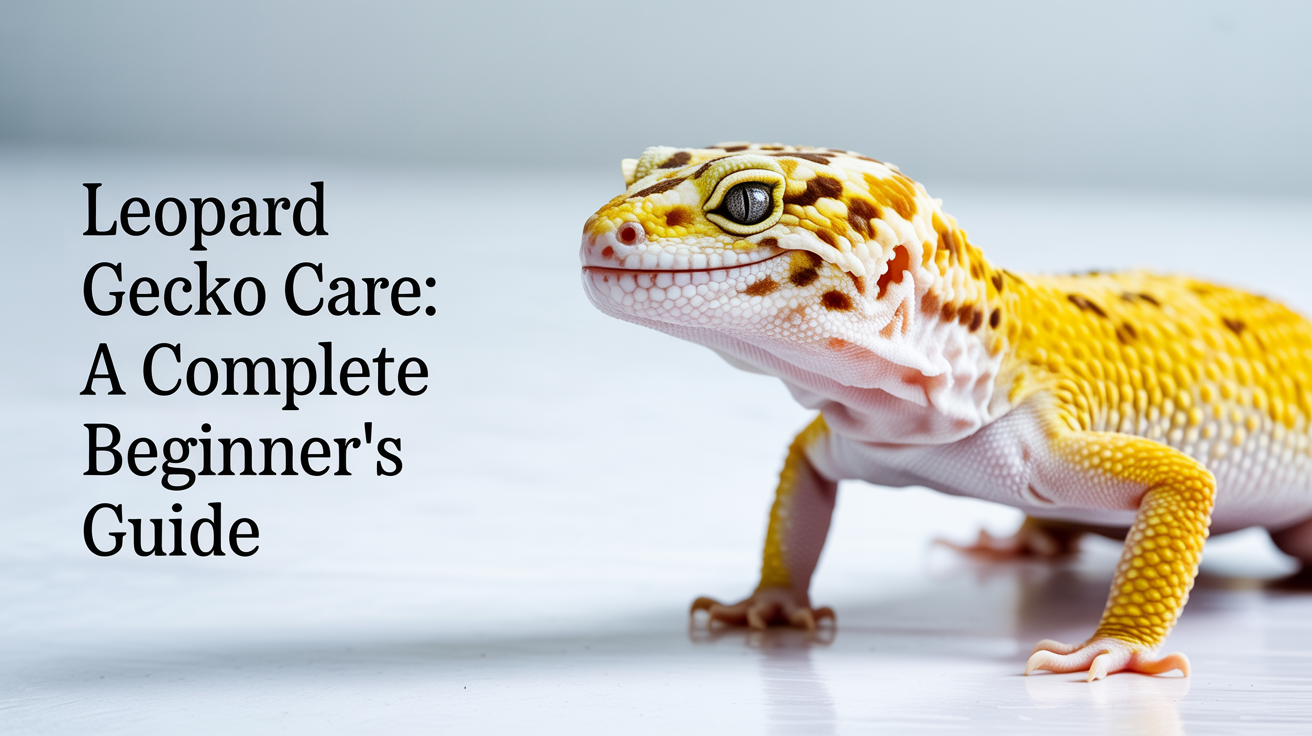
Leopard geckos are one of the best reptiles for beginners, and that reputation is well earned. They stay manageable in size, tolerate gentle handling, and communicate clearly when something is off. But "beginner-friendly" doesn't mean low-maintenance. Getting their environment right from day one makes the difference between a thriving gecko and a sick one.
Species Overview
Leopard geckos (Eublepharis macularius) are native to the rocky grasslands and scrublands of Pakistan, Afghanistan, and northwestern India. In the wild they shelter under rocks during the heat of the day and emerge at dusk and dawn to hunt. That crepuscular pattern matters for how you set up lighting and feeding schedules.
Adult leopard geckos reach 7 to 10 inches from snout to tail tip, with females typically on the smaller end. A healthy, well-fed gecko stores fat reserves in its tail, giving it that characteristic plump appearance. Captive lifespans commonly reach 15 to 20 years, and some individuals live longer. This is a long-term commitment.
They are ground-dwellers. Unlike crested geckos or arboreal species, leopard geckos don't climb much, so enclosure height matters less than floor space.
Enclosure Setup
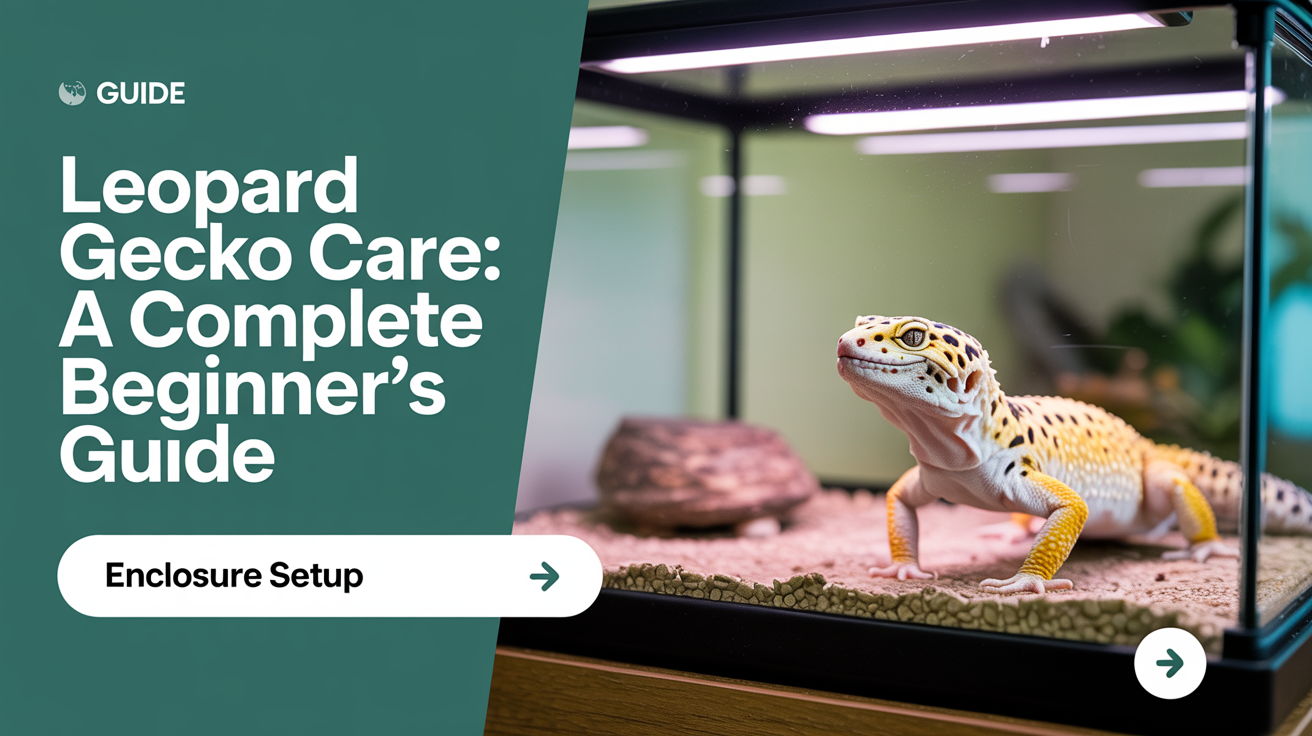
A 20-gallon long tank (30" x 12" x 12") is the minimum for one adult. Many keepers move up to a 40-gallon breeder as the gecko grows, and that extra space is genuinely beneficial. Avoid housing two adults together unless you have significant reptile experience; cohabitation stress is a common cause of illness.
Glass terrariums with front-opening doors or a secure mesh lid both work. Make sure the lid is escape-proof. Leopard geckos can't climb glass, but they're surprisingly good at squeezing through gaps.
Substrate
For adult leopard geckos, suitable options include:
- Tile (slate or ceramic): easy to clean, holds warmth well, provides a natural look
- Paper towels or reptile carpet: practical for quarantine setups or hatchlings
- A bioactive mix of topsoil and sand (roughly 70/30): more naturalistic, but requires more setup knowledge
Avoid loose particulate substrates like pure play sand, calci-sand, or wood chips for any gecko under six months old. Hatchlings and juveniles are at serious risk of impaction if they accidentally ingest substrate while hunting. Many keepers stick with tile or paper towels until the gecko is reliably feeding and well-established.
Heating: Belly Heat Comes First
This is the single most important thing to understand about leopard gecko care. They are ectotherms that thermoregulate by moving between warm and cool zones, and they absorb most of their heat through their belly. Overhead heat lamps alone are not sufficient.
The primary heat source should be an under-tank heater (UTH) placed under one side of the enclosure, paired with a thermostat. Running a UTH without a thermostat is a fire hazard and can cook the gecko from below without triggering any obvious warning sign.
Temperature targets:
| Zone | °F | °C |
|---|---|---|
| Warm side surface | 88–92°F | 31–33°C |
| Cool side | 72–76°F | 22–24°C |
| Ambient room temp (night minimum) | 65°F | 18°C |
Measure surface temperatures with an infrared thermometer, not a stick-on dial gauge. Dial gauges measure air temperature, not the belly-contact surface, which is what matters.
UVB Lighting
Leopard geckos have historically been kept without UVB lighting, and many survive that way. Current research suggests they do benefit from low-level UVB exposure, and the reptile community has increasingly adopted it as a best practice. A T5 HO 5.0 or 6% UVB bulb positioned appropriately can support vitamin D3 synthesis and may improve overall health and activity levels. If you do use UVB, provide 10 to 12 hours of light per day and replace the bulb according to the manufacturer's schedule (typically every 6 to 12 months), even if it still appears to emit visible light.
UVB does not replace proper belly heat. It's a supplement, not a substitute.
Hides and Enrichment
A leopard gecko needs at least three hides: one on the warm side, one on the cool side, and one humid hide. Skipping any of these creates stress.
- Warm hide: placed directly over or near the UTH; the gecko retreats here to digest food
- Cool hide: a secure shelter on the opposite end where the gecko can escape heat
- Humid hide: a container with a damp substrate inside, such as sphagnum moss or coconut fiber kept moist but not soggy; this is critical during shedding
Leopard geckos shed their skin regularly, more frequently in juveniles. Without access to a humid hide, retained shed can wrap around toes and cut off circulation, causing permanent injury or amputation. Check for retained shed, especially around the toes, eyes, and tail base, after every shed.
Beyond hides, add a few other shelters or cork bark pieces. A gecko that feels exposed will be chronically stressed, which suppresses immune function over time.
Diet and Supplementation
Leopard geckos are strict insectivores. They do not eat fruit, vegetables, or any plant material.
Feeder insects to rotate through:
- Crickets (a staple, good nutritional profile)
- Dubia roaches (high protein, easy to gut-load)
- Mealworms (fine in moderation; fatty, so not as a sole diet)
- Black soldier fly larvae (high calcium, a useful addition)
- Waxworms (a treat only; very high in fat)
Gut-load feeder insects 24 to 48 hours before feeding by giving them nutritious foods: leafy greens, sweet potato, and commercial gut-load products. A gecko can only absorb nutrients from what its prey last ate.
Dust insects with calcium and vitamin supplements before each feeding. A practical schedule:
- Every feeding: plain calcium powder (no D3) for geckos with UVB, or calcium with D3 if keeping without UVB
- Every other feeding: a multivitamin supplement containing vitamin A
Feed juveniles daily; feed adults every two to three days. Offer as many insects as the gecko will eat in about 15 minutes, removing uneaten prey afterward. Crickets left overnight can stress or even injure a sleeping gecko.
Provide a small shallow dish of fresh water at all times and change it every day or two.
Handling and Temperament
Leopard geckos generally become quite calm with regular, gentle handling, but they need time to settle into a new home first. Allow a new gecko at least two weeks to acclimate before handling, continuing to feed normally, before you start picking it up.
When you do begin, keep sessions short (five to ten minutes) and stay close to a flat surface in case the gecko drops suddenly. Support the full body; don't grab by the tail. Leopard geckos can drop their tails as a predator defense, and while the tail does regenerate, the regrown version is a smooth, rounded stump that looks nothing like the original.
Most geckos stop fleeing after a few weeks of consistent, calm handling. Some individuals are more skittish than others regardless of technique. Respect their signals.
Health and Common Issues
A healthy leopard gecko is alert at dusk and dawn, has clear eyes, a plump tail, and sheds cleanly. Issues to watch for:
Retained shed is the most common problem and is almost always preventable with a functioning humid hide.
Metabolic bone disease (MBD) results from calcium or vitamin D3 deficiency. Signs include soft jaw, rubbery limbs, and tremors. Caused by inadequate supplementation or no UVB. Reversible in early stages but serious if allowed to progress.
Cryptosporidiosis ("crypto") is a parasitic infection with no reliable cure. Signs include chronic weight loss despite eating. It is contagious to other reptiles. A fecal test from an exotics vet can diagnose it.
Impaction causes lethargy, loss of appetite, and a distended abdomen. More common in geckos kept on loose substrate or those fed excessively large prey items.
Find an exotics veterinarian before you bring your gecko home. A baseline wellness check in the first few months of ownership catches problems early, and you want a vet relationship established before an emergency. General-practice vets often lack reptile experience.
For a comparison with another popular beginner reptile, see our guide to bearded dragon care. If you're weighing gecko options, the crested gecko care guide covers an arboreal alternative with different husbandry requirements. Keepers who want a slightly larger beginner snake might also look at ball python care.
Leopard Gecko Care Summary
| Parameter | Requirement |
|---|---|
| Enclosure size | 20-gallon long minimum (30" x 12"); 40-gallon breeder preferred for adults |
| Warm side surface temp | 88–92°F (31–33°C) |
| Cool side temp | 72–76°F (22–24°C) |
| Night minimum | 65°F (18°C) |
| Primary heat source | Under-tank heater on a thermostat |
| UVB | Low-level (5.0 / 6%) recommended |
| Diet | Gut-loaded, dusted insects only |
| Feeding frequency | Juveniles: daily; adults: every 2–3 days |
| Lifespan | 15–20 years in captivity |
| Hides required | Minimum 3: warm, cool, humid |
Frequently Asked Questions
Do leopard geckos need a heat lamp?
A heat lamp is not required and is often a poor primary heat source for leopard geckos because they thermoregulate through belly contact, not ambient air warmth. An under-tank heater on a thermostat is the correct approach. If you want a low-level heat or light source overhead (particularly for UVB), a low-wattage bulb or dedicated UVB tube is fine, but the UTH does the real work.
How often do leopard geckos shed?
Juveniles shed roughly every two to four weeks as they grow rapidly. Adults shed less often, around once a month or so, though this varies by individual and season. You'll know a shed is coming when the gecko's skin takes on a dull, whitish, or dusty appearance. Ensure the humid hide is moist at all times, not just when you notice the color change.
Can I keep two leopard geckos together?
It's generally not recommended, especially for beginners. Males will fight. Even female pairs or female-male pairings carry risks: resource competition, stress, and the risk of one gecko bullying the other subtly enough that you miss it until one animal has lost significant weight. If you want multiple geckos, house them separately.
What size feeder insects should I use?
A reliable rule: the insect should be no wider than the space between the gecko's eyes. Prey that's too large can cause regurgitation or contribute to impaction. For hatchlings, this means small crickets or very small dubia. Adult geckos can handle large crickets and adult dubia roaches comfortably.
How do I know if my leopard gecko is healthy?
A healthy gecko is alert and active during crepuscular hours, eats consistently, has a tail that's plump (fat stored there is a good sign), clear unsunken eyes, and sheds completely without retained patches. Weight loss, lethargy during active periods, bloating, discharge from the eyes or nose, and unusual posture are all reasons to see an exotics vet.