Species Guides
Ball Python Care: A Complete Beginner's Guide
Learn how to care for a ball python, from enclosure setup and heating to feeding and handling. A practical guide for first-time keepers.
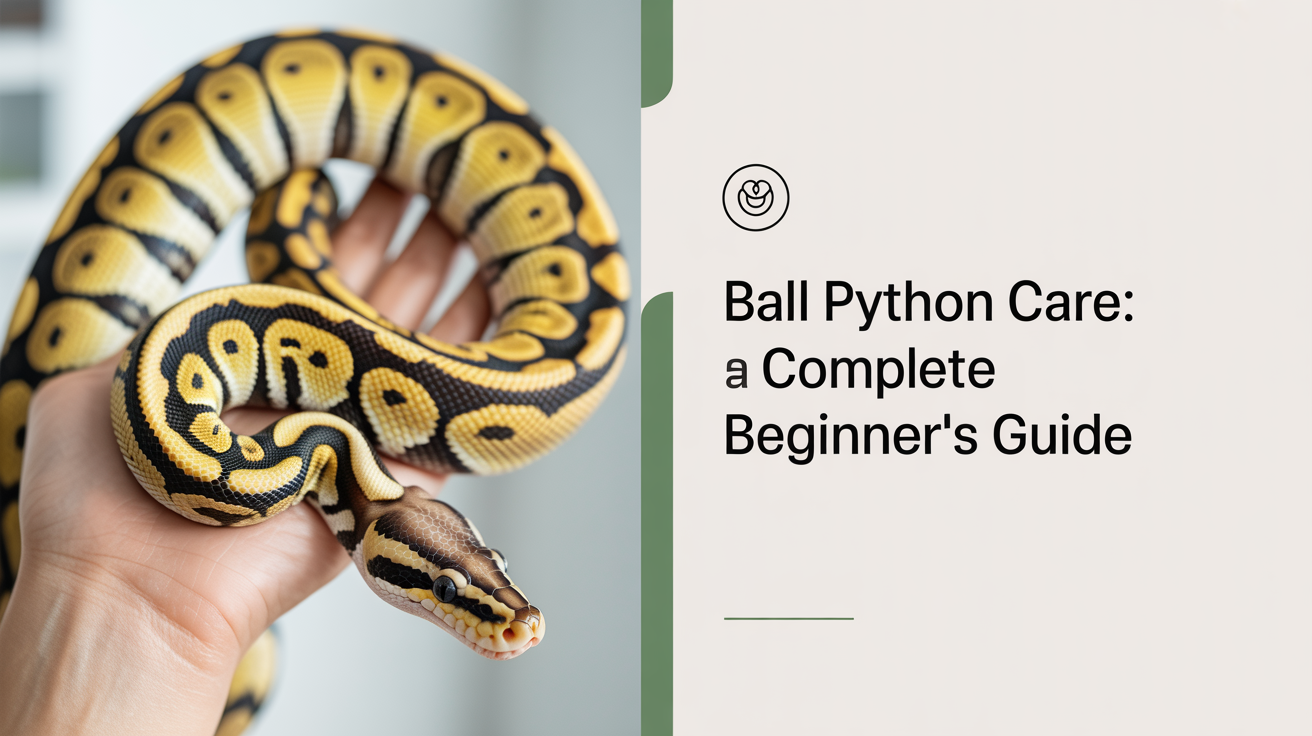
Ball pythons are one of the most forgiving reptiles a beginner can keep. They stay manageable in size, rarely bite when handled calmly, and adapt well to captive life. The trade-off is that they are long-term commitments and surprisingly particular about their environment. Get the basics right from the start and you will have a healthy snake for decades.
At a Glance
- Lifespan is 20 to 30 years, among the longest of any commonly kept beginner reptile, plan for a multi-decade commitment.
- Humidity is the make-or-break variable: 55 to 65% relative humidity, bumped to 70% during shed cycles.
- Every heat source needs a thermostat, without one, an uncontrolled heat mat can cause thermal burns before anyone notices.
- Two hides minimum (warm and cool side), plus a humid hide during shed, or the snake is forced to choose between security and thermoregulation.
- Feed frozen-thawed only, live rodents can injure a snake even in an apparently lopsided match.
- Fasting for weeks is normal, not an emergency, especially in fall and winter breeding season, but visible weight loss always warrants a vet call.
Ball Python Overview
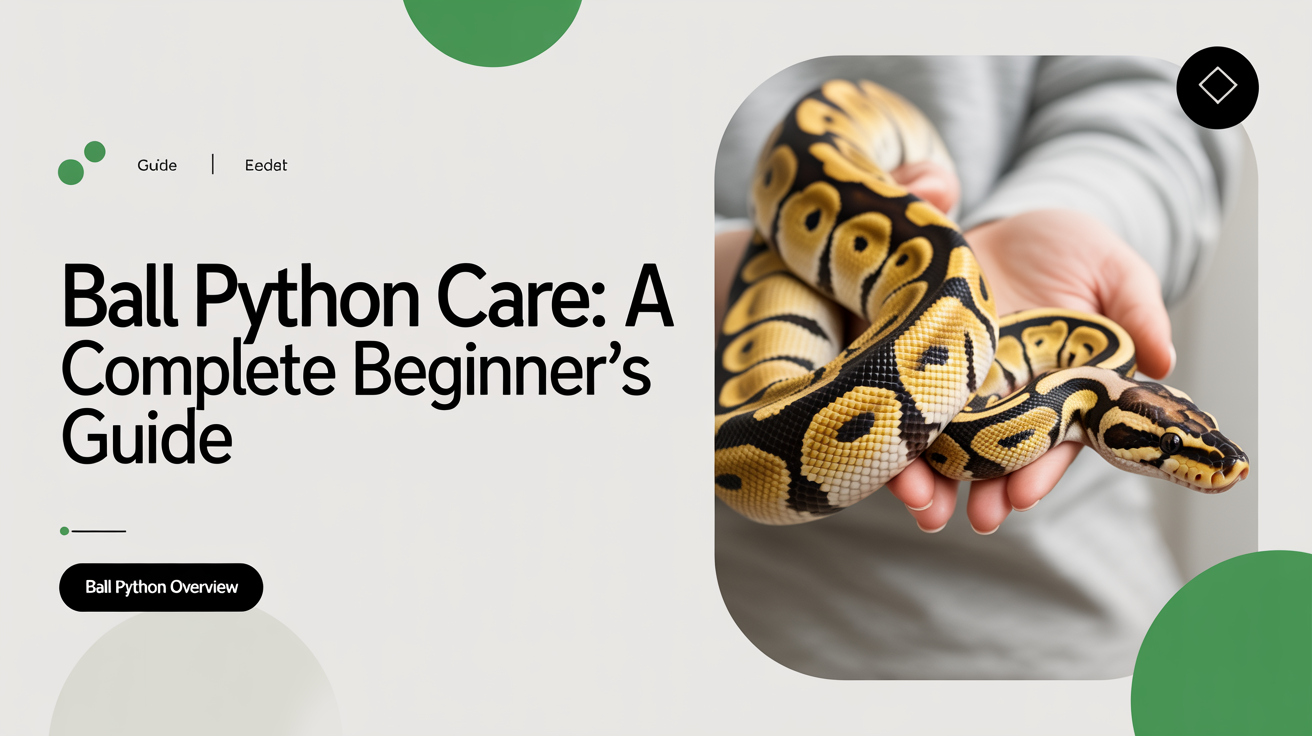
Ball pythons (Python regius) are native to sub-Saharan Africa, where they live in grasslands and open forests. In captivity they typically reach 3 to 5 feet as adults, with females running slightly larger than males. Hatchlings start at around 10 inches.
Lifespan is one of the first things prospective keepers overlook: a well-cared-for ball python commonly lives 20 to 30 years, and some exceed that. This is not a starter pet you will outgrow in a few years. Plan accordingly.
They earned the name "ball python" from their defensive posture: when threatened, they curl tightly into a ball with their head tucked in the center. Most captive-bred specimens rarely do this once they are settled in.
Setting Up the Enclosure
Enclosure Size
A juvenile ball python can live in a 20-gallon enclosure temporarily, but adults need significantly more room. The practical minimum for an adult is a 40-gallon tank (roughly 36" x 18"). Many experienced keepers prefer a 4' x 2' x 2' PVC or melamine enclosure, which gives better floor space and holds humidity more reliably than glass.
Glass tanks can work, but they leak heat and humidity through screen lids, which creates extra work. If you use glass, cover most of the screen lid with aluminum foil or a towel and monitor your numbers closely.
Substrate
For humidity retention and a naturalistic feel, coconut fiber, cypress mulch, and bioactive mixes all perform well. Avoid cedar and pine, which contain aromatic oils toxic to snakes. Paper towels work fine for quarantine or hospital setups but dry out too fast for long-term use.
Aim for a substrate depth of at least 3 to 4 inches so your snake can burrow slightly if it chooses.
Security
Ball pythons are escape artists. A loose lid means a missing snake, often within a few hours of a gap appearing. Use locking clips on screen lids or choose an enclosure with a secure front-opening design. Never assume the weight of the lid alone is enough.
Heating and Temperature
Getting temperatures right is the single most important husbandry task. Ball pythons are ectotherms: they regulate body temperature by moving between warm and cool zones, so both ends of the enclosure matter. The Merck Veterinary Manual's guidance on reptile husbandry recommends thermostat-controlled heaters positioned toward one end of the enclosure specifically to create this kind of gradient, rather than warming the whole space evenly.
Temperature Gradient
| Zone | Target (°F) | Target (°C) |
|---|---|---|
| Warm side (basking/hot spot) | 88–92°F | 31–33°C |
| Warm side ambient | 82–85°F | 28–29°C |
| Cool side ambient | 76–80°F | 24–27°C |
| Nighttime low (whole tank) | No lower than 72°F | 22°C |
Under-tank heat mats (UTH) combined with a ceramic heat emitter (CHE) or low-wattage radiant heat panel are popular choices. Overhead deep heat projectors (DHP) are increasingly favored because they warm tissue more naturally than surface heat alone.
Thermostats Are Not Optional
Every heat source must be connected to a thermostat. Without one, heat mats can reach temperatures that cause thermal burns on the ventral surface, often going unnoticed until tissue damage is severe. Pulse-proportional or on/off thermostats in the $30 to $80 range are adequate for most setups. Probe placement matters: put the probe in the warm hide, at substrate level.
Use two thermometers with probes (one per side) rather than relying on stick-on dial thermometers, which are notoriously inaccurate.
Humidity
Ball pythons need 55 to 65% relative humidity for healthy skin and successful sheds. During shed cycles, bumping humidity to 70% can help.
Low humidity causes incomplete (retained) sheds, which can constrict toes and eyes if left untreated. Signs of an upcoming shed include dull, milky scales and blue-tinted eyes, followed by a clearing phase a few days before the actual shed.
Maintaining humidity is easier with:
- A substrate that holds moisture (cypress mulch, coconut fiber)
- A partially covered lid
- A humid hide (more on this below)
- Regular light misting if needed
Check humidity with a digital hygrometer, not an analog dial gauge.
Shed Cycle Timeline
Knowing what a normal shed looks like helps you tell a routine cycle from a problem early. A full cycle typically runs 10 to 14 days from the first visible sign to a clean shed.
| Day | What You'll See | What To Do |
|---|---|---|
| Day 1–3 | Skin dulls slightly; appetite may drop | Maintain normal humidity, no action needed |
| Day 4–7 | Eyes turn milky blue ("in blue"); belly may pale | Bump humidity toward 70%; expect reduced activity |
| Day 8–10 | Eyes clear back to normal | Confirm humidity is holding; add a damp hide if not already present |
| Day 10–14 | Full shed occurs, usually overnight | Check the shed came off in one piece, including eye caps and tail tip |
Hides and Enrichment
Two Hides Are a Requirement
Ball pythons feel most secure when they can fully conceal themselves. Every enclosure needs at least two hides: one on the warm side and one on the cool side. Without both, your snake is forced to choose between feeling secure and thermoregulating properly. That chronic stress often suppresses appetite and immune function.
The hide should fit snugly around the snake. A ball python in a hide that is too large will not feel secure. Commercial half-log hides, plastic shoe boxes with an entry hole cut in, and commercially made "caves" all work.
Humid Hide
Add a third hide filled with damp sphagnum moss on the warm side. This gives your snake a microclimate of higher humidity to soak in during shed cycles, dramatically reducing retained shed problems.
Enrichment
Ball pythons are more active at night than most keepers realize. A few branches for low-level climbing and some clutter (additional hides, fake plants) can reduce stress and encourage natural movement.
Feeding Your Ball Python
Prey Size and Type
Feed prey items that are roughly the same width as the widest part of your snake's body. A prey item that is too large can cause regurgitation. As a rough sizing guide, a hatchling around 10 inches takes an appropriately sized pinky or fuzzy mouse, while a 4-foot adult typically takes a small to medium rat, weight of the prey should land somewhere around 10 to 15% of the snake's own body weight per meal.
Always feed frozen-thawed rodents. Live prey can injure your snake, even in a seemingly lopsided match. Thaw frozen mice or rats in the refrigerator overnight and warm them to approximately 100°F (38°C) in warm water before offering. A heat gun or thermometer helps confirm the surface temperature, since a warm exterior triggers the snake's feeding response.
Hatchlings and juveniles eat appropriately sized mice; adults typically graduate to small to medium rats.
Feeding Frequency
- Hatchlings and juveniles (under 12 months): every 5 to 7 days
- Sub-adults and adults: every 10 to 14 days
Avoid handling your snake for 48 hours after a meal to prevent regurgitation.
Picky Eaters and Fasting
Ball pythons have a reputation for going off food, and it is well-earned. Adults commonly refuse food for weeks or months, especially during breeding season (fall and winter) or during a shed cycle. A healthy, well-fleshed adult refusing food for 4 to 8 weeks is usually not a crisis.
What warrants a vet visit: weight loss that is visible (spine and hip bones becoming pronounced), mucus around the mouth or nostrils, wheezing, or a fast that stretches beyond 3 months in a juvenile.
For a snake that has been reluctant to accept frozen-thawed, braining (lightly scoring the skull of the prey to release scent), switching rat to mouse or vice versa, or feeding in a separate feeding container can sometimes break the pattern. Reducing handling and disturbance for a week before the next offered meal also helps more often than keepers expect, a stressed snake rarely eats well.
Handling
Ball pythons generally tolerate handling well once they have settled into their enclosure. Give a newly acquired snake at least 2 weeks with minimal disturbance before starting regular handling sessions.
Start with short sessions of 5 to 10 minutes and gradually build up. Most ball pythons do well with handling 2 to 4 times per week. Always support the body and let the snake move through your hands rather than gripping tightly. Avoid handling within 48 hours of a meal or when the snake is in shed.
Defensive hissing or musking (releasing a foul-smelling secretion) usually decreases as the snake becomes accustomed to you. Biting is uncommon in calm, captive-bred ball pythons, and a bite from a juvenile is usually more startling than painful.
Common Health Issues
Respiratory Infections
Wheezing, clicking sounds when breathing, open-mouth breathing, or mucus around the mouth and nostrils are warning signs of a respiratory infection (RI). According to the Merck Veterinary Manual, respiratory infections in reptiles are commonly linked to unfavorable environmental temperature or humidity, insufficient ventilation, unsanitary conditions, and concurrent disease or malnutrition, which is exactly why the humidity and temperature ranges above matter beyond simple comfort. RIs require veterinary treatment, typically antibiotics. Do not attempt to treat an RI at home.
Incomplete Sheds
Retained eye caps (spectacles) and retained shed on the tail tip are the most common retained-shed complications. A warm soak of 15 to 20 minutes followed by gentle assistance with a damp cloth usually resolves minor retained shed. If an eye cap does not come off with a soak, contact a vet rather than pulling at it.
Mites
Snake mites (Ophionyssus natricis) are tiny, dark parasites that cluster around the eyes, under scales, and in water dishes. If you see small moving dots in the water bowl or on your snake, act immediately. Mites spread quickly between enclosures. Treat with vet-recommended products (Provent-a-Mite for the enclosure, appropriate treatments for the animal) and clean thoroughly.
Internal Parasites
Wild-caught ball pythons often carry internal parasites. Captive-bred animals from reputable breeders are lower risk but not immune. A fecal exam at an exotic vet within the first few months of ownership is a good baseline.
Quick-Reference Care Summary
| Parameter | Recommended Range |
|---|---|
| Enclosure (adult) | 40 gallon minimum; 4' x 2' x 2' preferred |
| Warm side hot spot | 88–92°F (31–33°C) |
| Warm side ambient | 82–85°F (28–29°C) |
| Cool side | 76–80°F (24–27°C) |
| Nighttime low | 72°F (22°C) minimum |
| Humidity | 55–65%; 70% during shed |
| Diet | Frozen-thawed rodents, appropriately sized |
| Feeding frequency (adult) | Every 10–14 days |
| Lifespan | 20–30 years |
| Hides | Minimum 2 (warm + cool side) + 1 humid hide |
Finding a Vet
Find an exotics-experienced vet before you need one. General practice vets often lack reptile training, and an emergency is the wrong time to locate a specialist. The Association of Reptile and Amphibian Veterinarians maintains a searchable vet directory that both members and the general public can use to find a reptile-experienced practice nearby. A baseline wellness exam and fecal test in the first few months of ownership is money well spent.
Ball pythons are hardier than their reputation for pickiness suggests, but they do require an experienced hand for health problems. An RI or retained eye cap left untreated can become serious quickly.
If you are comparing reptile options before committing, see our Bearded Dragon Care: A Complete Beginner's Guide, Leopard Gecko Care: A Complete Beginner's Guide, and Crested Gecko Care: A Complete Beginner's Guide for contrast.
Frequently Asked Questions
How big do ball pythons get?
Most adults reach 3 to 5 feet. Females tend to be larger than males. Some exceptional females approach 6 feet, but this is uncommon. Their girth is substantial relative to their length, which is part of why a 4' x 2' floor footprint matters more than enclosure height.
Can ball pythons live together?
No. Ball pythons are solitary in the wild and should be housed individually in captivity. Co-habitation causes chronic stress, competition for hides, and risk of disease transmission. Even a "bonded pair" is a stress situation for both animals.
How long can a ball python go without eating?
Healthy adults can fast for weeks to months without immediate harm, particularly in fall and winter. Adults commonly skip food for 4 to 8 weeks during breeding season. Juveniles should not go more than 3 to 4 weeks without eating without a vet checkup, and any snake that is losing visible body condition needs professional attention.
Do ball pythons need UVB lighting?
The current evidence is not conclusive, but research increasingly suggests low-level UVB (around 2.0 to 5.0 UVI) benefits reptile health generally. Ball pythons have been kept successfully for decades without UVB, so it is not strictly required, but a low-output bulb on a 12-hour cycle does no harm and may provide long-term benefits.
What is the best age to buy a ball python?
Captive-bred juveniles at 3 to 6 months old, feeding reliably on frozen-thawed prey, are the easiest starting point. Avoid wild-caught animals, which carry higher parasite loads and often refuse food in captivity. Buy from a reputable breeder who can show you the snake eating before you take it home.
Why did my ball python's poop smell so strong, and is that normal?
Reptile waste has a stronger odor than most mammal waste because of how their digestive tract processes protein-heavy meals, and yes, it is normal. What's not normal is waste that is watery for more than one or two feedings in a row, contains visible worms, or is accompanied by straining, any of those warrants a fecal exam. Spot-clean waste promptly and do a full substrate change on a regular schedule to keep bacterial load down.