Species Guides
Crested Gecko Care: A Complete Beginner's Guide
Everything first-time keepers need to know about crested gecko care: enclosure setup, temperature, humidity, diet, and handling tips.
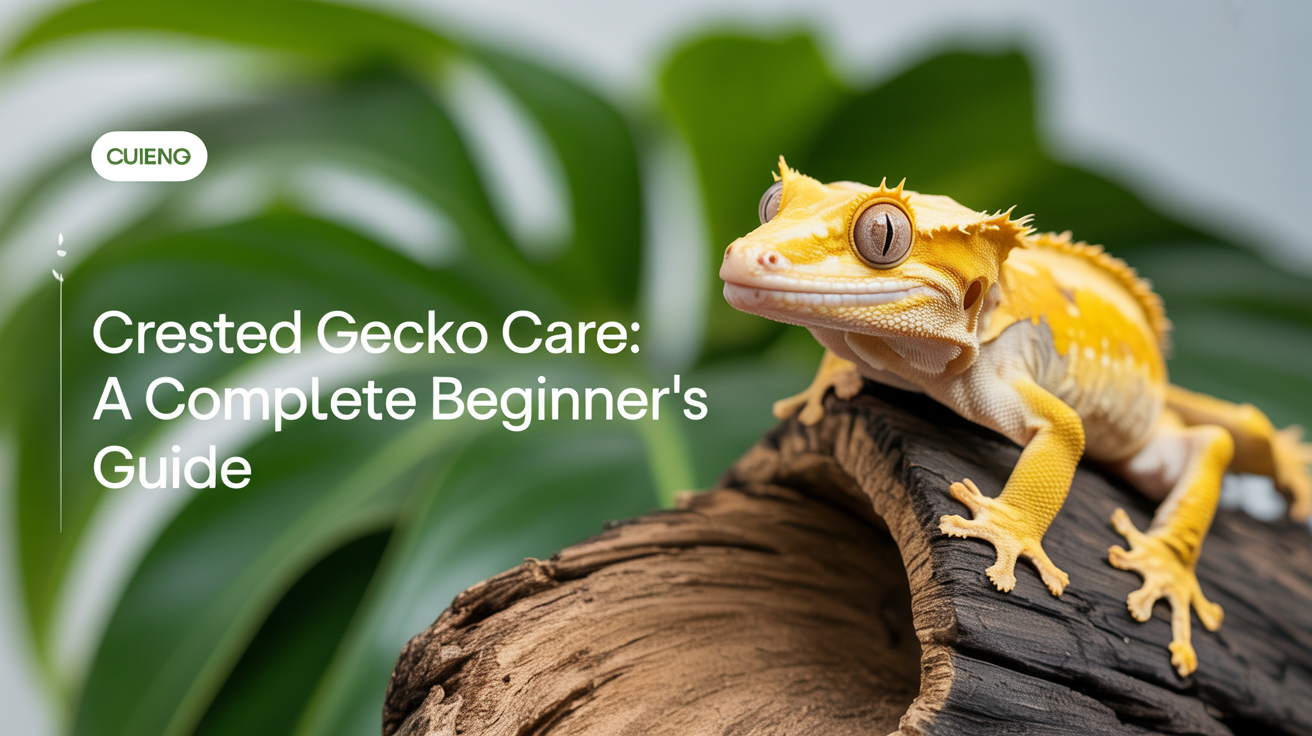
Crested geckos are one of the most forgiving reptiles you can keep. They thrive at room temperature, eat a commercially available powdered diet, and are small enough to house comfortably in a living room. If you're new to reptiles, they're a genuinely good starting point, not because they're maintenance-free, but because their care requirements are consistent and well understood.
This guide covers everything you need to set up correctly the first time.
At a Glance
- No basking lamp needed for most keepers: room temperature between 72 and 78°F (22 to 26°C) is the target range.
- Minimum adult enclosure is 18 x 18 x 24 inches (tall, arboreal), not a standard "long" tank.
- Humidity runs 60 to 80% on a wet/dry misting cycle, not constant dampness.
- Diet is mostly a mix-with-water powder (Repashy, Pangea, or similar), fed 3 to 4 times a week, with occasional dusted insects.
- Tails do not regrow if dropped, so handle gently and never grab one by the tail.
- Lifespan runs 15 to 20 years, so this is a decade-plus commitment, not a starter pet you'll outgrow in a year.
Species Overview
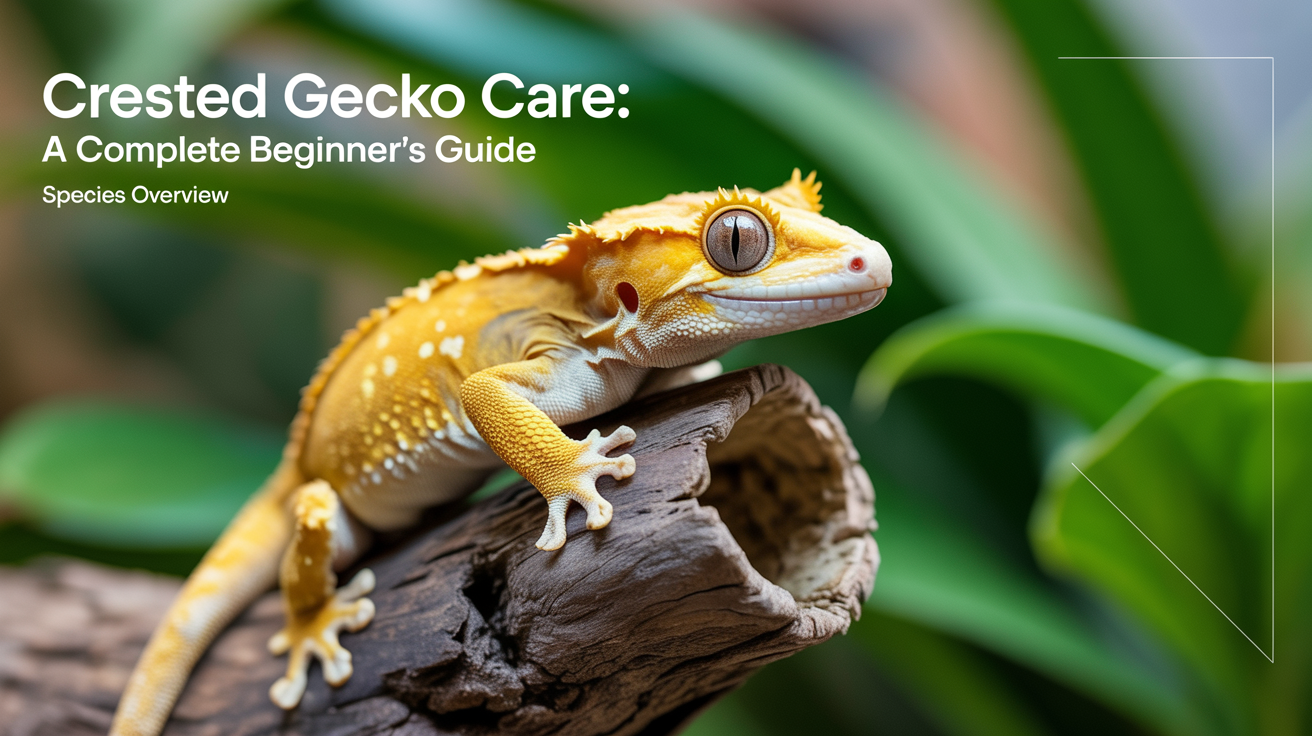
Crested geckos (Correlophus ciliatus) are native to New Caledonia, a group of islands in the South Pacific. They were thought to be extinct until rediscovered in 1994 and have since become one of the most popular pet lizards in the world.
Adults reach 7 to 9 inches (18 to 23 cm) from snout to tail tip and typically weigh 35 to 55 grams. A healthy, well-kept crested gecko can live 15 to 20 years, so this is a long commitment.
One trait worth knowing upfront: crested geckos can drop their tails as a defense mechanism (called autotomy), and unlike many lizards, they do not regenerate them. A tailless gecko is completely healthy and normal, breeders call them "frogbutts", but it's something to be aware of during handling, especially early on when your gecko is still getting used to you.
Enclosure Setup
Crested geckos are arboreal, meaning they live in trees and prefer to climb rather than burrow. Vertical space matters more than floor space.
The minimum enclosure size for a single adult is 18 x 18 x 24 inches (45 x 45 x 60 cm). This is the standard "tall" terrarium format sold by most reptile brands. Juveniles can start in something smaller, a 12 x 12 x 18 inch enclosure works for the first several months, but adults need the full height, and many keepers go straight to the adult size to skip a mid-life upgrade. Screen or mesh-sided enclosures improve airflow and make maintaining humidity easier.
Inside the enclosure, provide:
- Climbing branches and cork bark, diagonal and horizontal pieces let your gecko move naturally
- Live or artificial plants, pothos, philodendron, and bromeliads all work well for live setups; high-quality silk or plastic plants are fine otherwise
- Hides, at least two: one in the upper part of the enclosure (warm side) and one lower (cool side)
- A water dish, even though geckos drink from misted droplets, a shallow dish provides a backup water source
Bioactive setups with a living substrate (organic topsoil, peat, and coco fiber layered with springtails and isopods) are popular for crested geckos and make humidity management easier, since the cleanup crew processes waste and the deeper substrate buffers moisture swings between mistings. A paper towel or reptile carpet substrate also works fine if you want something simpler to clean, though you'll be misting and spot-cleaning more deliberately without a bioactive layer doing some of that work for you.
Temperature Requirements
This is where crested geckos stand apart from most reptiles: they don't need a basking lamp or supplemental heat if your home stays within a reasonable range.
The ideal temperature band is 72 to 78°F (22 to 26°C), which matches typical indoor temperatures in most households. They can tolerate brief dips to the low 60s°F (around 16°C) without harm, but extended cold will suppress their immune system and slow digestion.
The critical limit on the other side is heat. Temperatures above 82°F (28°C) cause significant stress. Above 85°F (29°C), crested geckos can die quickly, sometimes within hours of a heat wave hitting an unventilated room. If your home gets hot in summer, you need a plan, a small air conditioner, a basement location, or a cooling fan positioned to circulate air around (not directly into) the enclosure. Keepers in un-air-conditioned apartments often move the enclosure to the coolest room in the house, usually a north-facing bedroom or a basement, during the hottest weeks of the year.
Do not use heat mats under glass or plastic enclosures without a thermostat, and avoid incandescent basking bulbs unless you're in a genuinely cold room and using a thermostat to regulate output. Most keepers in temperate climates need no supplemental heat at all.
Humidity and Misting
Crested geckos need 60 to 80% relative humidity. Consistent humidity prevents shedding problems and keeps their respiratory tract healthy.
The standard approach is a "wet/dry cycle": mist the enclosure once or twice daily (morning and evening works well), allowing it to partially dry between sessions. This mimics the natural cycle of rain followed by drying in their native habitat.
Use a digital hygrometer to monitor levels. During a shed, you can mist more frequently to keep the skin soft and loosening evenly. According to the Merck Veterinary Manual, incomplete or abnormal shedding (dysecdysis) in reptiles is most often caused by low humidity, and is far easier to prevent through consistent misting than to treat once it's underway.
Signs of humidity that's consistently too low: retained shed, especially around the toes, and skin that looks dull or tight. Signs of too much humidity with no drying period: mold growth on substrate, respiratory wheezing, and scale infections. The wet/dry cycle prevents both.
An automated misting system (like a Mistking or Exo Terra fogger) can simplify this if you have an inconsistent schedule. A basic single-nozzle system runs about $60 to $100 and pays for itself in reliability if you travel often or keep an unpredictable work schedule.
Diet and Feeding
Crested geckos are one of the few reptiles that can eat a commercially formulated, nutritionally complete powder diet as their primary food source. Brands like Repashy, Pangea, and Black Panther Zoological have published feeding studies behind their formulas, and long-term captive populations have done well on them.
Mix the powder with water to a pudding consistency and offer it in a small dish 3 to 4 times per week. Remove uneaten food within 24 hours to prevent bacterial growth.
Live insects make a good supplement. Crickets and dubia roaches in appropriate sizes (no wider than the space between the gecko's eyes) can be offered once or twice a week, dusted with calcium + D3 powder. Insects add enrichment and protein, especially useful for juveniles and breeding females, whose calcium demands run higher than an average adult male's.
Avoid feeding wild-caught insects (pesticide risk) and citrus fruit (too acidic). Waxworms and other fatty treats should be rare, no more than once every week or two, since crested geckos gain weight easily on a rich diet and have no natural predator pressure in captivity to keep them lean.
Fresh water should be available at all times. Crested geckos drink water droplets off leaves after misting, but a small water dish provides security between misting sessions.
Handling and Temperament
Crested geckos are generally calm once acclimated, but they're fast and can jump. New geckos should be given one to two weeks to settle in before handling begins.
Start with brief sessions, five minutes or less, and let the gecko walk from hand to hand rather than gripping it. Hand-walking keeps them moving and engaged without feeling restrained. Build up time gradually over several weeks, working toward ten to fifteen minutes a session by month two or three.
Most crested geckos become quite comfortable with regular handling. A few individuals remain flighty regardless of how much time you put in. Temperament varies by individual, not just by species.
If your gecko drops its tail during handling, stay calm. Put the gecko back in the enclosure, remove the still-moving tail (it can startle the gecko if it sees it), and check the wound site. Tail drops heal cleanly in most cases, usually forming a scabbed stub within a week or two. Keep the substrate clean and watch for signs of infection: swelling, discharge, or a wound that hasn't started to close after several days. No regrowth will occur.
Never grab a crested gecko by the tail.
Care Summary
| Parameter | Value |
|---|---|
| Adult size | 7 to 9 inches (18 to 23 cm) |
| Adult weight | 35 to 55 grams |
| Lifespan | 15 to 20 years |
| Enclosure (adult) | 18 x 18 x 24 in (45 x 45 x 60 cm), tall/arboreal |
| Enclosure (juvenile) | 12 x 12 x 18 in (30 x 30 x 45 cm) |
| Temperature | 72 to 78°F (22 to 26°C); max 82°F (28°C) |
| Humidity | 60 to 80%; wet/dry misting cycle |
| Diet | CGD powder diet + occasional dusted insects |
| Feeding frequency | Powder 3 to 4x/week; insects 1 to 2x/week |
| UVB lighting | Optional but beneficial; low-output 2.0 or 5.0 |
| Handling | After 1 to 2 week acclimation; 5 min to start |
A note on UVB: crested geckos are crepuscular (most active at dusk and dawn) and were traditionally kept without UVB. More recent research suggests low-level UVB helps with calcium metabolism and overall health. A T5 HO 5.0 or Arcadia 6% bulb on a 10- to 12-hour cycle is a good addition if you want to optimize the setup, but it is not a requirement the way it is for bearded dragons.
Finding a Vet
Crested geckos are exotic animals. Not every veterinarian has reptile experience. Find an exotics vet in your area before your gecko shows any signs of illness, it's much easier to locate a good practice when you're not in a panic. The Association of Reptilian and Amphibian Veterinarians (ARAV) maintains a searchable directory of reptile-experienced vets by region, and it's worth bookmarking on day one rather than searching for it during an emergency.
Common health issues in crested geckos include retained shed, metabolic bone disease, parasites in wild-caught animals, and respiratory infections from chronic humidity imbalance. Per the Merck Veterinary Manual, metabolic bone disease (nutritional secondary hyperparathyroidism) is the single most common bone condition seen in pet reptiles, typically driven by an imbalanced calcium-to-phosphorus ratio, insufficient vitamin D3, or a lack of appropriate UV exposure. Affected animals can show weakness, an abnormal gait, or swelling along the jaw and limbs. All of these conditions are treatable when caught early by a vet who knows reptiles, and far more manageable than they are once bone deformity has already set in.
If you're considering other reptile species, check our guides on leopard gecko care or ball python care for comparison.
Frequently Asked Questions
Do crested geckos need a heat lamp?
Most do not. If your home stays between 72 and 78°F (22 to 26°C), no supplemental heat is needed. If your home drops below 65°F (18°C) regularly, a low-wattage ceramic heat emitter on a thermostat can help. Heat lamps that raise temperatures above 82°F (28°C) are harmful.
How often should I feed my crested gecko?
Offer the CGD powder diet three to four times per week, removing uneaten portions within 24 hours. Live insects can be added once or twice a week as a supplement. Juveniles eat more frequently than adults and grow quickly in their first year, often needing powder offered every other day rather than the twice- or thrice-weekly schedule that suits a full-grown adult.
Why did my crested gecko drop its tail?
Tail drops happen when a gecko feels threatened or grabbed incorrectly. It is a natural defense response. The wound heals on its own, and the gecko will live a completely normal life without the tail. Unlike many lizard species, crested geckos do not regenerate lost tails.
Can I keep two crested geckos together?
Two females can sometimes cohabitate in a large enough enclosure, but cohabitation carries real risks: competition for resources, stress, and injury. Males should never be housed together. A male-female pair will breed continuously, which is taxing on the female. For most beginners, one gecko per enclosure is the right setup.
How do I know if my crested gecko is healthy?
A healthy crested gecko is alert at night (they're most active after dark), has clear eyes, smooth skin after a completed shed, and good muscle tone. It should eat consistently and maintain or gain weight over time. A kitchen scale accurate to 1 gram is a simple way to track weight monthly. Sudden weight loss, lethargy, labored breathing, or swollen limbs are all reasons to contact an exotics vet.
What's a normal weight for an adult crested gecko?
Most healthy adults settle between 35 and 55 grams, though some larger individuals reach 60 grams without being overweight. Weight matters more as a trend than a single number: a gecko that's steadily gaining or holding steady is doing fine, while one that drops more than 10% of its body weight over a month or two warrants a vet visit, even if it's still eating.