Habitat & Setup
Choosing the Right Substrate for Your Reptile
A practical guide to picking the best reptile substrate for your species, covering impaction risks, humidity needs, and what to avoid.
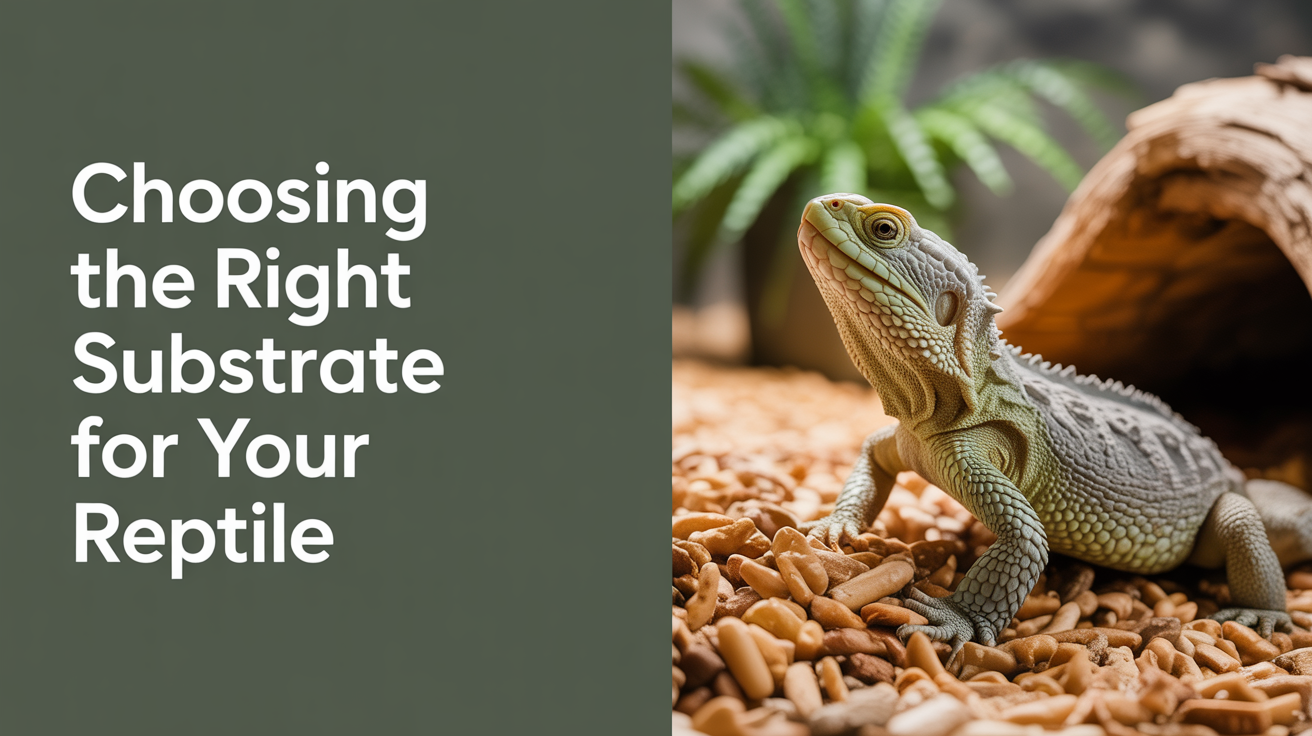
Substrate is the material lining the floor of your reptile's enclosure, and it does more than look natural. It affects humidity, foot health, bacterial load, and the real risk of impaction if your animal accidentally ingests it. Getting this decision right before you bring your animal home is easier than fixing problems after the fact.
Why Substrate Matters More Than You Might Think
The floor of an enclosure is where your reptile spends most of its time, basking, burrowing, hunting, resting. The wrong choice can cause respiratory infections from mold, scale rot from excess moisture, or a life-threatening intestinal blockage from swallowed particles.
Two questions should drive every substrate choice:
- What environment does this species come from (desert, tropical forest, temperate woodland)?
- How old and how healthy is the animal?
A juvenile bearded dragon and an adult green tree frog need completely different floors.
The Impaction Problem
Loose particulate substrates, fine sand, gravel, crushed walnut shells, carry an impaction risk. When a reptile strikes at prey, it can ingest substrate accidentally. Enough of it compacts in the gut and causes a life-threatening bowel obstruction, especially in juveniles whose digestive tracts are smaller and more vulnerable.
This doesn't mean all loose substrate is off the table for every species. An adult leopard gecko on a bioactive soil mix usually does fine. A four-week-old gecko on the same mix is a different story. Err toward solid surfaces for hatchlings and any animal that's sick, recovering, or a voracious feeder.
Matching Substrate to Habitat Type
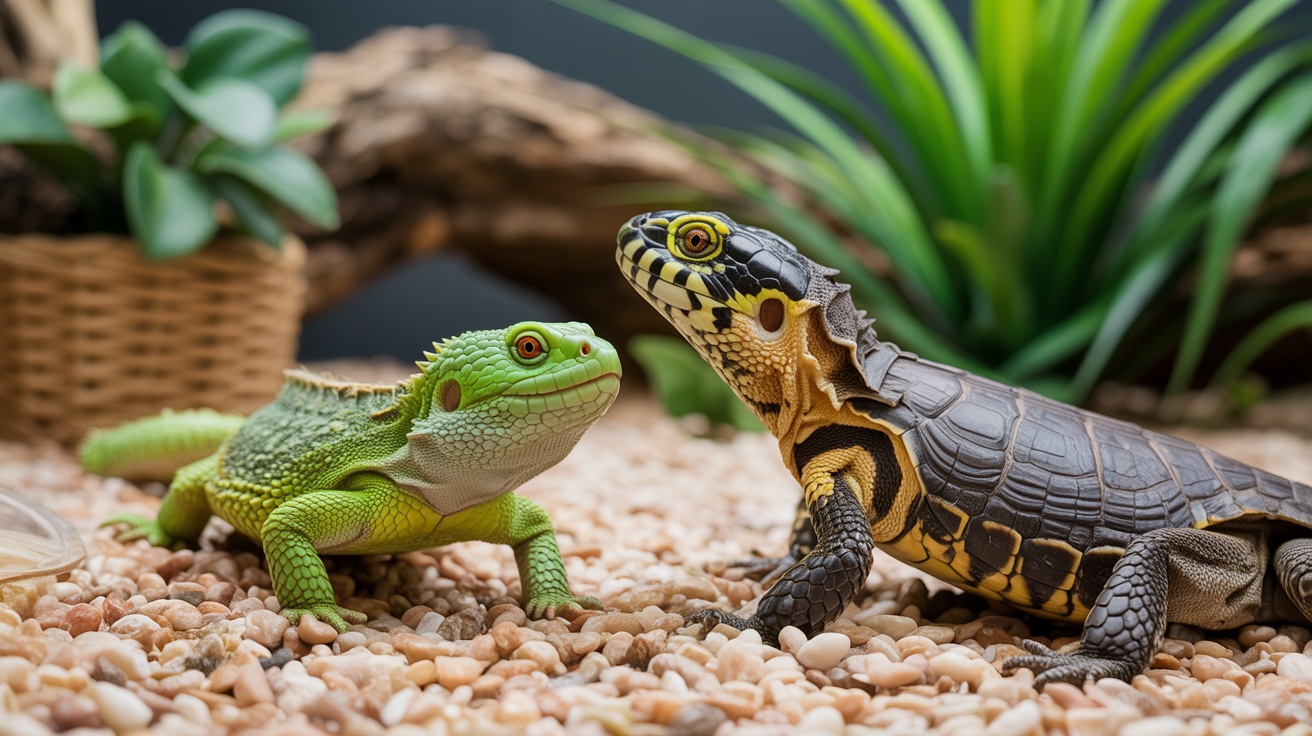
Desert and Arid Species
Bearded dragons, leopard geckos, blue-tongued skinks, and uromastyx come from environments with low humidity and hard, dry ground. They need substrate that doesn't hold moisture against the skin.
Good choices for adult arid-species keepers include:
- Tile (ceramic or slate): Holds heat well, easy to clean, no ingestion risk. Needs a textured surface so the animal isn't sliding.
- Topsoil-and-play-sand mix (70/30): For adult bearded dragons specifically, a dry topsoil-sand blend allows natural digging behavior without the clay dust issues of commercial "desert sand" products. Avoid anything labeled "calci-sand" (see below).
- Reptile carpet: Washable, no particles. Watch for loose loops that can catch toenails.
For hatchlings and juveniles of any desert species, paper towel or unprinted newspaper is the safest choice until the animal reaches six months and is feeding reliably.
Tropical and Humid Species
Crested geckos, day geckos, red-eyed tree frogs, chameleons, and ball pythons need substrate that maintains higher ambient humidity. Bone-dry floors cause dehydration and dysecdysis (incomplete sheds).
- Coco fiber (coconut coir): Holds moisture well, lightweight, mold-resistant compared to peat. Works as a standalone or mixed with topsoil.
- Sphagnum moss: Excellent moisture retention. Often used as a top layer over coco fiber, or packed into humid hides. Replace it every few weeks before it breaks down.
- Bioactive tropical mixes: A blend of topsoil, coco fiber, and coarse sand with a cleanup crew (isopods, springtails) can self-cycle waste in larger enclosures. More setup, but it stabilizes humidity and reduces deep cleans.
For setting up the full enclosure structure, substrate choice connects directly to your drainage layer and misting schedule.
Aquatic and Semi-Aquatic Species
Turtles, mud skippers, and fire-bellied toads need different logic entirely. River sand, smooth pebbles (large enough to not be swallowed), or bare-bottom tanks with separate land areas work depending on the species. This guide focuses on terrestrial and arboreal reptiles, but the impaction and hygiene principles carry over.
Substrate Comparison at a Glance
| Substrate | Good For | Watch-Outs |
|---|---|---|
| Paper towel / newspaper | Hatchlings, quarantine, sick animals | Zero enrichment; replace daily |
| Ceramic or slate tile | Adult arid species, easy keepers | No burrowing; needs edge guards |
| Reptile carpet | Beginners, adult leopard geckos | Loose loops catch claws; hand-wash weekly |
| Coco fiber | Tropical species, moderate burrowers | Can mold if soaked; replace every 2–3 months |
| Sphagnum moss | Humid hides, tree frogs, top layer | Breaks down; check weekly for rot |
| Topsoil-sand mix (70/30) | Adult bearded dragons, uromastyx | Must be dry; fine dust if disturbed |
| Bioactive mix | Experienced keepers, larger enclosures | Requires cleanup crew; complex to start |
What to Avoid
Calci-sand (calcium carbonate sand): Marketed as "digestible," but it clumps in the gut the same way fine sand does. The digestibility claim doesn't hold in practice, and impaction cases are well-documented. Skip it.
Cedar and pine shavings: These contain aromatic oils (phenols) that are toxic to reptiles and amphibians. Even brief exposure can cause respiratory irritation and liver damage. Cedar in particular should never enter a reptile room. Aspen shavings are sometimes used for dry-habitat snakes, but they're a poor fit for species needing humidity.
Crushed walnut shell: Marketed as "natural" desert substrate, it has sharp edges that can abrade skin and cause gut impaction when swallowed. Not worth the risk.
Gravel (fine or medium): Hard, non-digestible, and easy to accidentally ingest during feeding. Passes poorly and can perforate the intestinal wall.
Scented or dyed wood chips: Any substrate with added fragrance, dye, or pesticide treatment is a chemical exposure risk. Check the bag. If the label doesn't list the ingredient, don't use it.
For context on why the floor temperature also matters, see how to set up a temperature gradient in a reptile tank, substrate material affects how well your heat source transfers to the animal.
Practical Tips for Getting Started
Start simple. If you're a first-time keeper, paper towel costs nothing, shows you immediately if your animal is passing waste normally, and carries zero impaction risk. Upgrade once you understand the animal's behavior and feeding response.
Feed in a separate container if using loose substrate. This is the single most effective way to reduce impaction risk without switching floors. Place the animal in a clean feeding tub, offer prey, return after the meal. Takes two minutes.
Spot-clean daily, deep-clean on a schedule. Substrate isn't a set-it-and-forget-it decision. Coco fiber in a tropical enclosure should be replaced fully every two to three months even if it looks fine. Tile and paper towel need attention more frequently, but the work is lighter. Bacterial buildup happens beneath the surface before you see any visible rot.
Watch your animal's behavior. A lizard digging frantically at the corners of a tile enclosure may be telling you it wants a substrate that allows burrowing. An animal that's constantly licking the floor is often stressed or searching for prey, not eating substrate intentionally, but still at risk if loose particles are present.
The right enclosure size also matters here: cramped conditions force animals to spend more time in soiled areas, accelerating bacterial growth regardless of what substrate you use.
Frequently Asked Questions
What's the safest substrate for a baby bearded dragon?
Paper towel. Full stop. A juvenile beardie is a voracious, somewhat indiscriminate feeder, and any loose particle, even "safe" sand, is a risk until the animal is reliably large enough to pass small amounts without blockage. Most keepers switch to tile or a dry topsoil-sand mix around six months, once feeding behavior is established.
Can I use soil from my garden?
No. Garden soil can contain pesticides, herbicide residue, fertilizer salts, parasites, and pathogenic bacteria that your animal has no immunity to. Bagged topsoil from a hardware store (plain, no fertilizers added) is a reasonable base for a topsoil-sand mix, but read the label to confirm no additives.
Is reptile carpet actually good substrate?
It's a reasonable beginner option for adult animals in dry enclosures. The main risks are: (1) loose carpet loops catching and tearing toenails, and (2) bacterial buildup if it's not washed on a weekly rotation. Keep two pieces cut to size, one in the enclosure, one drying after washing. Carpet becomes a problem mostly when keepers don't replace or wash it often enough.
How deep should substrate be?
For species that don't burrow, two to three inches is enough. For burrowing species (sand boas, uromastyx, some skinks), aim for a depth equal to at least the animal's body length so it can fully submerge. Shallow substrate for a burrow-prone animal leads to chronic stress and repetitive digging behavior against the enclosure walls.
My leopard gecko keeps eating substrate. What do I do?
Frequent substrate ingestion in an adult leo often signals calcium deficiency (licking the ground looking for minerals) or incorrect temperatures (slowing digestion, making the animal feel impacted). Check that you're dusting feeders with calcium powder consistently and that your warm-side floor temperature is hitting 88–92°F. If behavior persists, switch to tile while you troubleshoot, there's no downside to removing the risk temporarily.