Habitat & Setup
How to Set Up a Reptile Tank: A Step-by-Step Guide
Learn how to set up a reptile tank from scratch, including substrate, heating, UVB, and why you must stabilize temps for 48 hours before your animal arrives.
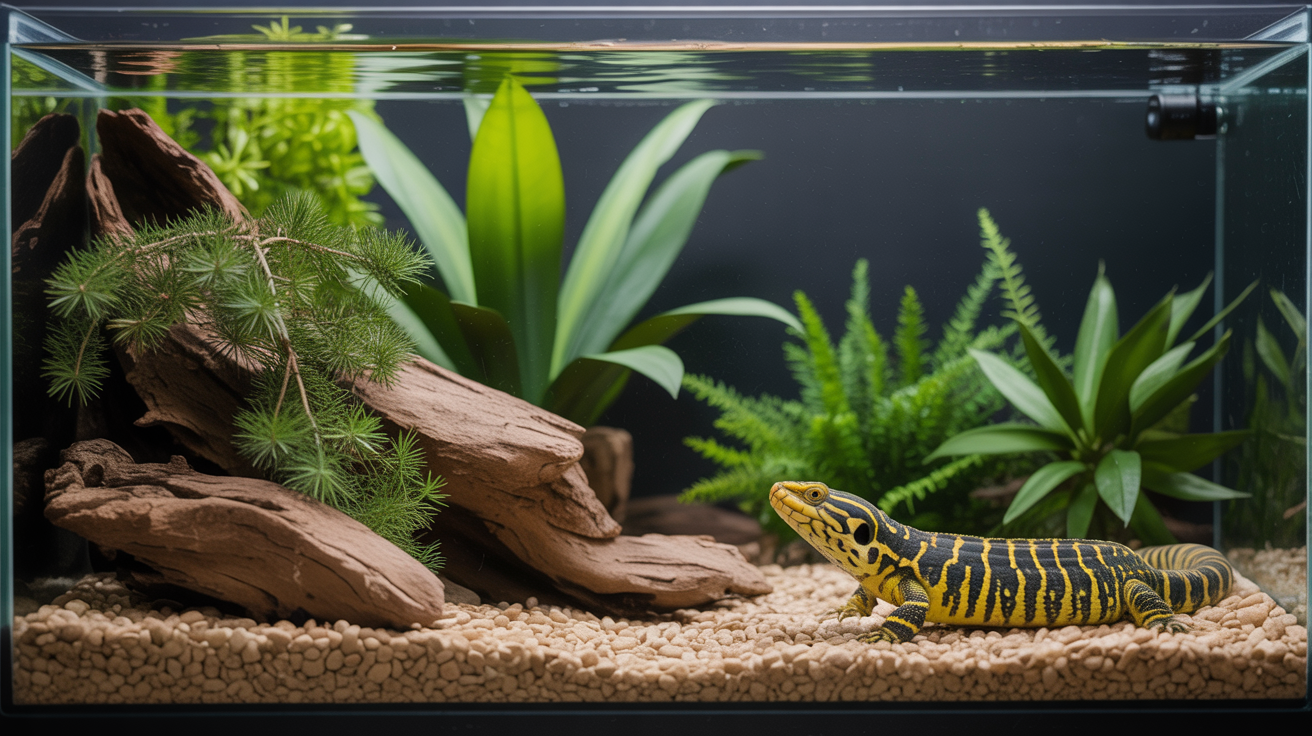
Getting a reptile enclosure ready before your animal arrives is one of the most important things you can do as a new keeper. A tank that hasn't been tested, where temperatures are guessing, humidity is unknown, and hides aren't placed, puts unnecessary stress on an animal that is already coping with transport. This guide walks you through the full setup process, step by step, with a 48-hour stabilization window built in at the end.
Species needs vary significantly. A ball python needs very different conditions than a leopard gecko or a bearded dragon. Wherever this guide gives ranges, look up the specific requirements for your species and treat those numbers as the target.
What You'll Need: Equipment Checklist
Before you start, gather everything. Mid-setup trips to the pet store interrupt the process and leave substrate and hides sitting without power.
| Item | Notes |
|---|---|
| Glass or PVC enclosure | Size matched to species; see what size tank does your reptile need |
| Substrate | Species-appropriate; see choosing the right substrate |
| Basking lamp or ceramic heat emitter (CHE) | Wattage depends on tank size and ambient room temp |
| UVB lamp (linear T5 HO recommended) | Size matched to enclosure; check Ferguson Zone for species |
| Thermostat | Dimming thermostat for basking bulbs; pulse for CHE |
| Digital thermometers (x2 minimum) | One for cool side, one for basking spot |
| Infrared temp gun | Point-and-read surface temps instantly |
| Digital hygrometer | For humidity-dependent species |
| Hides (x2 minimum) | One warm side, one cool side |
| Branches, cork bark, rocks, or other furniture | Secure and non-toxic |
| Water dish | Heavy enough that it won't tip |
| Reptile-safe disinfectant | F10SC or diluted white vinegar |
- Enclosure cleaned and dry
- Substrate added
- Hardscape and hides placed
- Heating and UVB installed and wired to thermostats
- Two thermometers and a hygrometer in place
- Enclosure running for 24–48 hours before animal arrives
Step 1: Clean the Enclosure
New tanks aren't necessarily sterile. Glass may have residues from manufacturing or transport. Used tanks can carry bacteria, mites, or fungal spores from previous occupants.
Wipe down every surface, floor, walls, lid, and any accessories, with a reptile-safe disinfectant. F10SC (diluted per the label, typically 1:250) is effective and widely available. Plain white vinegar diluted 50/50 with water works for a lighter clean on new tanks. Avoid ammonia-based cleaners, bleach at full strength, or products with pine oils; the fumes linger and can harm respiratory tissues.
Rinse with clean water, then let the enclosure air out completely. The tank should smell like nothing before you move to the next step.
Step 2: Add Substrate
Choosing the right substrate is a full topic on its own, but the short version: match the substrate to the animal's natural environment and digestive risk profile.
- Leopard geckos: Paper towels (for juveniles), tile, or a loose topsoil/sand mix for adult bioactive setups
- Ball pythons: Coco fiber, coconut husk chips, or a bioactive topsoil mix (holds humidity well)
- Bearded dragons: Reptile carpet for juveniles (loose substrate and young beardies mix badly); bioactive or tile for adults
- Corn snakes: Aspen shavings, coco fiber, or cypress mulch
Depth matters too. Snakes that like to burrow need 4–6 inches minimum. Surface-dwelling geckos need far less. Pour or pack the substrate evenly, and if you're using a loose mix for burrowing species, lightly compress the bottom layer so it holds a tunnel shape.
Step 3: Build the Hardscape and Place Hides
Reptiles are prey animals. An exposed enclosure with nowhere to hide creates chronic stress, which suppresses immune function and shortens lifespans. Hides aren't decorative, they're essential.
Place at least two hides: one on the warm side of the tank, one on the cool side. The animal should be able to choose the temperature it wants while still feeling secure. Hides should be just large enough for the animal to fit inside with its body touching the walls on at least two sides. An oversized hide doesn't provide the same sense of security.
Arrange branches, cork bark tubes, and rock formations before you add heat sources. This matters because:
- You need to know where the basking surface will be before you aim your lamp.
- Stacking rocks or branches after the substrate is in can cause unstable structures. Build from the bottom up.
Make sure everything is stable. A heavy branch or flat rock that tips over onto a reptile can cause serious injury. If you're stacking rocks, a small dab of aquarium-safe silicone sealant between pieces adds security without harming the animal.
Step 4: Install Heating and UVB
This step has the most room for error, and it's where incorrect setups cause the most harm, either through burns or through inadequate UV exposure that causes metabolic bone disease over months.
Heating
Most reptiles need a temperature gradient: a warm basking zone on one end and a cooler retreat on the other. The animal moves between zones to self-regulate body temperature, a process called thermoregulation. Without a proper gradient, the animal has no choice, it can only sit in one temperature zone, which disrupts digestion, immune response, and behavior.
Rough basking surface temperature targets (verify for your species):
| Species group | Basking surface (°F) | Basking surface (°C) | Cool side (°F) | Cool side (°C) |
|---|---|---|---|---|
| Bearded dragons | 100–110°F | 38–43°C | 80–85°F | 27–29°C |
| Leopard geckos | 88–92°F | 31–33°C | 72–77°F | 22–25°C |
| Ball pythons | 88–92°F | 31–33°C | 76–80°F | 24–27°C |
| Corn snakes | 85–88°F | 29–31°C | 70–75°F | 21–24°C |
| Blue-tongue skinks | 100–105°F | 38–41°C | 75–80°F | 24–27°C |
Connect all heat sources to a thermostat. A basking bulb should run through a dimming thermostat with the probe placed at basking level. Ceramic heat emitters run through a pulse-proportional thermostat. Never run a heat source unregulated, overnight temperature spikes can cook an animal in a glass enclosure.
See how to set up a temperature gradient in a reptile tank for wiring details and probe placement.
UVB
Most reptiles, including species once considered to need "low" UV, benefit from UVB exposure. It enables vitamin D3 synthesis, which drives calcium absorption. Without it, animals develop metabolic bone disease (MBD), a painful and often irreversible condition.
Use a linear T5 HO UVB bulb sized to cover at least two-thirds of the enclosure's length. The "Ferguson Zone" system categorizes reptiles by UV need (Zone 1 through Zone 4); match the bulb's UV Index output to your species' zone. For most common beginner species:
- Leopard geckos: Ferguson Zone 1–2 (low UV, shade dwellers)
- Ball pythons: Ferguson Zone 1 (crepuscular; low UV)
- Bearded dragons: Ferguson Zone 3–4 (high UV, open basking)
- Corn snakes: Ferguson Zone 1–2
Mount UVB on a timer set to 10–12 hours on, 12–14 hours off. Reptiles need a day/night cycle.
Step 5: Place Thermometers and Hygrometer
Two thermometers aren't a luxury. You need one on the warm side (near the basking zone, not directly under the lamp) and one on the cool side. This lets you confirm the gradient is working and catch problems immediately.
For surface temperature, use an infrared temp gun pointed directly at the basking rock or branch. Digital probe thermometers in the air above the basking spot read several degrees lower than what the animal actually experiences when lying on the surface. The surface is what matters.
Place the hygrometer at mid-level in the enclosure, away from the water dish (which will artificially inflate readings). Target humidity by species:
| Species | Target humidity |
|---|---|
| Ball pythons | 60–80% |
| Leopard geckos | 30–40% |
| Bearded dragons | 30–40% |
| Corn snakes | 40–60% |
| Blue-tongue skinks | 40–60% |
If humidity runs low, misting one side of the enclosure (not the whole thing) or adding a covered humid hide with damp sphagnum moss often corrects it. If it runs high, increase ventilation.
Step 6: Run the Enclosure for 24–48 Hours Before the Animal Goes In
This step is the one most beginners skip, and it's the most important.
Turn everything on. Let the enclosure run for a full day, or ideally two. Check temperatures at different times: morning, midday, evening. Thermostats can drift, bulbs can be angled wrong, and ambient room temperature changes throughout the day can pull basking temps lower than expected.
What to check during this window:
- Basking surface (infrared gun): hitting the target for your species?
- Cool side thermometer: stable and within range?
- Overnight low: does the cool side drop below the species' minimum comfortable temperature? If so, add a low-wattage CHE on a separate thermostat to maintain a floor temp.
- Humidity: stable across morning and evening readings?
- Thermostat: is the basking bulb dimming and brightening to hold the probe temperature?
Fix anything that's off before the animal arrives. Adding an animal to an unverified enclosure and then adjusting temperatures around a stressed, newly arrived reptile makes it harder to know whether behavioral problems are from the move or from the environment.
Frequently Asked Questions
Do I need UVB if I give my reptile vitamin D3 supplements?
Supplementation helps, but it doesn't fully replace natural UVB exposure. The body regulates vitamin D3 synthesis from UVB very precisely, it's difficult to oversupplement through light, while oral D3 can accumulate to toxic levels if overdone. For most diurnal (daytime-active) reptiles, UVB is strongly recommended. For nocturnal species like leopard geckos, UVB at low levels is still beneficial even if not strictly required for survival.
How long should I wait before handling a new reptile?
Most keepers recommend 1–2 weeks of minimal interaction after bringing a new reptile home. The animal is adjusting to a new environment, new smells, and new light cycles. Let it eat successfully at least once before introducing regular handling.
Can I use a heat mat instead of a basking lamp?
Heat mats work for some species (leopard geckos, certain snakes) as a belly-heat supplement, but they shouldn't replace overhead heat for basking species. Reptiles that bask regulate temperature by moving toward or away from a surface-level heat source, a mat under the substrate doesn't replicate the directed warmth of an overhead lamp. Always run heat mats through a thermostat.
What if my thermometer readings are inconsistent?
Cheap stick-on analog thermometers (the ones that look like decals on the glass) are notoriously inaccurate. Replace them with digital probe thermometers or, better, verify all readings with an infrared temp gun. A second point of reference is the most reliable way to catch a faulty sensor.
Should I find an exotic vet before I get my reptile?
Yes. Finding an experienced exotics vet before you need one is far less stressful than scrambling during a health crisis. Not all vets treat reptiles, search for one that lists herpetology or exotic animal medicine as a specialty. Schedule a new-patient wellness exam within the first few months of ownership. A vet familiar with your species is an important part of long-term care, not just an emergency resource.