Habitat & Setup
What Size Tank Does Your Reptile Need?
Reptile tank size depends on species, lifestyle, and adult dimensions. Learn the right enclosure size for popular reptiles, from bearded dragons to geckos.
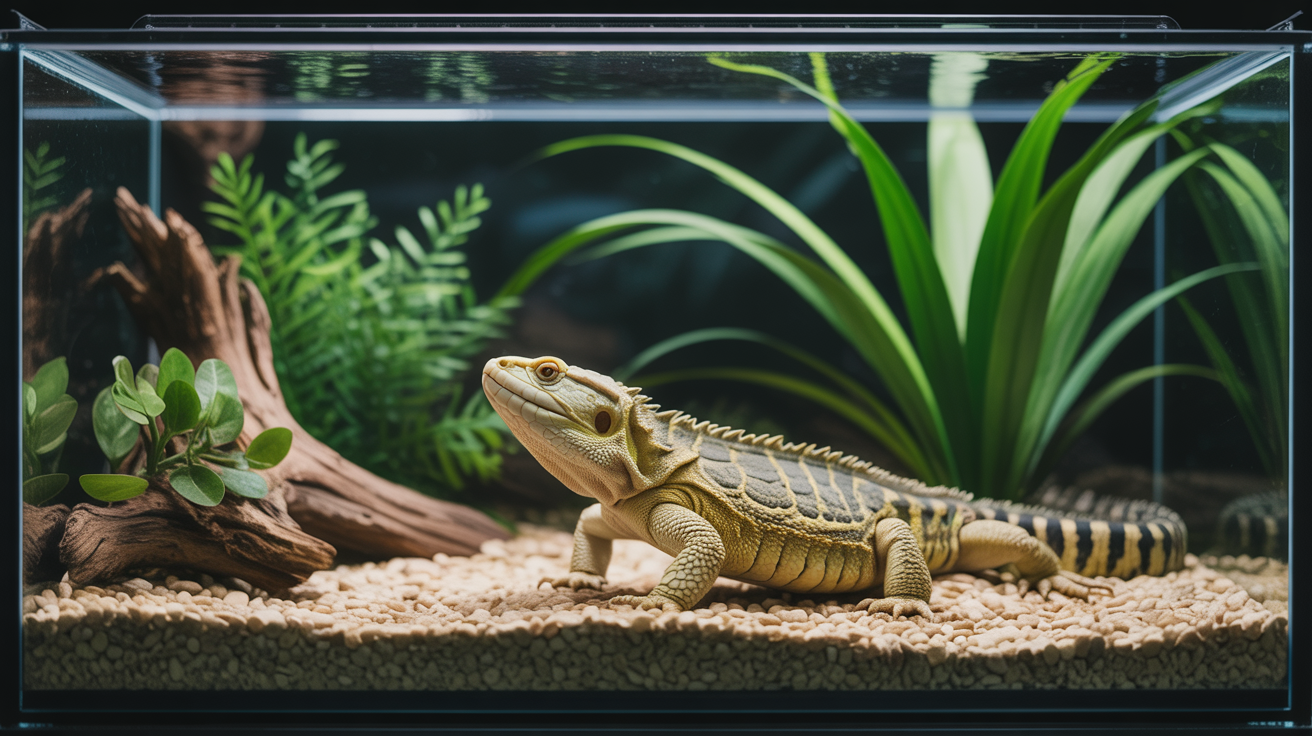
Getting the enclosure size right is one of the most important decisions you'll make as a new reptile keeper. Too small, and your animal can't thermoregulate properly, gets stressed, and often stops eating. Too large without the right setup, and a hatchling can struggle to find food or feel secure. The good news is that once you understand a few basic principles, choosing the right tank becomes straightforward.
Why Enclosure Size Matters More Than You Might Think
Most beginners focus on temperature and humidity, which absolutely matter, but overlook how much space affects those same factors. A properly sized enclosure makes it possible to create a genuine thermal gradient: a warm basking side and a cooler retreat on the other end. In a tank that's too short, heat from the basking lamp radiates through the whole space and your reptile has no way to cool down.
Stress is the other reason size matters. Reptiles that feel cramped often pace the glass repeatedly, refuse food, or show defensive behavior. These aren't personality quirks, they're signs that the animal doesn't have enough territory.
One thing to note: gallons are a convenient shorthand, but they don't tell the whole story. A 40-gallon "breeder" tank and a 40-gallon "long" tank hold the same water, but have different floor footprints. For ground-dwelling reptiles, floor space is what counts. For climbers, height is equally critical.
Floor Space vs. Height: Matching the Tank to the Animal's Lifestyle
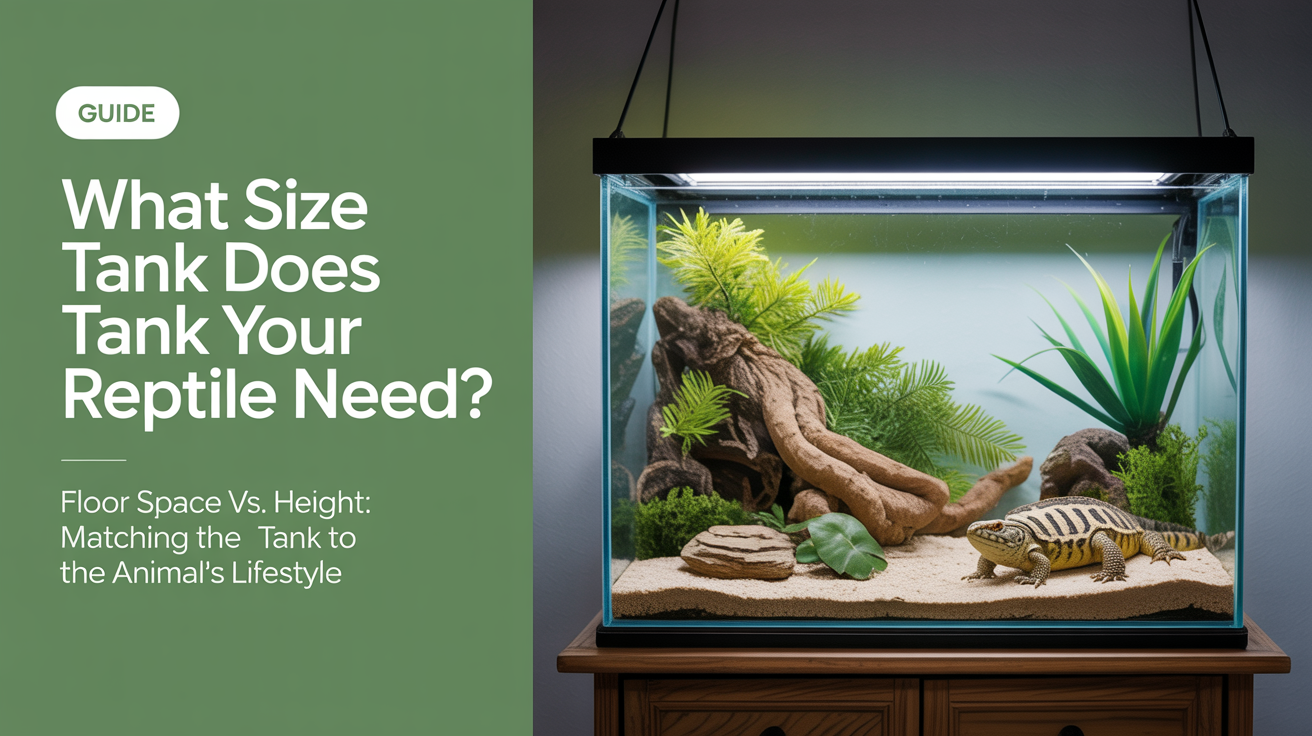
Ground Dwellers Need Horizontal Space
Terrestrial species like bearded dragons, blue-tongued skinks, and leopard geckos spend almost all their time on the ground. For these animals, a long, wide enclosure is far more valuable than a tall one. A 4 ft × 2 ft floor gives a bearded dragon room to move between its basking spot and a cooler hide, a 2 ft × 2 ft footprint at the same volume does not.
When shopping for tanks for ground dwellers, pay attention to the actual floor dimensions listed in the product specs, not just the gallon rating. A 40-gallon breeder (36" × 18" × 16") is almost always a better choice for a ground dweller than a standard 40-gallon (36" × 12" × 16"), even though they sound identical.
Arboreal Species Need Vertical Height
Chameleons, crested geckos, green tree pythons, and other climbing reptiles orient their lives vertically. They bask higher up, retreat lower to cool down, and rarely touch the substrate except by accident. For these animals, height drives the thermal gradient, warm air rises toward the basking lamp at the top, and the lower third of the enclosure stays naturally cooler.
A good rule of thumb for arboreal species: the enclosure should be at least as tall as the animal is long, and ideally two to three times that. A veiled chameleon, for example, does poorly in a 20-gallon aquarium but thrives in a 24" × 24" × 48" screen enclosure.
Semi-Aquatic and Burrowing Species
Turtles and semi-aquatic turtles need enough water depth to swim and turn around, plus a dry basking area. Burrowing species like sand boas need enough substrate depth to disappear completely, typically 4–6 inches minimum, which means a tank with some vertical space even if height isn't the primary concern.
"Grow Into It" vs. Starting Small for Hatchlings
There's a genuine debate among keepers about whether to start a hatchling in its adult enclosure or use a smaller "grow-with-me" setup. Both approaches work when done correctly.
Starting in the Adult Enclosure
Starting a hatchling in a large enclosure is fine for most species, provided you do two things: add plenty of hides so the animal can feel secure, and feed with tongs or a feeding dish so prey isn't lost in substrate. A baby bearded dragon in a 4 ft × 2 ft enclosure can thrive as long as it can find food easily and has multiple small hides to choose from.
This approach saves money (you buy one enclosure instead of two) and means the animal never has to go through the stress of a tank upgrade.
Starting Small
Some keepers prefer smaller starter enclosures for hatchlings, particularly with species that are very secretive or prone to stress, baby ball pythons, for example, are often kept in tubs or 10-gallon tanks initially. The argument is that a small space makes the animal feel secure and makes it easier to find prey, which reduces feeding refusals.
If you go this route, plan the upgrade timeline before you buy. A ball python needs to move to at least a 4 ft enclosure as an adult, buying a 10-gallon "starter" kit and then needing a full replacement in a year adds up. Build that cost into your initial budget.
Common Adult Enclosure Sizes by Species
These are widely accepted minimums for healthy adult animals. Bigger is almost always better for the animal, provided you furnish the space appropriately.
| Species | Min. Adult Enclosure | Dimensions (approx.) | Notes |
|---|---|---|---|
| Bearded Dragon | 120 gallons | 48" × 24" × 24" | Floor space is the priority |
| Leopard Gecko | 40 gallons | 36" × 18" × 18" | Breeder footprint preferred |
| Crested Gecko | 30+ gallon tall | 18" × 18" × 36" | Height matters most |
| Ball Python | 120 gallons | 48" × 24" × 24" | Many keepers use PVC tubs |
| Corn Snake | 40 gallons | 36" × 18" × 18" | Active, needs length |
| Blue-Tongued Skink | 120 gallons | 48" × 24" × 24" | Needs deep substrate |
| Veiled Chameleon | Screen enclosure | 24" × 24" × 48" | Screen (not glass) for ventilation |
| Green Anole | 20 gallons tall | 24" × 12" × 24" | Arboreal; add vertical plants |
| Red-Eared Slider | 75+ gallons | 48" × 18" × 20" | Plus basking platform + UV |
| Russian Tortoise | 4 ft × 8 ft (outdoor) | Varies | Outdoor or large indoor pen |
A few clarifications on the table: chameleons are almost universally kept in screen enclosures rather than glass tanks because they need strong cross-ventilation, glass traps humidity and can lead to respiratory infections. Tortoises generally do better in open-top pens than in tanks; the "4 ft × 8 ft" figure is a floor pen, not a glass aquarium.
The bearded dragon tank size recommendation used to be 75 gallons in older care guides. Current consensus among experienced keepers and herpetological societies has shifted to 120 gallons for adults, primarily because it allows a proper thermal gradient without the basking zone radiating heat across the whole enclosure.
Setting Up the Enclosure Once You Have the Right Size
Size is the foundation, but what you put inside the enclosure determines whether that space actually works for your animal. A step-by-step tank setup guide covers the full process, from positioning hides to arranging decor so the enclosure feels natural rather than just functional.
Substrate, the material covering the floor, also affects how much usable space your reptile actually has. Loose particulate substrates allow burrowing behavior and hold humidity better in humid-species tanks. Tile or paper towel works well for arid species and makes cleaning simpler. More on the trade-offs in this guide to choosing the right substrate.
And once the tank is sized and furnished, dialing in the temperature gradient is the final piece. You want a measurable difference of at least 15–20°F between the basking zone and the cool end. This guide on setting up a temperature gradient walks through exactly how to achieve that.
Frequently Asked Questions
Can I keep a bearded dragon in a 40-gallon tank?
A 40-gallon tank works for a juvenile bearded dragon (under 10 inches or so), but it's too small for an adult. Adult bearded dragons reach 18–24 inches in length and need at least a 4 ft × 2 ft floor, roughly a 120-gallon enclosure, to have a proper thermal gradient and room to move. Keeping an adult in a 40-gallon long-term typically leads to stress, glass surfing, and difficulty maintaining appropriate temperatures.
Is a bigger tank always better?
Bigger is better for adult animals, with one caveat: the enclosure needs to be furnished appropriately. A large, empty enclosure can actually stress some reptiles, especially secretive species like ball pythons. More space is beneficial when you fill it with hides, climbing structures, or appropriate substrate, not when it's a bare glass box. For hatchlings, oversized enclosures can make it hard to find food and can feel insecure; starting slightly smaller (or adding lots of cover) is reasonable.
What's the difference between a 40-gallon breeder and a 40-gallon long?
Both hold 40 gallons, but the dimensions differ. A 40-gallon breeder is typically 36" × 18" × 16", it has a wider footprint and lower height. A 40-gallon long is usually 48" × 12" × 16", longer but narrower. For ground-dwelling reptiles, the breeder wins because 18 inches of width allows more natural movement and makes gradient placement easier. The long has more floor length but is cramped side-to-side.
Do reptiles actually use all the space in a larger enclosure?
Yes, provided the enclosure is set up with appropriate enrichment. Reptiles in properly furnished enclosures actively use different zones throughout the day, basking in the morning, retreating to hides midday, exploring in the evening. The common idea that reptiles are "lazy" and don't use large spaces usually reflects animals kept in barren enclosures with nothing to explore, not natural behavior.
How do I know if my reptile's tank is too small?
The clearest signs are: glass surfing (repeatedly pacing or scratching at the front glass), refusal to eat despite other conditions being correct, inability to fully stretch out, and visible stress behaviors like dark coloration in bearded dragons or constant hiding. If your animal can't fully extend its body in its longest dimension, the enclosure is definitely too small. For thermal gradient problems, use a temperature gun: if the cool end reads above 80°F on a hot day, the enclosure isn't long enough to dissipate the heat from your basking lamp.