Species Guides
Corn Snake Care: A Complete Beginner's Guide
Learn how to care for a corn snake: enclosure size, temps, humidity, feeding schedule, handling tips, and common health issues for beginners.
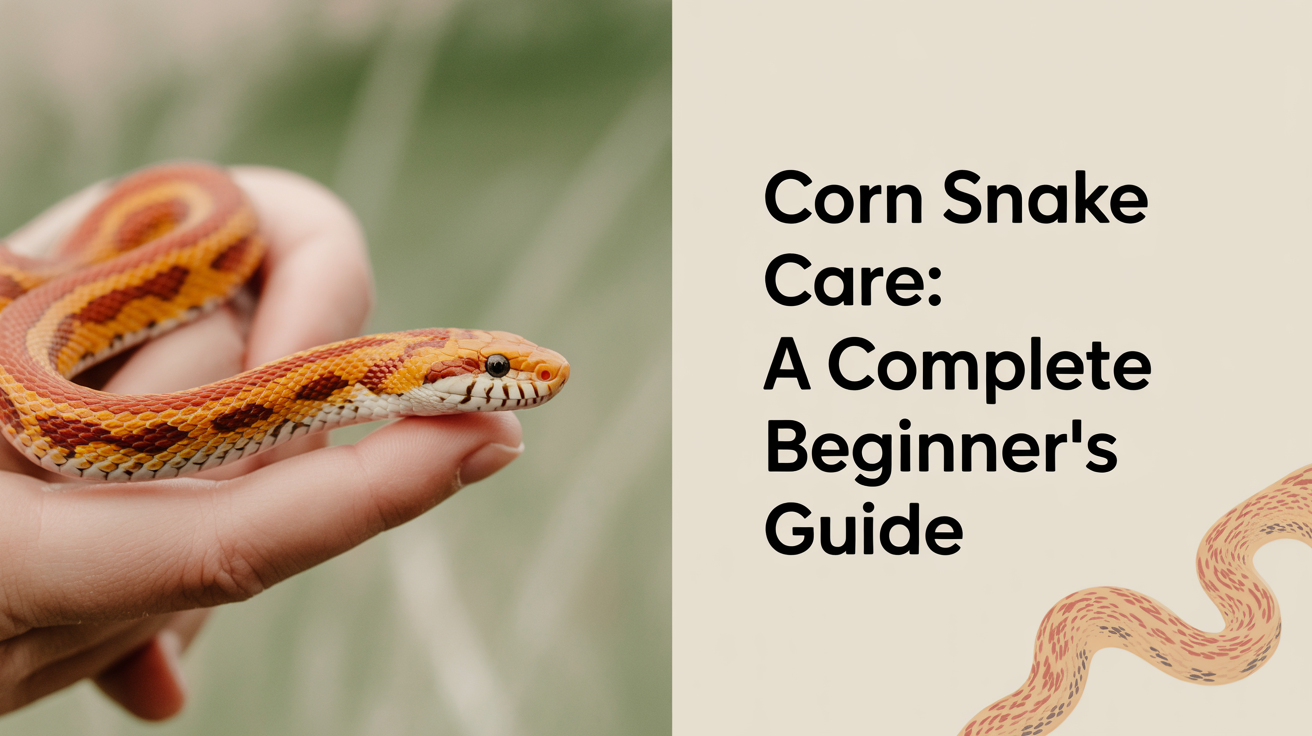
Corn snakes (Pantherophis guttatus) are one of the best first snakes for a reason. They stay a manageable size, tolerate regular handling well, and forgive a beginner's early mistakes better than most other species. With a lifespan of 15 to 20 years or longer in captivity, though, "beginner-friendly" does not mean low-commitment.
This guide covers everything you need to get a corn snake set up correctly from day one, including enclosure sizing, temperatures, humidity, feeding, and the health issues most likely to show up over a long captive life.
At a Glance
- Adults need a minimum 40-gallon breeder (36 x 18 in), not the 20-gallon long tank that works fine for hatchlings.
- Warm side runs 80 to 85°F, cool side 72 to 76°F, with a locking screen lid, corn snakes are accomplished escape artists.
- Humidity sits at 40 to 60% normally, rising to 60 to 70% during a shed cycle; low humidity is the top cause of stuck shed.
- Feed frozen-thawed mice sized to the snake's widest point, every 5 to 14 days depending on age.
- Wait 48 hours after feeding before handling, and expect a settled, food-motivated snake within a few weeks of gentle, consistent handling.
- Lifespan runs 15 to 20+ years, so budget for a long-term exotics vet relationship, not just the first year of setup.
Enclosure Size and Setup
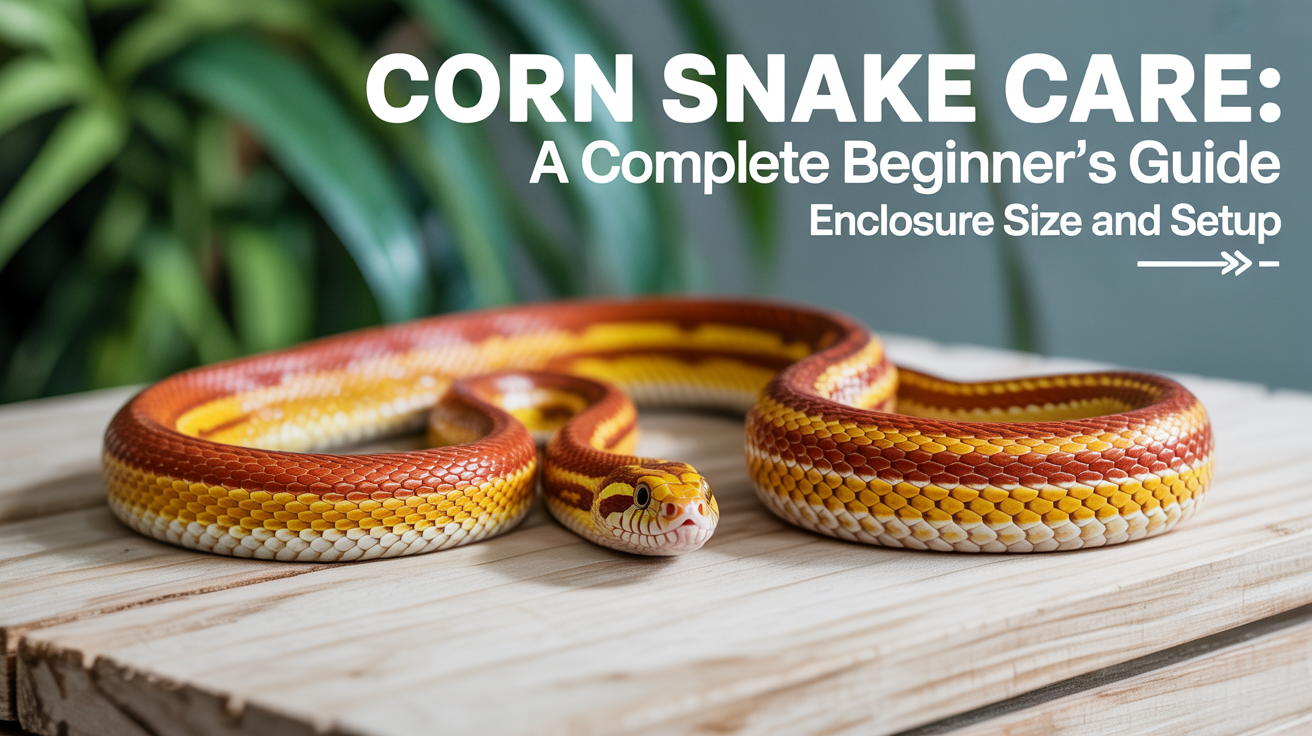
Corn snakes are active and exploratory, so they need more horizontal floor space than many keepers expect.
Hatchlings and juveniles (under 24 inches): A 20-gallon long tank (30 x 12 inches / 76 x 30 cm) works as a starter enclosure. Because corn snakes are escape artists, a secure, locking screen lid is non-negotiable, a gap the width of a pencil is enough for a hatchling to squeeze through and disappear behind a couch.
Adults (24 inches and up): Most adult corn snakes reach 3 to 5 feet in length. A 40-gallon breeder (36 x 18 inches / 91 x 46 cm) is a reasonable minimum for an adult. Many keepers move up to a 4 x 2 x 2-foot PVC or melamine enclosure, which also retains heat more efficiently than an all-glass tank and holds humidity better during shed cycles.
For substrate, loose, absorbent materials work best. Aspen shavings are a classic choice, cheap, easy to spot-clean, and good at controlling odor. Coconut fiber or a coconut fiber/topsoil blend also works well and holds slight humidity without going sour. Avoid cedar and pine shavings, which contain aromatic oils harmful to snakes.
Provide at least two hides: one on the warm side and one on the cool side. Corn snakes spend most of their time hidden, so skimping on hides leads to a stressed animal that refuses food and stays defensive. Add a few cork rounds or low climbing branches if you want to give the snake more environmental enrichment, though this is optional; corn snakes are more terrestrial than arboreal and won't use vertical space the way a tree-dwelling species would.
Temperatures and Heating
Corn snakes are a temperate North American species, so their temperature requirements are more moderate than a tropical python. You still need a gradient so the snake can thermoregulate.
Warm side: 80 to 85 F (27 to 29 C) Cool side: 72 to 76 F (22 to 24 C) Basking spot (directly over the heat source): 85 to 88 F (29 to 31 C) maximum Nighttime low: No lower than 65 F (18 C)
An under-tank heater (UTH) connected to a thermostat is the standard heating method. Plug the UTH into a thermostat probe placed on the warm-side floor to prevent overheating. A ceramic heat emitter (CHE) on a thermostat is another option if you want overhead heating, which is more natural and avoids the risk of a snake pressing directly against an unregulated hot surface.
Do not use heat rocks. They develop hot spots and cause burns.
Verify temperatures with a digital thermometer or a temperature gun. Stick-on dial thermometers are not accurate enough for reptile keeping, they can read 10 degrees or more off from the actual surface temperature.
A note on UVB: Corn snakes are crepuscular to nocturnal and can thrive without UVB lighting. That said, low-level UVB (a 5.0 or T5 6% tube covering part of the enclosure) does appear to benefit long-term health and color, and there is no downside to providing it. It is not a requirement, but it is a worthwhile addition if budget allows. A regular photoperiod of 12 hours of light and 12 hours of darkness helps maintain normal behavior and appetite.
Humidity and Substrate Management
Corn snakes do best at moderate humidity: 40 to 60% under normal conditions, rising to 60 to 70% during a shed cycle.
Low humidity is the most common cause of stuck shed (dysecdysis). A snake that cannot fully shed in one piece often has incomplete skin clinging around the eyes (retained eye caps) or tail tip. The Merck Veterinary Manual notes that dysecdysis in reptiles is most commonly caused by low humidity, though parasites, nutritional deficiencies, and a lack of rough surfaces to rub against during the shed can also contribute, and that it's considerably easier to prevent through consistent humidity than to correct afterward. If a stuck shed happens anyway, soak the snake in lukewarm water for 20 to 30 minutes, then gently work the retained skin loose with a damp cloth. Do not pull forcefully.
To maintain adequate humidity, mist one side of the enclosure lightly a few times a week. A humid hide (a hide box with a damp substrate of sphagnum moss inside) placed on the warm side gives the snake a high-humidity retreat during sheds without making the whole enclosure wet.
Screen lids let humidity escape quickly, especially in dry climates. Covering 50 to 70% of the screen with a piece of aluminum foil or a custom cover can bring humidity to the right range without extra effort.
Feeding Schedule and Prey Size
Corn snakes are constrictors that eat whole prey. Frozen-thawed mice are the best option for captive snakes. Live prey carries injury risk, a hungry, defensive mouse can bite a snake badly enough to cause infection, and pre-killed rodents remove the guesswork about whether the mouse has already bitten the snake.
To thaw a frozen mouse, place it in a sealed bag in warm water for 20 to 30 minutes until it reaches room temperature. Never microwave frozen rodents.
Prey sizing: Offer a mouse that is roughly the same width as the snake's widest body point, or slightly thicker. For hatchlings, that is a pinky mouse. As the snake grows, step up to fuzzy mice, then hoppers, then adult mice. Most adult corn snakes are fed adult or large adult mice.
Feeding frequency:
- Hatchlings to juveniles (under 12 months): every 5 to 7 days
- Juveniles to subadults (12 to 24 months): every 7 to 10 days
- Adults (2 years and up): every 10 to 14 days
After feeding, leave the snake undisturbed for 48 hours. Handling too soon can cause regurgitation, which stresses the animal and depletes nutrients, and a snake that regurgitates once often needs a longer recovery period before the next meal is offered at a reduced size.
If a corn snake refuses food, check temperatures first. A cool enclosure is the most common cause of feeding strikes. Snakes going into shed also often refuse food for a week before and after.
Handling and Temperament
Corn snakes are widely regarded as one of the most handleable snake species available in the pet trade. Most become calm within a few weeks of consistent, gentle handling.
Give a newly acquired corn snake 7 to 10 days to settle in before handling. Begin with short sessions of 10 to 15 minutes, a few times per week. Support the body rather than gripping, and let the snake move through your hands at its own pace.
Avoid handling within 48 hours of feeding and during shed, when the snake's eyes turn blue and its skin appears dull. A snake in shed can be defensive because its vision is temporarily obscured.
Wash your hands before and after every handling session. Corn snakes, like all reptiles, can carry Salmonella bacteria without showing any signs of illness themselves. This is a genuine health consideration, not a scare tactic: young children, pregnant people, and anyone immunocompromised should take extra care with handwashing and avoid letting the snake near the face or food-prep areas.
Compared to other species like the ball python, corn snakes are generally more active and less prone to long feeding strikes. They are not venomous and rarely bite once acclimated, though any snake will bite if it feels threatened or smells food on your hand.
Common Health Issues
Respiratory infection (RI): Symptoms include wheezing, mucus around the mouth or nostrils, and open-mouth breathing. Low temperatures and high humidity fluctuations are common triggers. The Merck Veterinary Manual lists poor environmental conditions, parasites, malnutrition, and vitamin A deficiency among common causes in pet reptiles, alongside open-mouth breathing and nasal discharge as the hallmark signs. RIs require veterinary treatment, often antibiotics prescribed by an exotics vet after a physical exam, and supportive care usually includes keeping the snake at the warm end of its temperature range while it recovers.
Mites: External parasites that appear as tiny moving black or red dots on the snake, in the water dish, or on your hands after handling. Mites spread quickly between enclosures. Isolate an affected snake immediately. A veterinarian can recommend safe treatment options, as over-the-counter products vary in safety and effectiveness.
Stuck shed (dysecdysis): Incomplete shedding, most often caused by low humidity or dehydration. See the humidity section above for how to address it. Retained eye caps that do not come off with gentle soaking should be handled by a vet to avoid damaging the spectacle.
Mouth rot (stomatitis): Redness, swelling, or cheesy discharge around the mouth. Often follows an injury or infection. Requires veterinary care.
Internal parasites: Newly acquired snakes, especially those from unverified sources, benefit from a fecal exam at an exotics vet early on. Worm or protozoan burdens often go undetected until a snake loses significant weight.
Finding an exotics vet before you need one is worth doing now, not after a problem appears. Not all veterinarians treat reptiles. The Association of Reptilian and Amphibian Veterinarians (ARAV) maintains a searchable vet directory if you need help locating a reptile-experienced practice in your area.
If you are comparing species before making a decision, our guides on leopard gecko care and bearded dragon care cover two other commonly recommended beginner reptiles with different care requirements.
Corn Snake Growth and Feeding Reference
| Age | Length | Prey Size | Feeding Interval |
|---|---|---|---|
| Hatchling (0–3 mo) | 8–12 in | Pinky mouse | Every 5–7 days |
| Juvenile (3–12 mo) | 12–24 in | Fuzzy mouse | Every 5–7 days |
| Subadult (1–2 yr) | 24–36 in | Hopper mouse | Every 7–10 days |
| Adult (2+ yr) | 3–5 ft | Adult mouse | Every 10–14 days |
| Large adult female | Up to 6 ft | Large adult mouse | Every 10–14 days |
This table is a starting point, not a strict rule. A snake carrying visibly extra weight around the mid-body should be fed less often or a smaller prey item; a thin snake with a visible spine can usually handle a slightly larger meal or shorter interval, always in consultation with feeding guidance from a vet if you're unsure.
Frequently Asked Questions
How long do corn snakes live? Corn snakes in captivity commonly live 15 to 20 years with proper care. Some individuals reach 25 years or more. This is one reason a corn snake purchase is a long-term commitment.
How big do corn snakes get? Most adults reach 3 to 5 feet (90 to 150 cm) in length. Males tend to be slightly smaller than females. Growth slows significantly after the first two years.
Do corn snakes need UVB lighting? They can survive without it, but low-level UVB (T5 6% tube) appears to support long-term health. A basic day/night light cycle is more important than UVB specifically. If you add a UVB bulb, mount it over the warm side and replace it every 12 months even if it still appears to emit light, as UV output degrades before the visible light does.
Why is my corn snake refusing to eat? The most common reasons are an enclosure that is too cool, a snake in pre-shed, a recently moved snake still adjusting to its new home, or the wrong prey size. If temperatures are correct and no shed is visible, try offering prey at dusk rather than midday, as corn snakes are more active in low light. A persistent refusal lasting more than four to six weeks in an adult warrants a vet check.
Can I handle a corn snake every day? Daily handling is fine once a snake is settled, as long as you avoid the 48-hour window after feeding and the active shed period. Corn snakes that are handled regularly from a young age tend to remain calm throughout their lives.
Is it normal for a corn snake to musk or bite when first handled? Yes, both are common defensive responses in a snake that hasn't been handled much yet, not signs that something is wrong with the animal or your technique. Musking (releasing a foul-smelling substance from the vent) fades quickly as the snake gets used to being picked up. Occasional defensive strikes in the first weeks usually stop once the snake associates your hands with calm, low-stress handling rather than threat.