Heating & Lighting
Do Reptiles Need Light at Night?
Most reptiles need heat at night but not light. Learn which night heating options work, what temperatures to target, and why colored bulbs are a mistake.
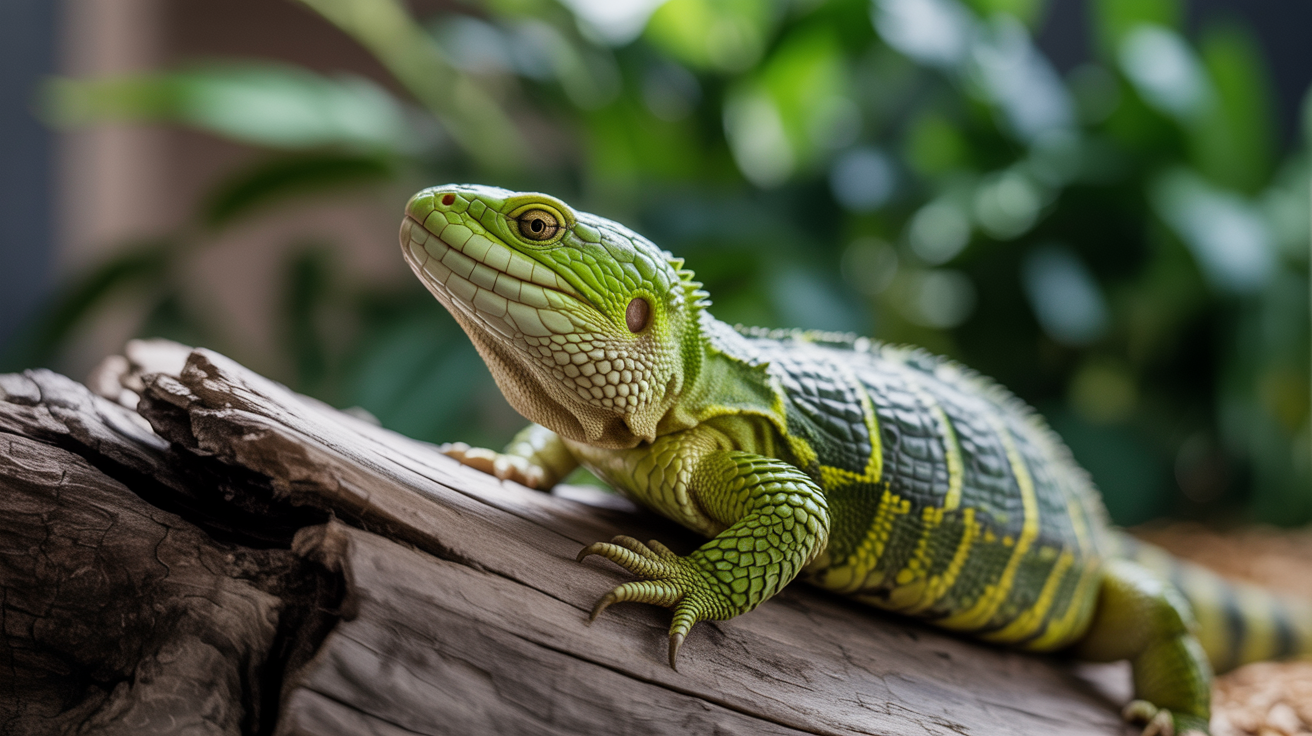
Most reptiles do not need any light after dark. What they often do need is warmth, but heat and light are two different things, and you can provide one without the other. This distinction matters more than it might seem, because leaving visible light on through the night disrupts the day-night cycle that many reptiles rely on for sleep, digestion, and hormone regulation.
The practical rule is simple: turn off all visible light when the sun goes down, including UVB bulbs, basking lamps, and any decorative "moonlight" bulbs you may have seen at the pet store. Whether you need to add a heat source after that depends on your room temperature and the species you keep. This guide walks through both questions.
At a Glance
- Turn off every visible light source at night, including basking bulbs, UVB tubes, and colored "moonlight" bulbs; a timer makes this automatic.
- Heat and light are separate needs. Most species can go dark at night but still need a warm floor or ambient temperature above a species-specific minimum.
- Ceramic heat emitters, deep heat projectors, radiant panels, and under-tank heaters all provide nighttime warmth with no light output.
- Colored night bulbs are a myth, many reptiles can perceive red and blue wavelengths, and the bulb still radiates uncontrolled heat.
- Always pair any nighttime heat source with a thermostat; heat sources left unregulated are a leading cause of thermal burns and enclosure fires.
- Check actual overnight temperatures with a probe thermometer rather than assuming a heat source is working as intended.
Why the Reptile Day-Night Cycle Matters
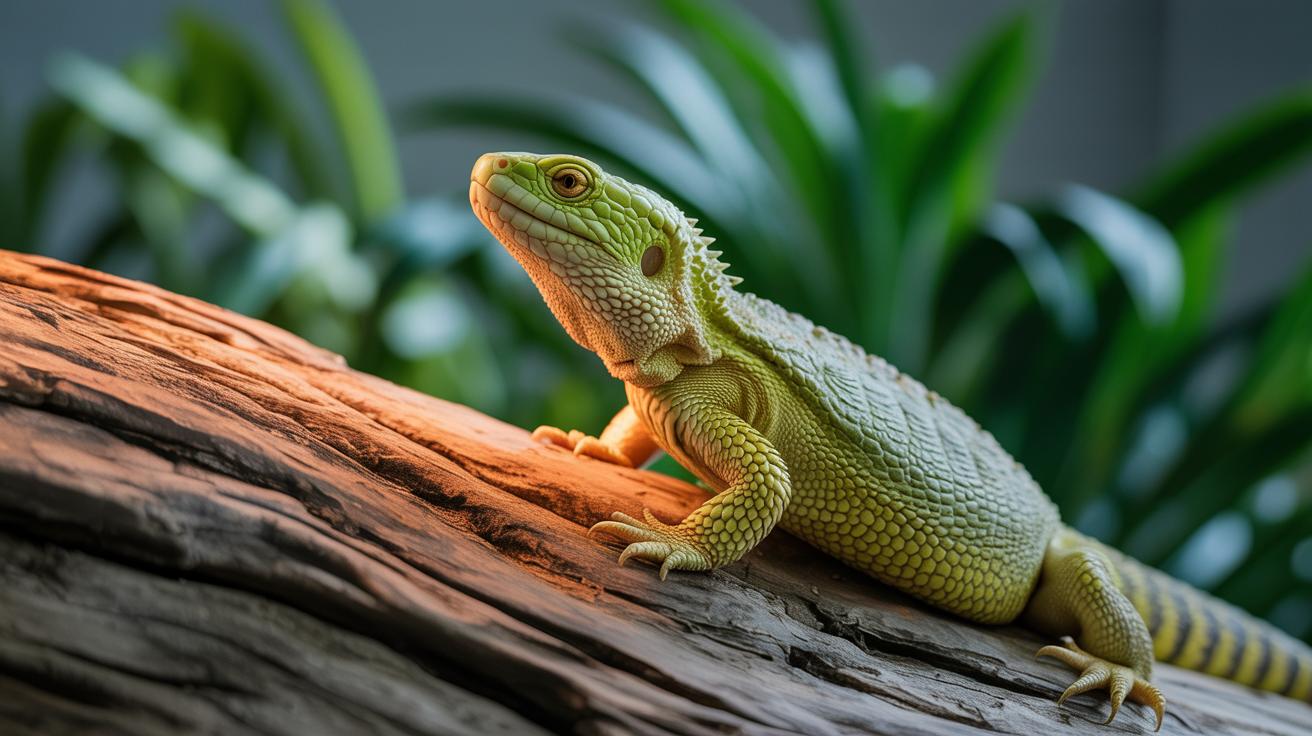
Reptiles are not robots that just need heat to function. Their biology responds to the rhythm of light and dark. A consistent day-night cycle (typically 12 hours on, 12 hours off for most tropical and subtropical species, adjusted seasonally for temperate ones) influences sleep quality, appetite, reproductive behavior, and the timing of shedding cycles.
When visible light stays on overnight, the animal cannot properly enter the rest phase. Over weeks and months, this can show up as chronic stress, reduced appetite, and general dullness. Keepers sometimes mistake these signs for illness or a husbandry problem elsewhere, when the root cause is simply that the lights never go off.
A timer is the easiest fix. Plug your basking lamp and UVB tube into a mechanical or digital timer and set them for a consistent on/off schedule. A basic mechanical outlet timer costs $8 to $15; a digital one with battery backup runs $15 to $25 and holds its schedule through a power blip. The enclosure does not need to be pitch black; ambient room light that filters in at dawn and dusk is fine and actually mimics natural conditions. What matters is that the bright artificial light inside the enclosure stops at a predictable time each night.
For more on how light and heat work together in a reptile setup, see Reptile Heating and Lighting Explained for Beginners.
Do Reptiles Need Heat at Night?
This is where species and room temperature come in. Reptiles are ectotherms, meaning they regulate body temperature through their environment rather than generating it internally. During the day, a basking lamp creates the thermal gradient they need to digest food, move efficiently, and carry out normal behavior. At night, most species tolerate a meaningful temperature drop and many benefit from it.
A cooler night signals to the animal's body that day has ended, reinforcing the day-night cycle. For many common species, a nighttime ambient temperature anywhere from 65°F to 75°F (18°C to 24°C) is acceptable. Problems arise only when temperatures fall below the safe floor for a given species or when the drop is so dramatic that the animal cannot maintain basic metabolic function.
Here are general nighttime temperature floors to work from:
| Species | Minimum Night Temp |
|---|---|
| Bearded dragon | 65°F (18°C) |
| Leopard gecko | 65°F (18°C) |
| Ball python | 72°F (22°C) |
| Crested gecko | 65°F (18°C) |
| Blue-tongue skink | 65°F (18°C) |
| Corn snake | 60°F (16°C) |
| Green tree python | 75°F (24°C) |
| Red-eyed tree frog | 68°F (20°C) |
These are floor values, not targets. If your room stays reliably above the listed minimum without supplemental heat, you can turn off all heat sources at night. If your house drops below those thresholds in winter, you need a heat source that produces warmth without light. As a rough guide, a single-pane window bedroom in a cold climate can drop 10 to 15°F below the rest of the house overnight, so measure the enclosure's actual location rather than assuming your thermostat's household reading applies.
What to Use for Night Heating
Forget the basking bulb after dark. The tools worth using for nighttime warmth are:
Ceramic heat emitters (CHE): These screw into a standard ceramic bulb socket and produce infrared heat with no light output at all. They run warm enough to maintain ambient temperatures in most setups and are one of the most reliable nighttime heating options available. A 60 to 100-watt CHE covers most single-enclosure setups and costs $15 to $30, plus $30 to $50 for a dedicated thermostat if you don't already have one. Always pair a CHE with a thermostat to prevent overheating.
Deep heat projectors: A newer format that emits longer-wave infrared heat, which penetrates tissue more like natural sunlight does. They produce a faint orange glow at maximum output but nothing like visible room light. Good for species that benefit from belly and body warming even after dark. They run $30 to $60, somewhat more than a basic CHE, and many keepers consider the difference worth it for larger or more heat-sensitive species like ball pythons.
Radiant heat panels: These mount to the ceiling or top of a PVC enclosure and radiate gentle, even heat downward. Popular with snake keepers in particular. Almost completely invisible when operating, and typically priced $30 to $80 depending on panel size, with larger panels needed for a 4x2x2 enclosure than for a 20-gallon tank.
Under-tank heaters (UTH): A heat mat placed under one end of the enclosure provides a warm belly spot without any light. These work well for nocturnal species like leopard geckos that naturally seek ground-level warmth. A standard small-to-medium UTH runs $15 to $30. Combine with a thermostat and a temperature gun to verify surface temps, since substrate insulates unevenly, and a mat that reads fine on top of thin paper towel substrate can run noticeably hotter under a thick layer of packed soil.
For all of these, a thermostat is not optional. It controls output and prevents the heat source from running at full power all night, which can overheat the enclosure. A simple on/off thermostat handles most setups; a proportional thermostat gives finer control and is worth the extra cost for sensitive species. The Merck Veterinary Manual's overview of reptile husbandry-related disorders lists inadequate temperature control as a contributing factor in several common reptile illnesses, alongside calcium and UVB deficiency, underscoring that heating equipment is not a place to economize on quality or reliability.
To understand how to dial in the correct temperatures during the day before worrying about nighttime, read How to Set the Right Basking Temperature.
The Problem with Colored Night Bulbs
Red, blue, and purple "moonlight" bulbs have been sold for years on the premise that reptiles cannot see those wavelengths and therefore the light does not disturb them. This is not accurate. Reptiles have well-developed color vision, many species have more cone types in their eyes than humans do, and a number of lizard and snake species have been shown in behavioral studies to respond to and discriminate red and blue light.
Beyond that, even if a specific animal were less sensitive to a particular color, the heat output from an incandescent colored bulb still warms the basking zone and disrupts the temperature drop that should come with nighttime. You get the worst of both worlds: light that may still register to the animal, and heat you cannot precisely control.
Skip them entirely. A ceramic heat emitter or heat mat provides better-controlled warmth, produces no disruptive light, and costs about the same. The colored night bulbs are a solution to a problem that has better answers.
Species-Specific Notes Worth Knowing
A few categories of animals have slightly different night requirements:
Strictly nocturnal species (leopard geckos, crested geckos, African fat-tailed geckos) are most active after the lights go off. Their enclosures should definitely be dark at night since that is when they hunt and move. These animals are also often sensitive to even low levels of light, so red night bulbs are a particularly bad fit.
Tropical species (ball pythons, green tree pythons, red-eyed tree frogs) tend to need warmer nights than desert species since their native environments do not cool dramatically after dark. Ball pythons, for instance, need ambient night temperatures staying at or above 72°F (22°C). A heat mat or thermostat-controlled radiant panel usually handles this.
Desert species (bearded dragons, uromastyx, some skinks) come from environments where nights genuinely get cold. A drop to 65°F (18°C) is not just acceptable for a bearded dragon; it is more natural than keeping the enclosure at basking temps around the clock.
If a species falls outside your temperature comfort zone even with supplemental heat, for example a household that runs cold in winter and a tropical species that needs a 75°F floor, a small space heater on a thermostat dedicated to the reptile room is often more practical and energy-efficient than trying to force a single enclosure's heat source to compensate for an entire cold room.
For more on how UVB interacts with the lighting schedule, see What Is UVB and Why Does Your Reptile Need It.
How to Set Up Your Night Heating Correctly
A practical setup for most keepers looks like this:
- Plug your basking bulb and UVB tube into a timer set to the same consistent schedule every day.
- Install a ceramic heat emitter or other no-light heat source on a separate thermostat set to your species-appropriate minimum ambient temperature.
- Place a digital thermometer with a probe in the cool end of the enclosure to monitor overnight temperatures.
- Check actual temps over a few nights before assuming the setup is dialed in.
If you are using a heat mat on the floor, make sure the thermostat probe reads the actual substrate surface, not the mat itself. Mat thermostats built into cheap heating pads are notoriously inaccurate and have caused burns.
One more practical point: avoid putting the thermostat probe directly below the basking spot. You want it measuring the general ambient, not the warmest point in the enclosure. If you're ever unsure whether a setup is safe, an exotics-experienced vet or the Association of Reptilian and Amphibian Veterinarians (ARAV) directory can point you toward local resources, including some clinics that offer basic husbandry consultations separate from a full wellness exam.
Frequently Asked Questions
Can I just leave my basking lamp on at a low wattage overnight?
No. Even low-wattage visible light disrupts the day-night cycle, and wattage does not correlate reliably with heat output at night in the way many keepers expect. A 40-watt incandescent can still raise basking zone temps significantly. Use a tool designed for nighttime heat without light instead.
My room never drops below 72°F (22°C) at night. Do I need any night heating at all?
For most tropical and desert species, no. If the ambient room temperature stays comfortably above your species' minimum, you can turn off all heat and light at night without any supplemental source. Verify with an actual thermometer rather than guessing, and re-check in winter when room temps fluctuate.
How do I know if my reptile is too cold at night?
An animal that is too cold at night may be lethargic in the morning and slow to start basking when lights come on. Digestion also slows, so undigested food that should have been processed overnight may cause regurgitation in snakes or produce unusually slow bowel movements in lizards. If you suspect a temperature problem, measure overnight temps rather than estimating, and consult an exotics vet if the animal seems unwell.
Are heat rocks safe for night heating?
Avoid them. Heat rocks have uneven heating elements that frequently develop hot spots capable of causing thermal burns, often on areas of the body the animal presses against the rock for extended periods during sleep. Ceramic heat emitters, radiant panels, or heat mats with external thermostats are all safer alternatives.
Can I use a timer for my heat mat the same way I do for the basking lamp?
Heat mats are usually left on all the time and regulated by a thermostat rather than a timer. Unlike basking lamps, they are designed to maintain a baseline floor temperature passively, and cycling them on and off with a timer while bypassing a thermostat creates temperature swings that are harder to control. Let the thermostat handle when the mat runs; let the timer handle when the lights go on and off.
Does a reptile's enclosure need total darkness at night, or is some ambient light okay?
Some ambient light is fine, and in most homes unavoidable anyway. What matters is the bright, direct light from the basking bulb and UVB tube going off on a predictable schedule. Soft ambient light from a hallway or a dim lamp elsewhere in the room does not meaningfully disrupt the cycle the way a basking bulb left on all night does, since it doesn't create the same intensity or directional glare inside the enclosure itself.