Habitat & Setup
Glass Tank vs. PVC Enclosure: Which Is Better?
Glass tanks are cheaper and widely available, but PVC enclosures hold heat and humidity far better. Here is how to choose for your species.
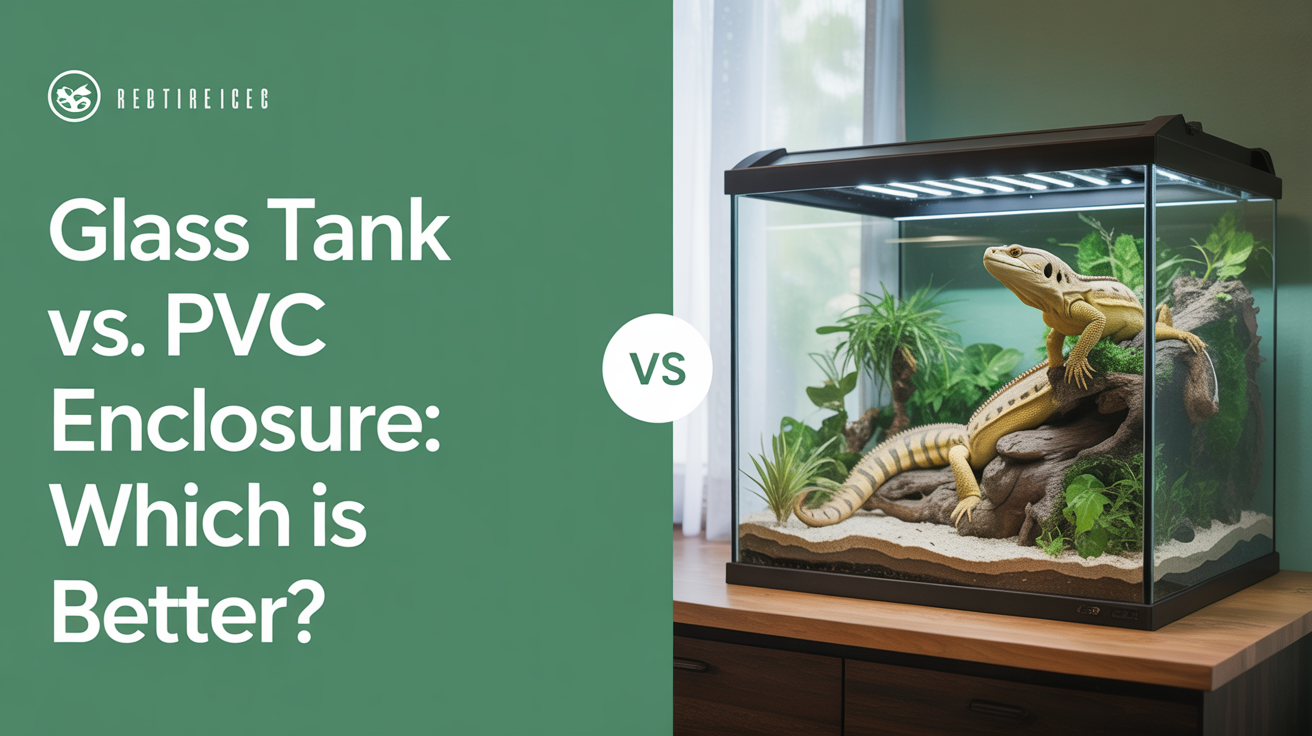
When you are setting up your first reptile enclosure, the choice between a glass tank and a PVC enclosure comes up fast. Both can house a healthy animal, but they handle heat, humidity, and light very differently. The right pick depends mostly on what species you are keeping and how demanding its environment needs to be.
Neither option is universally better. A glass tank that works well for a bearded dragon can make it genuinely difficult to hit the humidity a ball python needs. And a PVC enclosure that keeps a boa comfortable in a cool room might be more enclosure than a crested gecko requires. Here is what each type does well, where each falls short, and a practical guide to matching the enclosure to the animal.
What Glass Tanks Do Well
Glass tanks are everywhere. Any fish tank can be repurposed as a reptile enclosure, which keeps the entry cost low. You can often find used tanks at yard sales or from local fish-keepers, and new options are stocked at most pet shops.
Visibility is glass's clearest strength. The walls are transparent on all sides, so you can watch your animal from any angle. This matters more than it sounds for beginners who are still learning to read their pet's behavior or spot early signs of a problem.
Glass also holds up to cleaning well. Diluted bleach, reptile-safe disinfectants, and vinegar solutions work on glass without degrading the material, and you will not scratch the surface easily with a sponge.
The main drawback is thermal performance. Glass conducts heat readily and does not insulate. A basking spot that hits 105 to 110 F (40 to 43 C) for a bearded dragon is straightforward to achieve, but you will lose that heat through the walls. In a cool room, the ambient side of the enclosure can drop well below the 80 to 85 F (27 to 29 C) cool side most desert species need. You end up running more wattage to compensate.
Humidity is the bigger limitation. Glass tanks typically use a screen lid for ventilation, which means moisture escapes quickly. For species that need 60 to 80 percent humidity, like ball pythons or certain skinks, maintaining that level in a standard glass tank requires constant misting or the use of humid hides, and even then the tank can lose humidity faster than many keepers expect.
What PVC Enclosures Do Well
PVC enclosures are purpose-built for reptile keeping. The walls are thick and insulating, so they hold heat with less wattage than glass. A ceramic heat emitter or radiant heat panel that would struggle to warm a glass tank in a drafty room can maintain a steady 90 F (32 C) hot side in an equivalent PVC build.
Humidity retention is where PVC genuinely pulls ahead for tropical and semi-tropical species. The material does not absorb or pass moisture the way glass loses it through screen lids. Most PVC enclosures use smaller or adjustable vents rather than full screen tops, so you control airflow. A ball python keeper can mist once or twice a day and see 60 to 70 percent humidity hold for hours rather than minutes.
PVC enclosures are also front-opening as a rule. Top-opening access can stress prey animals (snakes in particular are already ambush predators and a hand coming from above can trigger a defensive response). Front doors let you approach from the side, which reads as less threatening to many species.
The tradeoffs are cost and weight. A quality PVC enclosure costs more upfront than a glass tank of the same footprint, and many cannot be broken down for moving the way a glass tank can.
Heat and Humidity: A Direct Comparison
The practical difference between these two materials shows up most clearly when you are trying to hit specific husbandry targets.
For a ball python needing a 90 to 95 F (32 to 35 C) basking zone, 75 to 80 F (24 to 27 C) ambient warm side, and 65 to 70 F (18 to 21 C) cool side, PVC holds those gradients with less equipment and less fuss. Glass can get there, but you will likely need a secondary heat source, more frequent monitoring, and some modification to reduce lid ventilation.
For a desert species like a bearded dragon, which needs a basking spot of 100 to 110 F (38 to 43 C) and a cool side around 80 F (27 C) with humidity below 40 percent, glass performs fine. You actually want airflow through a screen top to keep humidity low, so the feature that limits glass for humid-species keepers works in your favor here.
Arboreal species like crested geckos need moderate humidity (60 to 70 percent) and vertical height more than floor space. Tall glass terrariums with front doors or screen panels can work, but a hybrid enclosure, one with glass fronts and screen sides, is often the practical middle ground that many crested gecko keepers land on.
Matching the Enclosure to Your Species
Before buying an enclosure, look up the humidity and temperature gradient your specific species needs. That single step will narrow the choice faster than any general comparison.
Species that do well in glass tanks include bearded dragons, leopard geckos, corn snakes, and blue-tongue skinks. These animals come from drier environments, tolerate moderate temperature variation, and benefit from the visibility and ventilation glass provides.
Species that tend to do better in PVC enclosures include ball pythons, boa constrictors, red-tailed boas, tree boas, and many dart frog setups. These animals need high humidity, consistent warmth, and an enclosure that does not shed that humidity through its walls.
If you are still deciding on a species, what size tank does your reptile need covers floor space and height requirements across common beginner animals. It is worth reading before you buy any enclosure, since a 40-gallon breeder that looks spacious for a juvenile can be too small for that same animal at adult size.
Cost and Practical Considerations
Glass tanks range from inexpensive used aquariums to purpose-built reptile terrariums that cost as much as a starter PVC cage. A standard 40-gallon breeder tank is one of the most common beginner enclosures and regularly sells used for $30 to $60. New glass terrariums with front-opening doors and built-in vents run $150 to $300 depending on size.
PVC enclosures from dedicated reptile manufacturers typically start around $150 to $200 for smaller models and climb steeply for anything over 4 feet (1.2 m) long. The higher upfront cost is often offset by lower heating costs over time, since better insulation means less electricity to maintain temperatures.
One practical note: modifying a glass tank to reduce ventilation (adding a partial cover over the screen lid, for example) is a common workaround for humidity-sensitive species. It works, but it also reduces airflow, which can lead to respiratory problems if you are not monitoring carefully. A PVC enclosure designed for humid species handles this without workarounds.
When you set up either type, the substrate you choose affects humidity as much as the enclosure walls do. Choosing the right substrate for your reptile covers moisture-retaining substrates like coconut fiber and ABG mixes versus dry options like tile and play sand. For a full walkthrough of putting together the interior, how to set up a reptile tank: a step-by-step guide covers the process from bare enclosure to a finished setup.
Frequently Asked Questions
Can I use a fish tank for a reptile?
Yes, with caveats. Standard aquariums are designed to hold water and are structurally sound. The main limitation is the screen lid, which allows heat and humidity to escape quickly. For low-humidity species like leopard geckos or corn snakes, a converted fish tank works fine. For high-humidity species, you will need to cover part of the lid or look at a different enclosure type.
Is PVC safe for reptiles?
PVC enclosures designed for reptile keeping are safe. The material is non-toxic once manufactured and does not off-gas at normal room temperatures. It does not absorb bacteria the way wood can, and it cleans easily with diluted bleach or reptile-safe disinfectants. Avoid enclosures painted on the interior with non-reptile-safe paints, and make sure any new enclosure airs out for a day or two before adding an animal.
Do PVC enclosures need UVB lighting?
The enclosure material does not change your UVB requirements. UVB is determined by the species, not the box it lives in. A bearded dragon in a PVC enclosure still needs a T5 10.0 or 12% UVB bulb positioned to deliver appropriate UV index at basking depth. What changes is that PVC lids and vents are often designed differently from screen tops, so you may need to position the fixture inside the enclosure rather than on top.
Can I keep a snake in a glass tank?
Many snakes do fine in glass tanks, particularly corn snakes, king snakes, and hognose snakes, which tolerate moderate humidity. Ball pythons are the common exception. Their humidity needs (60 to 80 percent) are genuinely difficult to maintain in a standard screen-top glass tank, which is why most experienced ball python keepers use PVC or modified tubs. If you are set on glass for a ball python, covering 70 to 80 percent of the screen lid with aluminum foil or a glass pane is a common workaround, but it requires careful monitoring to keep ventilation adequate.
What is the best enclosure for a beginner?
There is no single answer. A 40-gallon glass breeder tank is a reasonable starting enclosure for a leopard gecko or bearded dragon, and the lower cost leaves room in the budget for heating and lighting equipment. If you are starting with a ball python or another humidity-sensitive species, investing in a purpose-built PVC enclosure from the start saves a lot of trial and error.