Heating & Lighting
Heat Mat, Heat Lamp, or Ceramic Emitter: Which to Use?
Compare reptile heat sources: heat mats, basking lamps, and ceramic emitters. Learn which suits your species, why thermostats matter, and how to keep things...
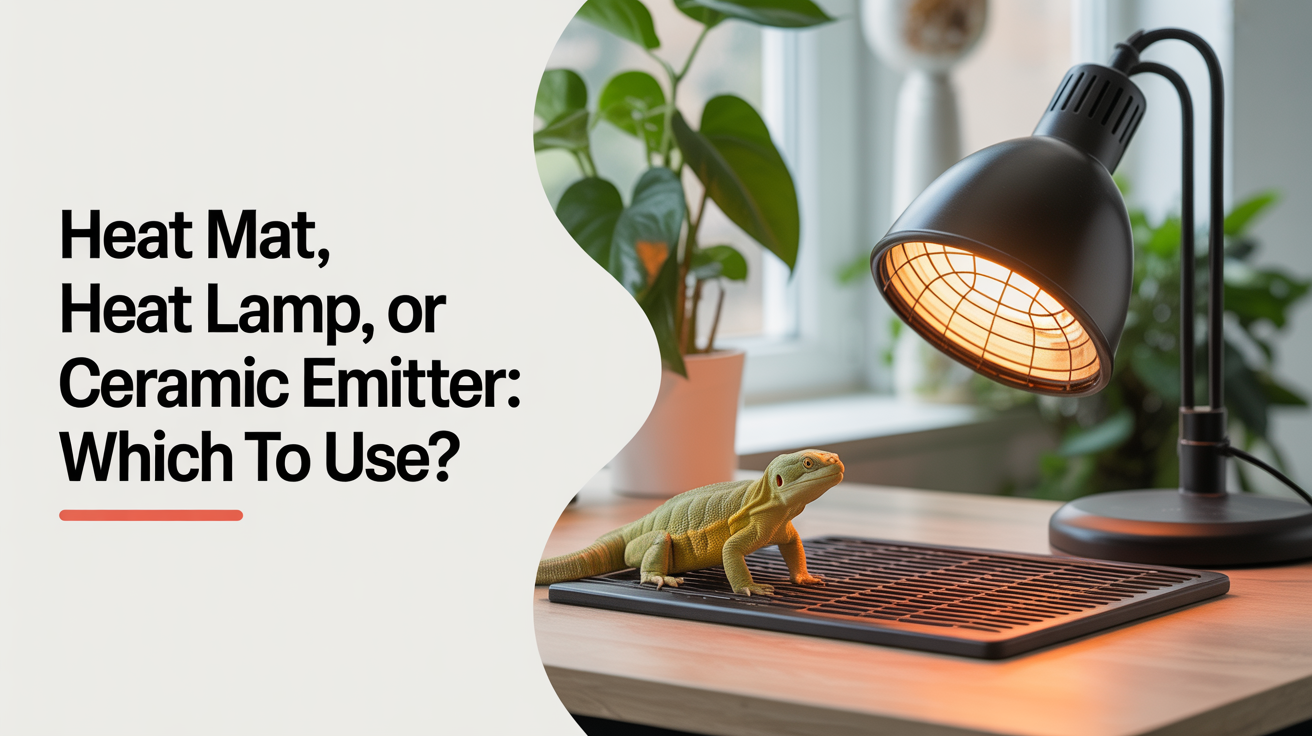
Choosing a reptile heat source is one of the first decisions you will make when setting up an enclosure, and it trips up a lot of beginners because there is no single right answer. The correct option depends on what species you are keeping, whether it needs belly heat or overhead radiant heat, and whether you need warmth during the day, night, or both.
This guide breaks down how each of the three main heat sources works, which situations call for each one, and what safety measures you should have in place regardless of which you choose. For a broader look at how heating and lighting work together, see reptile heating and lighting explained for beginners.
Heat Mats: Low-Level Warmth from Below
A heat mat (also called an under-tank heater or UTH) is a thin pad that sticks to the outside bottom of a glass enclosure. It heats the glass surface, which then warms the substrate and air directly above it.
How it delivers heat: Conductive heat. The animal must physically contact the warm surface or substrate above it to benefit. This is sometimes called belly heat.
When it works well:
- Nocturnal species that do not bask actively but need a warm spot for digestion, such as leopard geckos and corn snakes
- Invertebrates like tarantulas or millipedes that prefer gentle bottom warmth
- Supplemental nighttime warmth for species that need ambient temps to stay above around 65 to 70 degrees F (18 to 21 C) after lights go out
When it falls short:
- Basking species (bearded dragons, blue-tongued skinks, uromastyx) need overhead radiant heat to trigger proper thermoregulation; a mat alone will not do it
- Heat mats under deep substrate can overheat the glass before reaching the animal, creating a burn risk
- They add very little to overall air temperature, so they rarely raise ambient temps meaningfully
Safety requirement: Every heat mat must run through a thermostat, specifically a mat stat or on/off thermostat. Without one, mats can overheat, crack the tank bottom, or burn an animal that cannot move off the warm spot. Set the probe between the mat and the glass.
Overhead Basking Lamps: The Right Choice for Most Lizards
A basking lamp is a standard incandescent, halogen, or PAR bulb mounted in a dome reflector above one end of the enclosure. It produces visible light alongside heat, creating a focused warm zone at one spot.
How it delivers heat: Radiant heat from above, mimicking the sun. The animal sits under the beam, absorbs the warmth through its skin and back, and then moves to a cooler area when it has reached its target body temperature.
When it works well:
- Any species that basks: bearded dragons, water dragons, blue-tongued skinks, uromastyx, iguanas, many agamids
- Daytime heating for the warm end of a thermal gradient
- Raising the air temperature in the basking zone to 95 to 115 degrees F (35 to 46 C) depending on species, while the cool end stays 75 to 85 F (24 to 29 C)
When it falls short:
- Basking lamps produce light as a byproduct, so they are not suitable for nighttime heating when you want darkness
- A bulb that is too powerful or mounted too close can overheat or burn an animal quickly
- They can dry out the air in humid enclosures if left running constantly without adjustments
Safety requirement: Use a dimmer thermostat (also called a proportional thermostat) to control wattage output rather than turning the bulb on and off. This keeps the basking spot temperature steady and extends bulb life. Place the probe at the animal's back level in the basking zone, not on the glass. For guidance on dialing in the right temperatures, read how to set the right basking temperature.
Ceramic Heat Emitters: Heat Without Light
A ceramic heat emitter (CHE) screws into the same dome reflectors used for basking bulbs, but it produces no visible light at all. It gets extremely hot and radiates infrared heat downward.
How it delivers heat: Radiant heat from above, similar to a basking lamp, but with zero light output.
When it works well:
- Nighttime heating when you need to maintain ambient warmth without disturbing the light cycle
- Raising overall air temperature in the enclosure around the clock, especially in cold rooms
- Species that need warm nights, such as crested geckos or tropical boas, without constant light exposure
When it falls short:
- A CHE runs extremely hot at the ceramic surface, around 300 to 500 F (149 to 260 C) at the emitter itself, so any contact with the animal, flammable material, or improperly rated fixture can cause a fire or serious burn
- They do not produce UVB or visible light, so a CHE cannot replace a basking lamp for species that need photoperiod cues or UVB exposure
- Running continuously without a thermostat will almost certainly overheat your enclosure overnight
Safety requirement: Always use a pulse-proportional or on/off thermostat designed for ceramic emitters. Make sure the dome reflector you use is rated for the wattage of the CHE you pick (many low-cost domes are only rated to 60 watts; CHEs often run at 100 to 150 watts). The dome and lamp cord should not touch wood shelving or enclosure hoods rated for lower heat output.
Belly Heat Versus Overhead Radiant Heat
This is the single most important concept when choosing a heat source. Most reptile keepers underestimate how critical the direction of heat is.
Basking species (diurnal lizards especially) need overhead radiant heat to trigger thermoregulation correctly. In the wild, the sun warms their backs, which drives up core body temperature so they can digest food and fight off pathogens. A heat mat under a bearded dragon will warm its belly but does not replicate the sun's effect. Many basking lizards kept on mats alone show chronic digestive problems and suppressed immune function.
Snakes and crepuscular nocturnal lizards depend more on belly warmth or ambient warmth. A corn snake, for example, needs the surface it rests on to be around 85 to 90 F (29 to 32 C) to digest a meal, but it does not rely on sunlight from above the way a bearded dragon does. A mat or low-output radiant source works fine here.
The safest approach for most setups is to match the heat source to how the animal naturally thermoregulates, then verify with an accurate thermometer at multiple spots in the enclosure. For a deeper explanation of why light and heat often need to work together, see what is UVB and why does your reptile need it.
Using Multiple Sources Together
Many successful setups use more than one heat source. A common configuration for a bearded dragon, for example, is a basking lamp during the day and a ceramic heat emitter at night, both on separate thermostats. The daytime lamp provides the basking spot and triggers proper thermoregulation. The nighttime CHE keeps ambient temps from dropping below 65 to 70 F (18 to 21 C) without disrupting the dark period.
A corn snake setup might use only a heat mat on a mat thermostat under one side of the enclosure, providing a warm spot around 88 to 90 F (31 to 32 C) and a cool side in the low 70s F (21 to 23 C).
Always run each heat source through its own thermostat. Never assume wattage alone is low enough to be safe without one. Thermostats are inexpensive compared to the cost of a vet visit or a house fire.
If your animal shows signs of illness, lethargy unrelated to temperature changes, or refuses food persistently, consult a qualified exotics veterinarian rather than adjusting temperatures as a first response.
Frequently Asked Questions
Can I use a heat mat under a wooden enclosure? No. Heat mats are designed for the outside bottom of glass enclosures. Wood can act as insulation, trap heat, and create a fire risk. Use an overhead source or a side-mounted heat panel for wooden enclosures.
Do I really need a thermostat with every heat source? Yes. Every active heat source in a reptile enclosure should have a thermostat. Heat mats can crack glass or burn animals without one. Basking lamps can spike well above target temperatures as room temps change. Ceramic emitters can overheat an enclosure within hours without temperature control.
My ceramic emitter is getting the enclosure too warm overnight. What should I do? First, check that you have a working thermostat with the probe at the correct height (mid-enclosure ambient level, not right under the CHE). If your CHE is too powerful for the space, drop to a lower wattage or switch to a smaller heat source. A 40-watt CHE is often enough for a small enclosure in a temperate room.
Is a red bulb or blue "night bulb" a good heat source at night? Research suggests that many reptiles can see red and blue light at night, which can disrupt their sleep cycle. A ceramic heat emitter is a better option for nighttime warmth because it produces no visible light at all.
How do I know if my heat source is working correctly? Use a digital thermometer with a probe at the basking spot and a second thermometer at the cool end. An infrared temperature gun is useful for checking surface temperatures at the basking area directly. Check readings at different times of day and night to make sure your thermostat is holding the target range consistently.