Species Guides
How to Care for a Pet Tortoise: A Beginner's Guide
Learn how to care for a pet tortoise, from enclosure setup and UVB lighting to diet, soaking, and hibernation basics for Hermann's, Russian, and Greek tortoi...
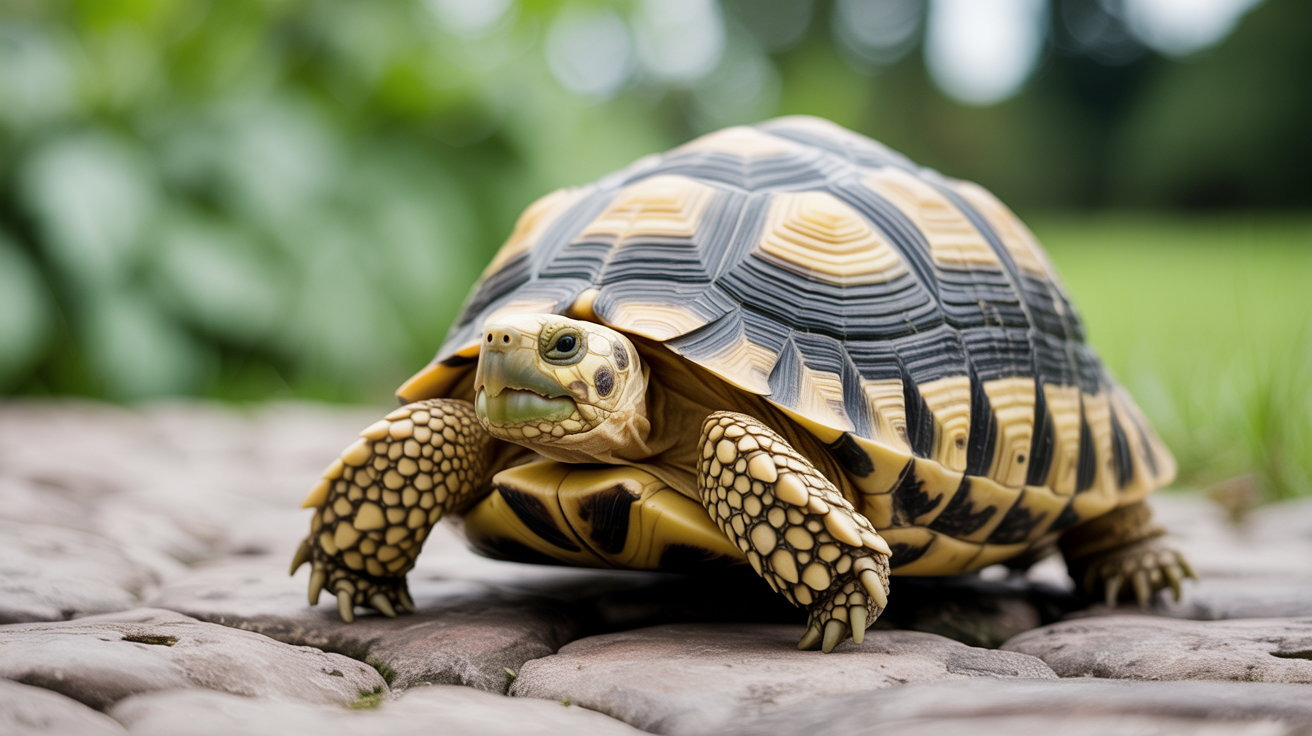
A tortoise is not a short-term pet. Hermann's, Russian, and Greek tortoises routinely live 50 to 80 years, and some individuals outlive their owners. Before you bring one home, that timeline is the single most important thing to accept: you are making a commitment that will likely outlast the decade, the house, and possibly the family structure you are in right now.
If that sounds serious, it should. But tortoises are also genuinely rewarding animals to keep. They are active during the day, have distinct personalities, and thrive when their enclosure actually meets their needs. This guide covers what those needs are for the three species beginners encounter most often.
At a Glance
- This is a 50-to-80-year commitment, often longer than the keeper's own remaining lifespan, plan for succession, not just care.
- Skip the aquarium. Glass tanks trap humidity poorly, confuse tortoises with reflections, and are almost always undersized, a tortoise table or secure outdoor pen is the standard.
- Basking spot runs 95–105°F (35–40°C) with a cooler end at 70–80°F (21–27°C) so the tortoise can self-regulate.
- UVB is mandatory, not optional, without it tortoises cannot metabolize calcium and will develop metabolic bone disease over time.
- No fruit, ever. Mediterranean tortoises are grazers; sugar disrupts their gut bacteria and worsens shell pyramiding.
- Brumation (hibernation) needs a vet check first, only healthy animals with adequate fat reserves should be allowed to brumate.
Species at a Glance: Hermann's, Russian, and Greek
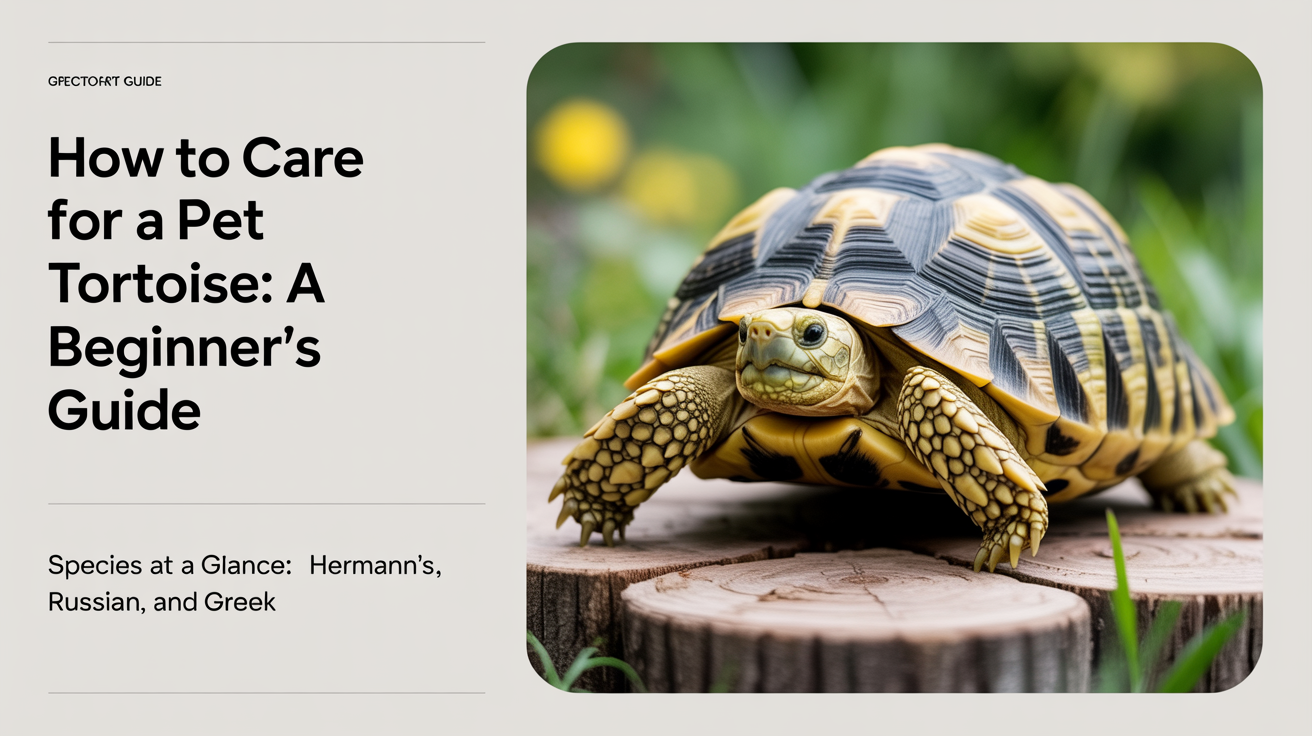
The three species beginners most often encounter share a lot of overlapping care, but they aren't identical. This comparison helps you see where they diverge.
| Trait | Hermann's Tortoise | Russian Tortoise | Greek Tortoise |
|---|---|---|---|
| Adult size | 6–8 in (15–20 cm) | 5–8 in (13–20 cm), females larger | 5–8 in (13–20 cm) |
| Temperament | Active, curious | Highly active, persistent digger | Moderate activity |
| Digging behavior | Moderate | Extensive, needs deep substrate and buried barriers | Moderate |
| Minimum table size (adult) | 4 × 2 ft | 4 × 2 ft, more floor space preferred | 4 × 2 ft |
| Cold tolerance | Good, brumates well | Best cold tolerance of the three | Good |
| Typical lifespan | 50–80 years | 40–60 years | 50–80 years |
Enclosure Setup: Space and Structure Matter
The most common beginner mistake with tortoises is housing them in an aquarium. Glass tanks hold humidity poorly and create confusing reflections that stress the animal. They also tend to be too small.
Tortoise tables are the standard indoor option. These are open-topped wooden enclosures, typically at least 4 feet by 2 feet (120 x 60 cm) for a single adult Hermann's or Greek tortoise. Russian tortoises are diggers and benefit from even more floor space. The open top allows heat and UVB to penetrate properly, and the wooden sides give the tortoise clear visual boundaries rather than reflective glass.
Outdoor pens are excellent for warmer months in temperate climates or year-round in hot regions. A secure pen with buried skirting (to prevent escape by digging) and shade options gives a tortoise the space and sun exposure it genuinely needs. Russian tortoises in particular are burrowers, so the walls need to go underground at least 12 inches (30 cm).
For substrate, a mix of topsoil and play sand works well for most Mediterranean species. It holds burrows, allows digging, and maintains a reasonable humidity without staying wet. Depth matters: 4 to 6 inches (10 to 15 cm) lets the tortoise thermoregulate by burying itself partially.
Heating, Lighting, and UVB
Tortoises are ectotherms that use the sun to regulate their body temperature and synthesize vitamin D3. In captivity, you replace that sun with a basking lamp and a UVB tube, and you get the temperatures wrong at your peril.
Basking spot: 95 to 105 F (35 to 40 C) directly under the lamp. This is where the tortoise warms up at the start of the day and after eating.
Cool end: 70 to 80 F (21 to 27 C). The temperature gradient lets the tortoise move between zones and self-regulate.
Nighttime: Most Mediterranean species tolerate drops to 60 to 65 F (15 to 18 C) at night, which is fine in a room-temperature home.
UVB is not optional. Without it, tortoises cannot metabolize calcium properly, which leads to metabolic bone disease over time, the Merck Veterinary Manual attributes the condition to a combination of poor dietary calcium-to-phosphorus ratio, vitamin D3 deficiency, and inadequate UVB or thermal husbandry. A linear T5 HO UVB tube rated for desert or arid species (Ferguson Zone 3 output, typically 10 to 12% UVB tubes) placed 10 to 14 inches (25 to 35 cm) above the basking area is the current standard. Compact coil UVB bulbs are less effective and harder to position correctly. Replace the tube every 12 months even if it still emits visible light, because UVB output drops before the bulb burns out.
Mediterranean tortoises prefer low humidity: 30 to 50% in most of the enclosure. One corner of the enclosure can be slightly more humid to support a hide, but standing water or persistently damp substrate invites respiratory problems.
Quick-Care Summary
| Parameter | Recommended Range |
|---|---|
| Indoor enclosure (adult) | Tortoise table, 4 × 2 ft minimum |
| Basking spot | 95–105°F (35–40°C) |
| Cool end | 70–80°F (21–27°C) |
| Nighttime low | 60–65°F (15–18°C) |
| UVB tube | T5 HO 10–12%, Ferguson Zone 3 |
| Humidity | 30–50% ambient |
| Diet | 80–90% weeds and wild plants |
| Soaking frequency | 2–3x/week (juveniles), 2x/week (adults) |
| Lifespan | 50–80 years |
Diet: High Fiber, Low Everything Else
Mediterranean tortoises evolved grazing on tough, low-nutrient vegetation. Their digestive systems are built for fiber, not calories.
The bulk of the diet (80 to 90%) should be broad-leaved weeds and wild plants: dandelion greens and flowers, plantain (broadleaf and ribwort), clover, sow thistle, hawkbit, and similar. These are higher in calcium and lower in oxalates than most store-bought greens. A good rule of thumb is a pile roughly the size of the tortoise's own shell, offered fresh daily for juveniles.
Store-bought greens can supplement when wild plants are unavailable. Romaine, endive, and spring mix are acceptable in rotation. Avoid iceberg lettuce (nutritionally empty) and spinach (high oxalates that bind calcium).
Do not feed fruit. Mediterranean tortoises are grazers, not frugivores. The sugar disrupts gut bacteria and contributes to loose stools and overgrowth of harmful microbes. This rule also applies to Russian tortoises, despite what some older care sheets say.
Do not feed animal protein. Tortoise kidneys are not equipped to process it regularly. High-protein diets are directly linked to pyramiding, the abnormal stacking of scutes on the shell.
Calcium supplementation matters. Dust food lightly with a calcium carbonate powder (plain calcium, no phosphorus) three to four times per week. A cuttlebone left in the enclosure lets the tortoise self-supplement as well. Vitamin D3 supplements are usually not needed if the UVB setup is adequate, but can be added once a week for indoor-only animals.
Feed juveniles daily. Adults do well on five days per week with two rest days. Portion size is roughly what fits in the shell's opening, though most keepers find it easier to simply offer a pile and let the tortoise stop when full.
Water, Soaking, and Hibernation
Soaking is the most reliable way to keep a tortoise hydrated and to encourage voiding. Soak hatchlings and juveniles in shallow, lukewarm water (85 F / 29 C) for 15 to 20 minutes three times per week. Adults benefit from two soaks per week. The water should reach the tortoise's chin but not go over the shell. Always supervise soaking because tortoises can flip and drown.
A shallow water dish can also be left in the enclosure, but many tortoises ignore it or use it as a toilet. Soaking is the more reliable method for ensuring adequate hydration.
Hibernation (correctly called brumation) is natural for Hermann's, Russian, and Greek tortoises. In the wild they brumate through cold winters. In captivity, whether to hibernate depends on the tortoise's health, weight, and age: only healthy animals with adequate fat reserves should be hibernated. A vet check before brumation is strongly recommended, particularly for animals new to your care, ideally including a fecal parasite check, since brumating with an active parasite load can be fatal. Hatchlings under three years old are often kept awake their first few winters to allow more growth. The method varies by species, but cool-box hibernation at 39 to 45 F (4 to 7 C) for 8 to 12 weeks is the most controlled approach for beginners. Weigh the tortoise weekly during brumation; a loss of more than 1% of body weight per month of brumation is a signal to wake it early and consult a vet.
Common Health Problems
Pyramiding refers to the raised, peaked appearance of individual shell scutes. It tends to result from a combination of low humidity during growth, high-protein diet, and inadequate UVB. Once formed, pyramiding is permanent, but you can prevent further progression by correcting those conditions. Juveniles kept too dry and fed too much protein-rich food (including excess legumes or commercial "tortoise pellets" heavy in concentrated nutrients) pyramid the fastest, slow, steady growth on a proper diet produces a smoother shell.
Metabolic bone disease (MBD) results from calcium-phosphorus imbalance or inadequate vitamin D3. Signs include soft or deformed shell, curved limbs, and lethargy. It is preventable with correct UVB and calcium supplementation, but requires veterinary treatment once established.
Respiratory infections (RI) present as wheezing, open-mouth breathing, nasal discharge, or a tortoise that cannot keep its head raised comfortably. They are often triggered by low temperatures, drafts, or excess humidity. A respiratory infection in a reptile warrants a prompt call to an exotics vet, not a wait-and-see approach.
Tortoises mask illness well. By the time symptoms are obvious, the problem has often been developing for some time. Find an exotics vet before you need one, not during a crisis, the Association of Reptile and Amphibian Veterinarians maintains a public directory if your regular vet doesn't see tortoises. Annual wellness checks are worthwhile for long-lived animals.
If you are also considering other beginner reptiles, the care approach differs considerably by species. Bearded dragons need significantly higher basking temps and a protein-rich diet that changes with age. Leopard geckos are nocturnal and need no UVB, making them a very different setup from tortoise care. Ball pythons are a snake option for beginners who prefer a non-lizard reptile.
Frequently Asked Questions
How long do pet tortoises live?
Most Mediterranean species live 50 to 80 years in captivity with proper care, and some individuals exceed 100 years. This is genuinely a lifelong commitment, and many tortoise keepers include provisions for their animals in their wills.
Can a tortoise live in a fish tank?
It is not recommended. Glass tanks trap humidity, create reflective confusion, and are almost always too small for adult tortoises. A wooden tortoise table or a secure outdoor pen provides better ventilation, space, and sight lines.
Do tortoises need to be bathed?
Yes. Regular soaking in shallow lukewarm water is the most reliable way to keep a tortoise hydrated and to support healthy kidney function. Aim for two to three times per week for juveniles and adults.
What should tortoises not eat?
Avoid fruit, animal protein (meat, dog food, cat food), spinach in large quantities, iceberg lettuce, and anything toxic to grazing animals. Stick to broad-leaved weeds and appropriate leafy greens as the core of the diet.
How do I know if my tortoise is sick?
Warning signs include wheezing or bubbling sounds, mucus around the nose or mouth, lethargy, loss of appetite lasting more than a week, sunken eyes, or difficulty moving limbs. Any of these warrants a call to an exotics vet. Tortoises are good at hiding illness, so by the time symptoms are visible, the problem usually needs prompt attention.
Which is the easiest Mediterranean tortoise for a first-time keeper?
Hermann's and Greek tortoises are usually recommended over Russian tortoises for a first table setup, mainly because Russian tortoises dig aggressively and need a deeper, more escape-proof enclosure to keep up with them. All three share the same core diet and UVB requirements, so the real difference for a beginner comes down to how much digging space you can provide.