Health & Care
How to Handle and Tame Your Reptile Gently
Learn how to tame a reptile safely — from the settling-in period to reading stress signals, supporting the body correctly, and knowing which species to skip.
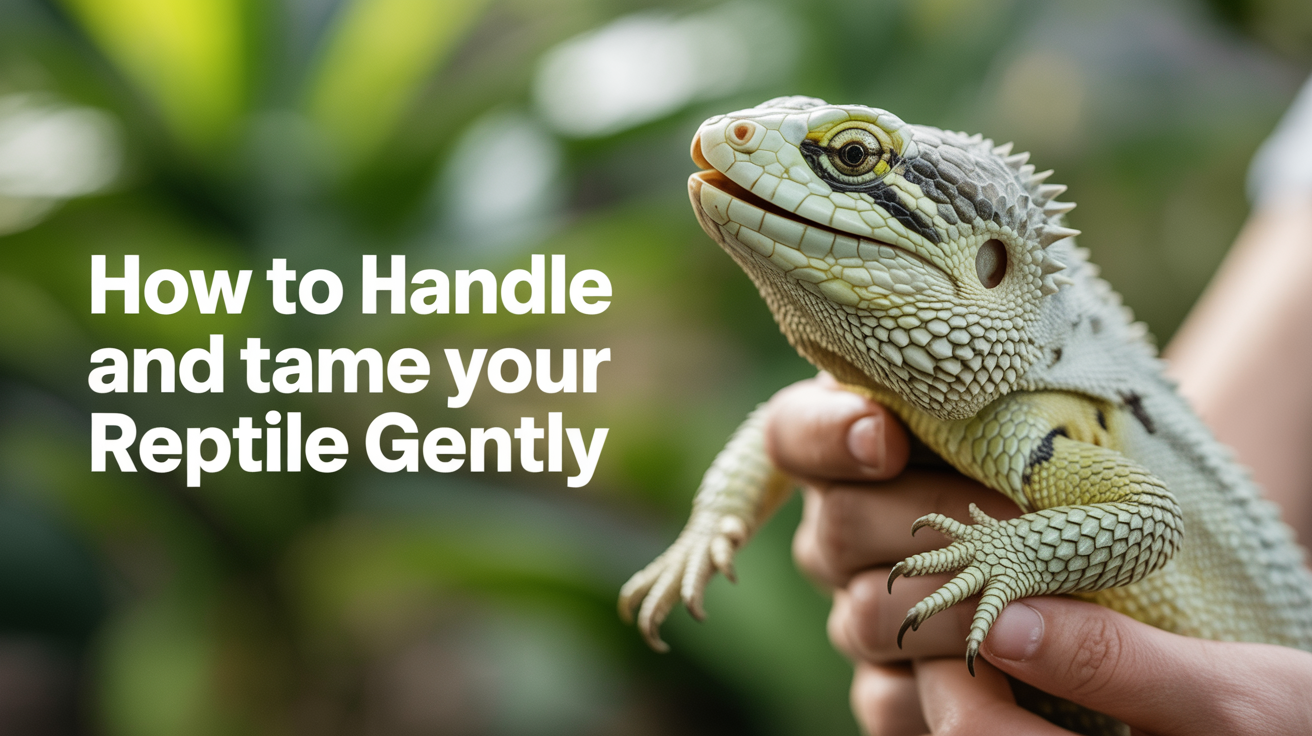
Picking up a nervous bearded dragon for the first time can feel like a small gamble. It might puff up, flatten its beard, or try to bolt. That reaction is normal, your animal doesn't know you yet. The good news is that most commonly kept reptiles can become genuinely comfortable with human contact, but only if you earn that comfort gradually. This guide covers how to do it right.
Give the Animal Time to Settle Before You Touch It
The single most common mistake new keepers make is handling too soon. A reptile that just arrived in your home is already stressed: new smells, unfamiliar temperatures, the vibration of shipping or travel. Reaching in during that window makes it worse.
The standard rule is one to two weeks of hands-off time after a new animal arrives. Keep the enclosure in a quiet spot, maintain correct temperatures and humidity, and offer food after the first few days. Watch from a respectful distance. You're letting the animal learn that the enclosure is safe before it has to contend with you.
Signs the Animal Is Relaxed Enough to Begin
- Eating consistently across at least two or three meals
- Basking on schedule without fleeing when you walk past
- Moving around the enclosure without constant hiding
- Eyes that look alert and clear (not sunken or wide-open in alarm)
If your animal refuses food for weeks or stays hidden most of the day, that's a sign the environment needs attention before handling begins. Check lighting, temperature gradients, and hide quality first. A sick or thermally deprived animal is not ready to be handled. See our guide on signs of a healthy reptile and warning signs of illness if you're unsure what you're looking at.
Reading Body Language: Stress Signals to Respect
Reptiles can't growl or bark, but they communicate clearly once you know what to look for. Ignoring these signals doesn't build trust, it erodes it.
Common Stress Signals by Group
Lizards (bearded dragons, leopard geckos, blue-tongue skinks):
- Darkening beard or body coloration
- Mouth gaping that isn't temperature-related
- Tail whipping or glass-surfing
- Flattening the body to appear wider
- Biting or lunging when your hand approaches
Snakes:
- Holding a tight S-coil with the head raised (strike position)
- Musking or defecating during handling
- Rapid, erratic movement trying to escape
- Hissing
Amphibians (frogs, salamanders, axolotls): Stop here. Most amphibians should not be handled routinely. Their skin is thin, permeable, and extremely sensitive to the oils, lotions, and salts on human hands, even brief contact can cause skin damage or introduce toxins. Handling a dart frog barehanded, for example, can harm both the animal and you. If you must move an amphibian for enclosure maintenance, use clean, wet, unpowdered gloves or wet hands rinsed with dechlorinated water, and keep it brief.
When to Put the Animal Down Immediately
Stop the session if you notice any of these:
- Biting or striking
- Sustained frantic movement lasting more than a minute
- Cloacal discharge (musking or defecating)
- Unusually cold or limp body (possible illness, not just stress)
- Loud hissing that doesn't stop
Put the animal back in its enclosure, give it 30 minutes to calm down, and try again another day. Forcing interaction past these signs teaches the animal that your hands predict bad experiences.
How to Actually Pick Up and Hold a Reptile
The mechanics matter. A reptile that feels unsupported will panic; one that feels stable tends to relax.
The Scoop, Not the Grab
Never reach from above and close your hand around an animal. Birds of prey attack from above, that silhouette triggers a flight response in many species. Instead:
- Approach from the side or front, slowly.
- Slide your hand under the animal, palm up.
- Let it step onto your hand rather than forcing it.
- Support the full body. For a bearded dragon, that means under the chest and the back legs. For a snake, support at least two points along the body so it doesn't feel it's falling.
- Keep your grip firm enough to feel secure but loose enough that the animal can shift position.
Short Sessions Build Confidence
Start with sessions of five minutes or less. For very skittish animals, even one or two minutes is fine at first. The goal isn't duration; it's ending on a calm note. Over days and weeks, gradually extend to 15 or 20 minutes as the animal stops trying to escape and begins exploring your hands and arms on its own.
A bearded dragon that walks onto your arm voluntarily and sits still while you watch TV is a tamed dragon. A snake that flows calmly between your hands without striking is a tame snake. You're not there after day three, it usually takes weeks to months depending on the species and the individual animal.
Do's and Don'ts at a Glance
Do:
- Wash your hands before and after every handling session
- Handle in a safe, low-to-the-ground space in case the animal drops
- Keep sessions short and consistent (daily or near-daily is better than weekly marathons)
- Stay calm and move slowly
- Return the animal to its enclosure on your terms, not because it's escaping
Don't:
- Handle within 48 hours of a feeding (risk of regurgitation, especially in snakes)
- Handle during a shed cycle, skin is sensitive and vision is compromised
- Let children handle unsupervised until the animal is well-tamed
- Handle when the animal is showing stress signals
- Handle if you have strong hand lotion, sunscreen, or insect repellent on your skin
Species That Generally Tolerate Handling vs. Those That Don't
Not every reptile is equally suited to regular interaction. Choosing the right species matters as much as technique.
More Handler-Friendly Species
- Bearded dragons are among the most tractable lizards available. Most become genuinely calm with consistent handling and will sit still for long periods.
- Leopard geckos are small, slow, and tolerant once tamed; they rarely bite when treated gently.
- Blue-tongue skinks are heavy-bodied, slow-moving, and generally relaxed with humans.
- Ball pythons are famously calm snakes; they're slow and tend to explore rather than flee.
- Corn snakes are lightweight, curious, and become very easy to handle with regular contact.
Species Requiring More Patience or Caution
- Green iguanas can be tamed but require years of consistent work and can deliver painful tail-whip injuries if frightened.
- Water dragons are fast, skittish, and prone to snout injuries from glass-surfing; they need large, enriched enclosures before handling is productive.
- Monitor lizards are intelligent but powerful; a Savannah monitor can be tamed, but it demands a keeper who understands reptile body language deeply.
- Most wild-caught animals of any species tend to remain defensive far longer than captive-bred individuals.
Amphibians Are Not "Handleable Pets"
To repeat this clearly: frogs, toads, salamanders, newts, and axolotls are for observing, not petting. That includes popular species like pacman frogs and White's tree frogs. If you want a reptile you can interact with regularly, choose a lizard or snake from the handler-friendly list above.
Hygiene: Protect Yourself and the Animal
Reptiles commonly carry Salmonella bacteria, not because they're dirty, but because it's a normal part of their gut flora. The bacteria doesn't harm them but can cause serious illness in humans, particularly children under five, elderly people, and anyone immunocompromised.
Wash your hands with soap and water for at least 20 seconds after every handling session. This isn't optional. Don't touch your face, food, or other surfaces between handling the animal and washing up.
Keep the animal away from kitchen surfaces, dining tables, and anywhere food is prepared. Don't let the animal make contact with an infant's face or hands.
The reverse matters too: before you pick up your animal, wash off any chemicals that could harm it, lotions, sunscreen, citrus residue from food, or cleaning products. Some reptiles absorb chemicals through skin contact more readily than you'd expect.
If your animal seems off after a handling session, check for stuck shed (a tight ring around a toe or tail tip can cut off circulation), dehydration, or signs of illness. Our article on how to help a reptile with a stuck or bad shed walks through that process, and what is metabolic bone disease and how to prevent it covers one of the most common husbandry-related illnesses that can leave an animal too weak to handle safely.
Frequently Asked Questions
How long does it take to tame a reptile?
It depends on the species and individual temperament, but most captive-bred bearded dragons and leopard geckos show noticeable improvement within two to four weeks of daily, short handling sessions. Ball pythons often settle within a few weeks to a couple of months. Wild-caught animals can take much longer, sometimes never fully taming. Patience and consistency matter more than any specific technique.
My reptile always tries to run away. Am I doing something wrong?
Not necessarily. Fast movement during handling is common in newly acquired animals and naturally skittish species. Make sure sessions are short (under five minutes), that you're not reaching from directly above, and that you're holding the animal low enough that it doesn't feel like it's in danger of falling. If the behavior doesn't improve after several weeks of daily tries, rule out husbandry problems, incorrect temperatures, inadequate hides, or illness can all make an animal permanently edgy.
Can I handle my snake after it eats?
Wait at least 48 hours after feeding a snake before handling. Snakes digest their meals slowly over several days, and handling during this window can cause them to regurgitate. Regurgitation is stressful and can cause long-term digestive problems if it happens repeatedly.
Is it safe for children to handle reptiles?
With supervision, yes, for appropriate species. A calm, tamed bearded dragon is a reasonable animal for a school-age child to hold under adult supervision. Strict handwashing before and after is non-negotiable. Very young children (under five) should not handle reptiles at all, both because of Salmonella risk and because they may not control their grip well enough to keep the animal (or themselves) safe.
My gecko dropped its tail during handling. What do I do?
Stay calm. Tail autotomy (self-amputation) is a defense mechanism in many gecko species; the tail will regrow, though the regenerated version usually looks different. Clean the enclosure to reduce infection risk, keep the gecko's housing extra clean for a few weeks, and monitor the stump for signs of infection (redness, swelling, discharge). Give the animal extra rest, no handling until the stump has fully healed, which typically takes several weeks.