Getting Started
How Long Do Pet Reptiles Live? A Lifespan Guide by Species
Compare realistic pet reptile lifespans by species, from leopard geckos to tortoises, and see what a decades-long commitment actually involves.
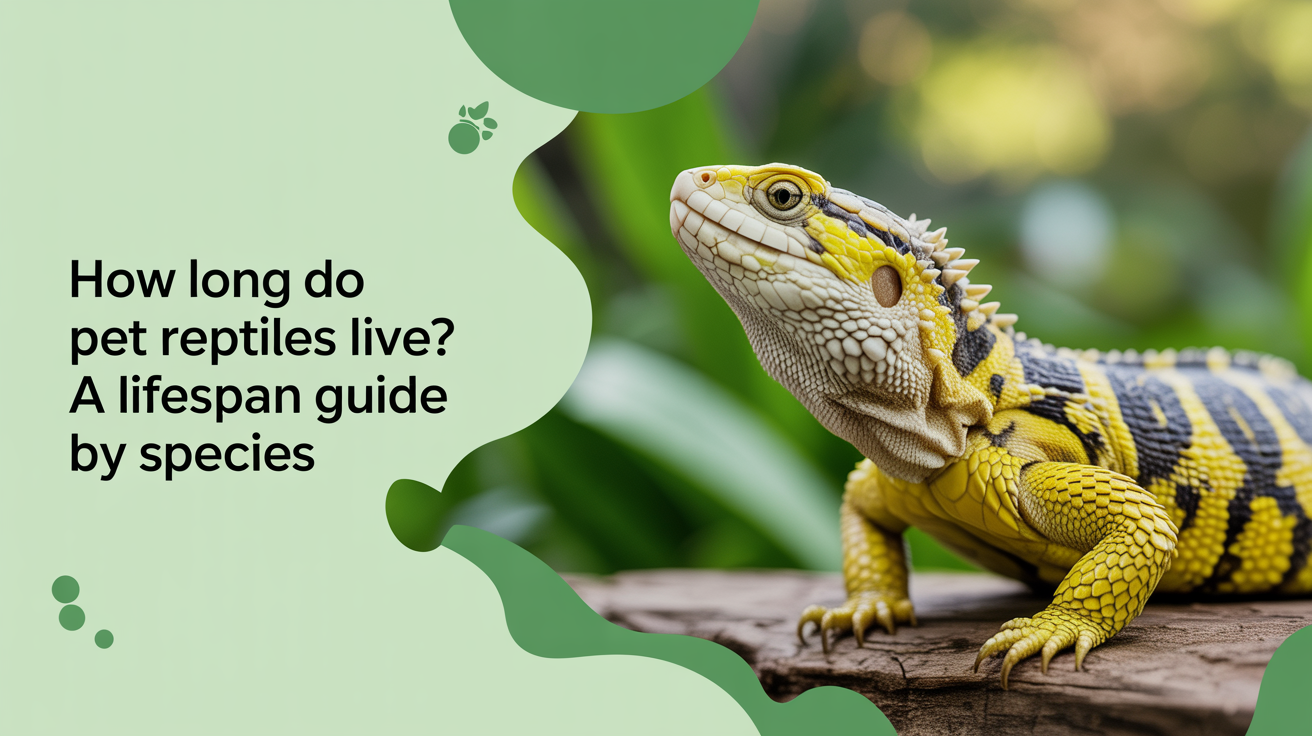
Before you bring home a lizard, snake, or tortoise, it helps to know what you're actually signing up for. Reptile lifespan by species varies enormously, from a gecko that might live about as long as a dog to a tortoise that could outlast you. That gap matters more with reptiles than with most pets, because a cold-blooded animal in a well-run enclosure tends to just keep going, year after year, long past the point where a new owner expected to still be caring for it.
This isn't meant to scare anyone off. Plenty of people keep the same leopard gecko or bearded dragon for its entire life without much drama. But going in with a realistic number in your head, instead of a vague sense that "reptiles live a while," makes for a much better match between you and the animal.
Reptile lifespan by species: the short version
Lifespan figures for captive reptiles are usually reported as ranges rather than fixed numbers, because so much depends on genetics, diet, and how closely an owner sticks to the animal's temperature and humidity needs. The table below reflects commonly cited ranges for well-cared-for individuals of each species, not worst-case or best-case outliers.
| Species | Typical lifespan (well cared for) | Notes |
|---|---|---|
| Leopard gecko | 15 to 20 years | Some documented individuals have lived into their twenties |
| Bearded dragon | 8 to 12 years | Shorter than many beginner reptiles; still a real commitment |
| Ball python | 20 to 30 years | Females often live longer than males |
| Tortoise (common pet species) | 40 to 80+ years, depending on species | Certain species can outlive several human generations |
A few things jump out here. Bearded dragons, despite being one of the most popular starter reptiles, tend to have the shortest lifespan on this list. Ball pythons and tortoises are the opposite story: a ball python bought as a hatchling can plausibly still be around when its owner retires, and some tortoise species are genuinely multi-generational pets. It's not unusual for a tortoise to be handed down from a parent to a child, and then to a grandchild, still going strong the whole time.
Why husbandry quality matters more than the species chart
A lifespan table is a starting point, not a guarantee. The single biggest factor separating a reptile that hits the high end of its range from one that dies young isn't genetics, it's husbandry: whether the enclosure holds a proper temperature gradient, whether UVB lighting is adequate and replaced on schedule, whether humidity sits in the right band for that species, and whether the diet is appropriate and varied enough.
An animal kept too cold runs a weaker immune system and digests food poorly. One kept without correct UVB can develop metabolic bone disease, a slow, often irreversible condition that shortens both lifespan and quality of life. Underfeeding, overfeeding, and the wrong prey or produce mix all take a toll too, usually gradually rather than all at once, which is part of why husbandry mistakes are easy to miss until real problems show up.
This cuts both ways. A gecko or dragon kept in a setup that never quite gets the heat and humidity right may fall well short of its expected range. But an animal in a well-run enclosure, fed appropriately and checked on regularly, has a real shot at the upper end of its species' typical lifespan, or beyond it. The species sets the ceiling; the owner's setup determines how close the animal gets to it.
Where a specific number isn't well established, such as exact upper limits for less commonly kept species, it's more honest to describe the pattern (this animal tends to live a long time relative to its size, or tends to be shorter-lived than people expect) than to state a precise figure that isn't really known.
What a multi-decade commitment actually looks like
It's one thing to read "20 to 30 years" in a table. It's another to think through what that means for your own life. A few practical angles worth considering before you commit to a long-lived species.
Housing changes over the years
Enclosures don't stay static for 15 or 30 years. You'll likely move at least once, maybe several times, while the animal is in your care. That means the enclosure needs to be something you can realistically transport or rebuild elsewhere, and that any landlord or housing situation you move into needs to tolerate a heated glass or PVC tank sitting in a room. Larger tortoises may eventually need outdoor space, which isn't something every home or climate can offer.
Care during travel and life changes
A weekend trip is easy: a timer on the lights, an automatic feeder or a quick check-in from a neighbor. A two-week vacation is harder, and a longer absence, a hospital stay, a period of financial strain, is harder still. Reptiles generally don't need daily attention the way a dog does, but they do need someone competent checking temperatures, restocking food, and watching for illness. Long-lived species mean this question comes up again and again over the animal's life, not just once.
Who takes over if you can't keep the animal
This is the part people skip, and it's the most important one for a 30-to-80-year pet. If something happens to you, or your circumstances change in a way that means you can no longer keep the animal, who takes over? For a bearded dragon on an 8 to 12 year timeline, this is a real question but a manageable one. For a tortoise that could still be alive in 60 years, it's worth having an actual plan: a family member who's willing, a local reptile rescue you've identified in advance, or at minimum knowing that reptile-specific rehoming resources exist and aren't hard to find when the time comes.
None of this means long-lived reptiles are a bad choice. It means the decision deserves the same kind of thought you'd give to a decision with a multi-decade horizon, because that's exactly what it is.
Matching lifespan to the right reptile for you
If a shorter, more contained commitment appeals to you, a bearded dragon at 8 to 12 years is one of the more approachable options on this list, and their more active, visibly food-motivated personality is part of why they're such a popular first reptile.
If you want something that will likely be part of your life for two or three decades but doesn't demand the space a tortoise eventually will, a leopard gecko or a ball python fits that middle ground. Both are manageable in an apartment-sized enclosure for their entire lives and are well documented as beginner species.
If you're prepared for the real possibility of a pet that outlives you, and you've thought through the space and succession questions above, a pet tortoise is worth researching properly rather than ruling out. Just go in with clear eyes about what that commitment involves, and read the species-specific guide before you buy, since housing and outdoor access requirements vary a lot by tortoise species.
Whichever direction you lean, the lifespan figure is only useful alongside the husbandry details underneath it. A long-lived species kept well is a rewarding, decades-spanning relationship with an animal that genuinely thrives. The same species kept in a setup that never quite gets the basics right won't come close to its potential lifespan, no matter what the chart says.
Frequently Asked Questions
What is the longest-living common pet reptile?
Among commonly kept pet reptiles, tortoises live the longest by a wide margin, with several popular pet species capable of living well past 50 years and some individuals documented living considerably longer. Among smaller, non-tortoise reptiles, ball pythons tend to have the longest typical lifespan on this list.
Do bearded dragons really live shorter lives than other beginner reptiles?
Yes, relative to leopard geckos and ball pythons, bearded dragons have a noticeably shorter typical lifespan, generally 8 to 12 years rather than 15 to 30. This doesn't make them a lesser pet, but it's worth knowing going in, since some new owners assume all popular beginner reptiles live equally long.
Can poor husbandry actually shorten a reptile's life significantly?
Yes. Chronic issues like incorrect temperatures, inadequate UVB, or an unsuitable diet tend to cause gradual health decline rather than sudden illness, and animals kept this way commonly fall well short of their species' typical lifespan. Getting the enclosure setup right from day one matters more for long-term health than almost anything else you'll do as an owner.
Should I avoid long-lived species like tortoises if I'm not sure I can commit for decades?
Not necessarily, but it's worth being honest with yourself first. A tortoise is a reasonable choice if you're willing to think through housing changes, travel logistics, and a rehoming plan in advance. If that planning feels overwhelming right now, a shorter-lived species like a bearded dragon lets you get comfortable with reptile care without the multi-generational commitment.
Does a reptile's lifespan in the wild match its lifespan in captivity?
Not usually, and the relationship isn't consistent across species. Some captive reptiles live longer than their wild counterparts because they aren't exposed to predators, food scarcity, or extreme weather. Others may have shorter or similar lifespans in captivity if husbandry doesn't fully replicate what the species needs. Captive lifespan figures for pet species are generally the more useful number to plan around.